Categorization skills Normal Reading Worksheets for Ages 3-6
3 filtered results
-
From - To
Enhance your child's early reading journey with our engaging Categorization Skills Normal Reading Worksheets designed for ages 3-6. These interactive worksheets help young learners develop critical thinking by sorting, grouping, and classifying various objects and images. Through fun activities and colorful visuals, children will learn foundational concepts such as similarities and differences, essential for effective reading comprehension. Suitable for home or classroom use, our worksheets encourage independent learning while fostering a love for reading. Encourage your child’s development in a joyful, engaging way with our expertly crafted resources that make learning a delightful experience!
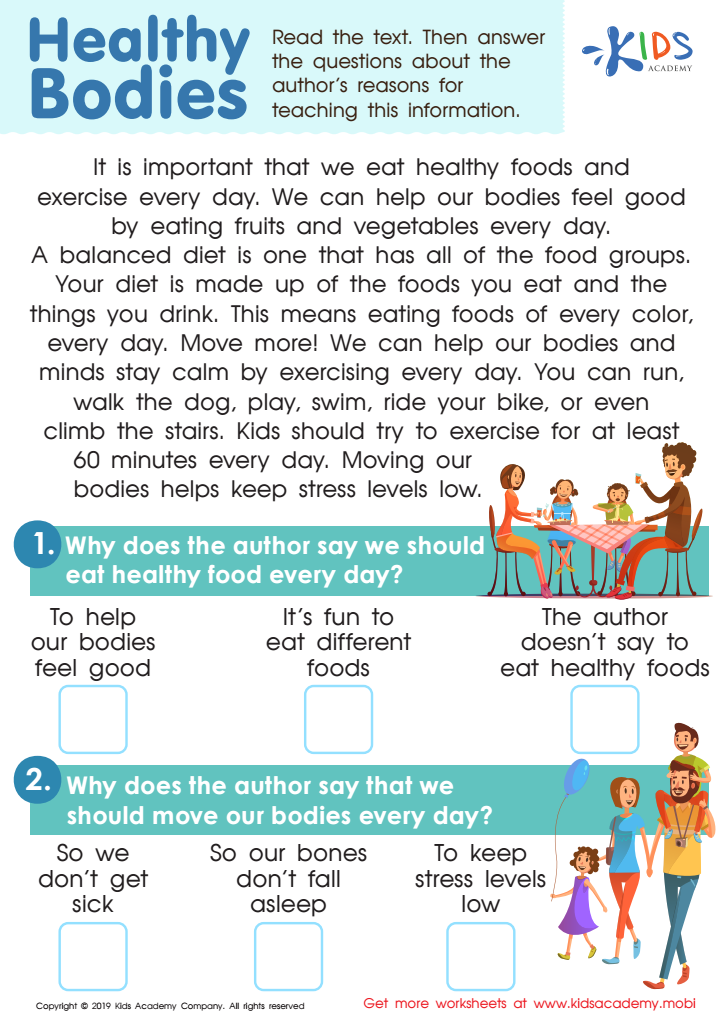
Healthy Bodies Worksheet
 Assign to My Students
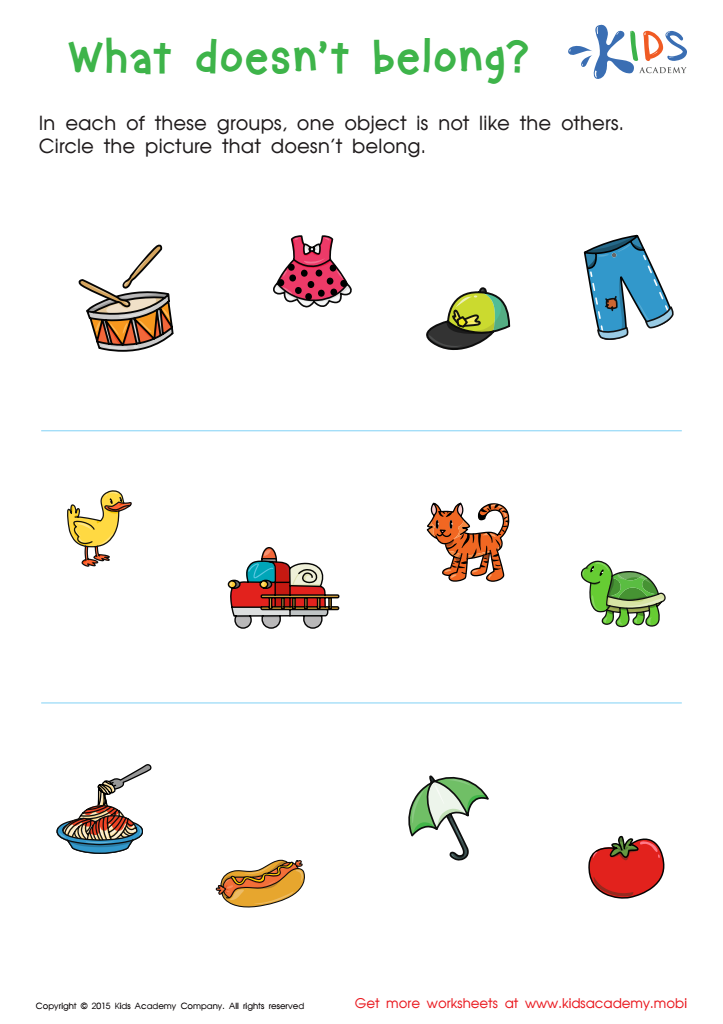
First Words: What Doesn't Belong Worksheet
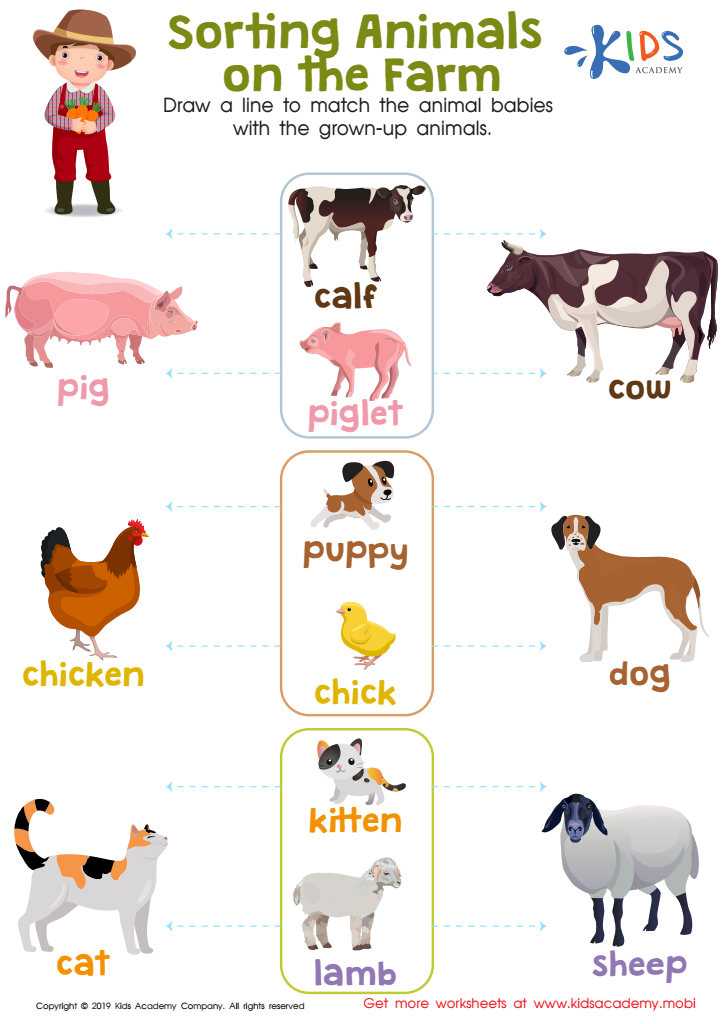
Sorting Animals on the Farm Worksheet






Categorization skills are essential for children aged 3-6, as they form the foundation for critical thinking and comprehension in reading. Developing these skills helps young learners identify similarities and differences among objects, concepts, or ideas. For parents and teachers, fostering categorization abilities can significantly enhance a child's vocabulary and understanding of language structures. When children categorize, they learn to group words based on characteristics, such as identifying fruits versus vegetables or categorizing animals by habitat. This ability not only supports language acquisition but also improves interpersonal communication skills.
Furthermore, categorization exercises stimulate cognitive development by encouraging children to think analytically and make connections between different pieces of information. This aligns with early literacy skills that become crucial as children transition to more complex reading tasks. Additionally, strong categorization skills are linked to higher performance in later academic endeavors, making early intervention vital.
Engaging children in games and activities that promote categorization, such as matching games or sorting tasks, can make learning enjoyable. Parents and teachers who prioritize these skills can equip children with essential tools for lifelong learning, setting the stage for both academic success and a deeper understanding of the world around them. It's an investment in their future!