Critical Thinking Normal Reading Worksheets for Ages 3-6 - Page 2
27 filtered results
-
From - To
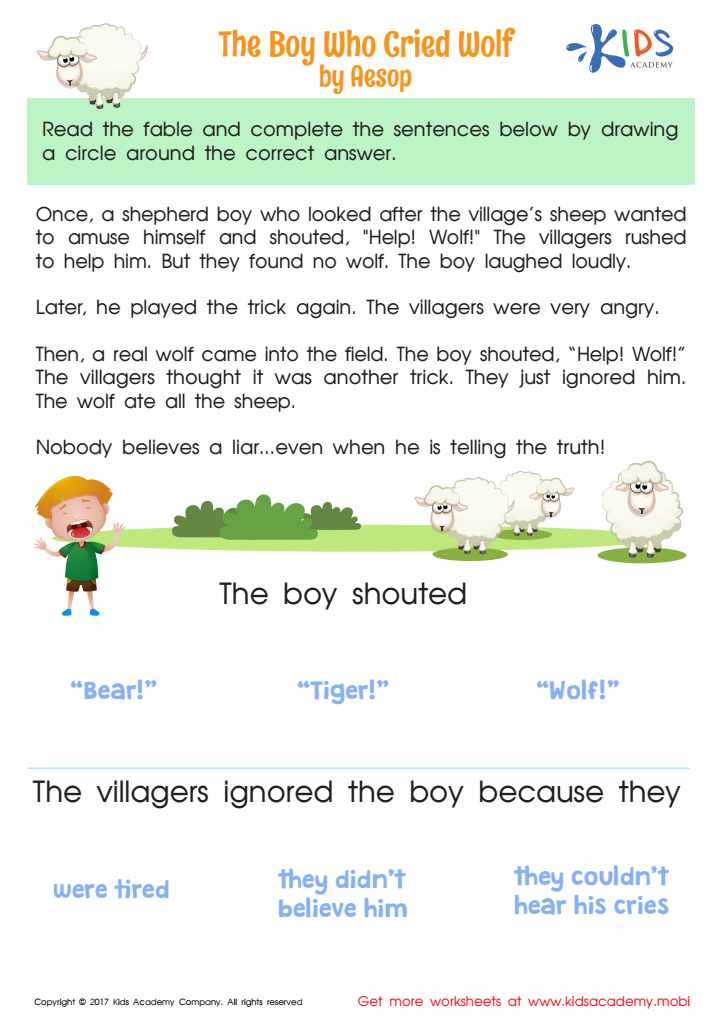
The Boy Who Cried Wolf Worksheet
 Assign to My Students
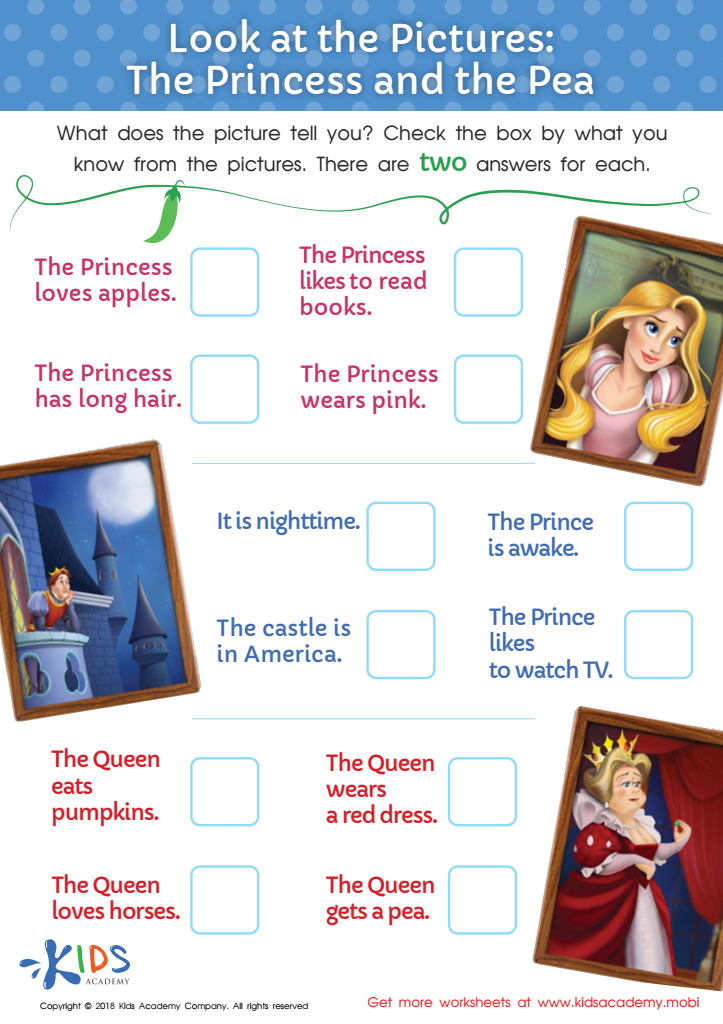
Look at the Pictures: The Princess and the Pea Worksheet
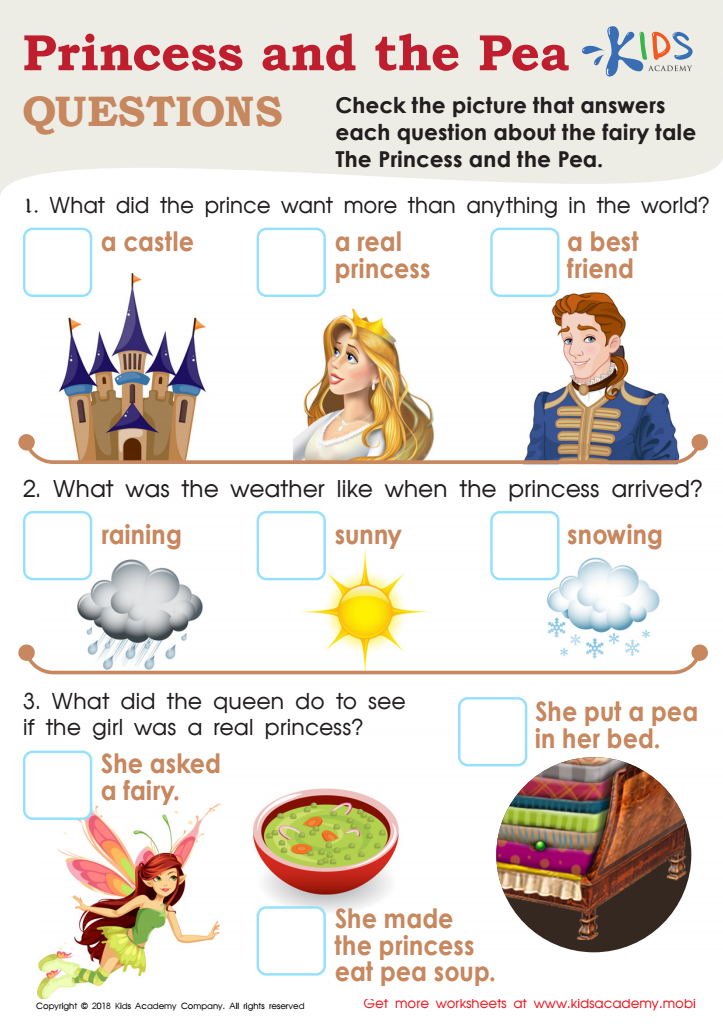
Princess and the Pea Questions Worksheet








Critical thinking is essential for children aged 3-6 as it lays the foundation for their future learning and problem-solving skills. At this age, children are naturally curious and eager to explore their environment. Normal reading, particularly that which encourages critical thinking, enhances this curiosity by allowing them to ask questions, make connections, and engage in thoughtful discussions about the stories they encounter.
Parents and teachers should care about this because early reading experiences shape cognitive development. Books that prompt analysis, prediction, and reflection can stimulate children's creativity and decision-making skills. As they encounter various characters, plots, and illustrations, they learn to differentiate between right and wrong, understand emotions, and develop empathy, fostering social skills essential for cooperative play.
Moreover, promoting critical thinking during early childhood prepares children for academic success. It equips them with the ability to process information independently, evaluate opinions, and approach challenges logically—skills which are increasingly important in our complex world. By prioritizing critical thinking in reading activities, parents and teachers can create a rich, engaging learning environment that not only strengthens literacy but also nurtures innovative and analytical thinkers for the future.








