Visual interpretation Normal Reading Fiction Worksheets for Ages 3-6
3 filtered results
-
From - To
Discover our engaging Visual Interpretation Normal Reading Fiction Worksheets designed specifically for children ages 3-6. These interactive resources help young learners enhance their comprehension and critical thinking skills through delightful stories and vibrant illustrations. Each worksheet encourages children to visualize and interpret the narrative, fostering a strong connection between text and imagery. As they work through various activities, kids will enjoy expanding their vocabulary, practicing creativity, and developing essential reading habits. Ideal for parents and educators seeking effective tools to support early literacy, these worksheets inspire a love for reading while promoting essential cognitive skills. Start your child's reading journey today!
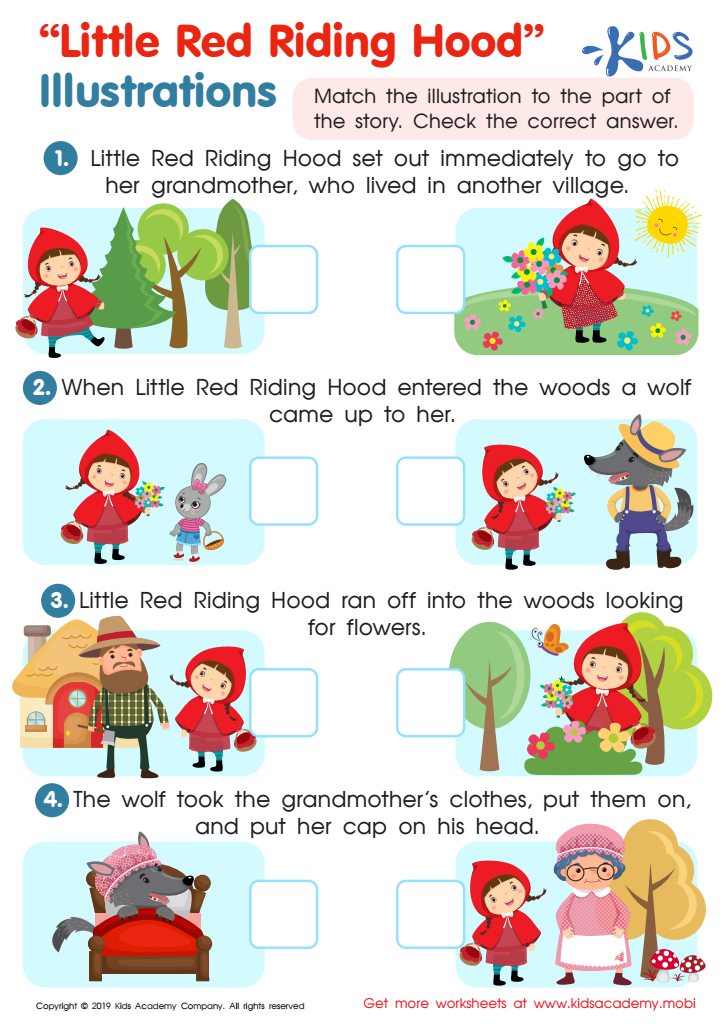
Little Red Riding Hood: Illustrations Worksheet
 Assign to My Students
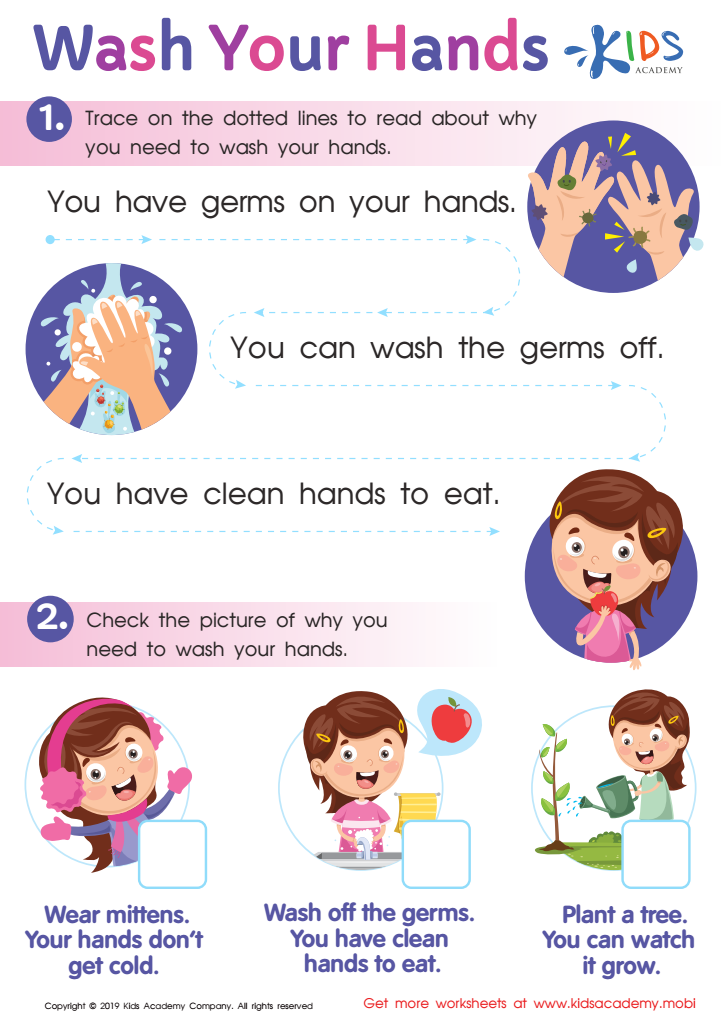
Wash Your Hands Worksheet
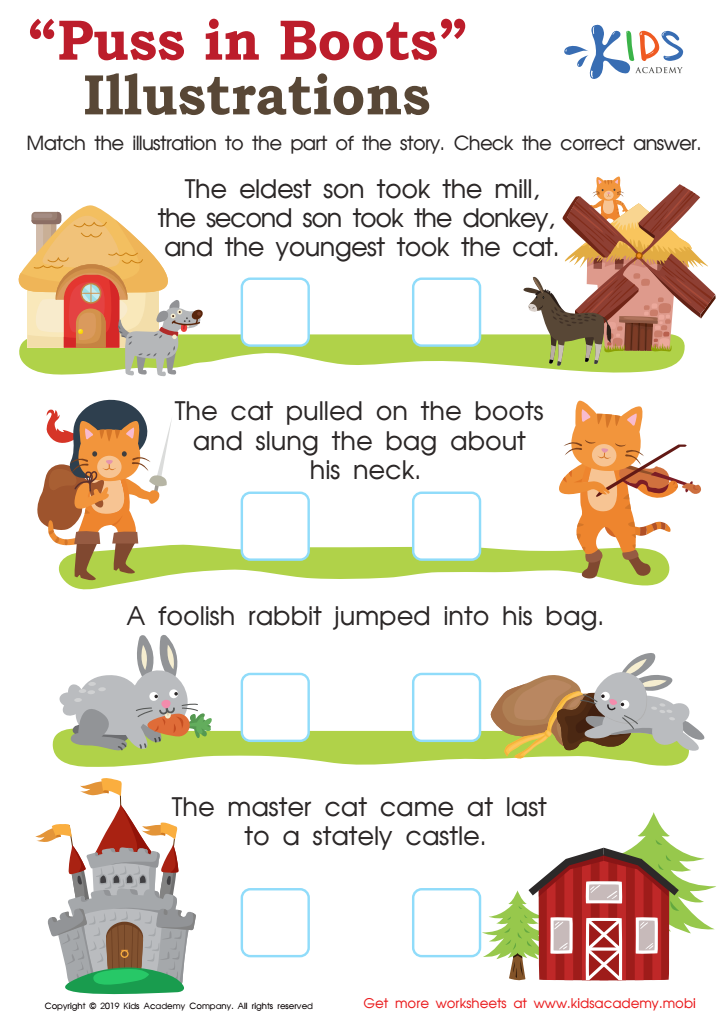
Puss in Boots Illustrations Worksheet







Visual interpretation plays a crucial role in early literacy development, particularly in engaging children ages 3-6 with fiction. During these formative years, young learners are naturally drawn to visual stimuli, making it essential for parents and teachers to recognize its significance in storytelling. Children at this age often learn to grasp narratives through pictures, which help bridge their understanding of words and meanings.
By focusing on visual interpretation, parents and teachers can enhance children's comprehension skills and stimulate their imagination. Engaging with picture books allows young readers to decode stories and develop preferences for characters and themes before they can fully grasp texts on their own. This exploration of visual elements fosters critical thinking, as children learn to analyze images and communicate their thoughts about the narrative.
Moreover, visual interpretation encourages discussions about emotions and experiences depicted in stories. These conversations nurture social-emotional development and foster a love for reading. By prioritizing visual interpretation in fiction, educators and parents set the foundation for a lifelong engagement with literature, nurturing not only proficient readers but also thoughtful and empathetic individuals. Therefore, integrating visual elements in early reading practices is a pivotal aspect of holistic education for young children.







