Filters

6 filtered results

Clear all filters
Favorites
With answer key
Interactive

6 filtered results

Difficulty Level

Grade


Enhance your child's reading skills with our engaging Reading Comprehension Rhyming Words Worksheets designed for ages 3-6. These fun-filled worksheets feature colorful illustrations and captivating rhyming words exercises that help young learners grasp phonics, improve vocabulary, and develop a love for reading. Perfect for preschool to kindergarten children, our worksheets provide an interactive and effective learning experience, fostering critical thinking and comprehension skills. Whether used at home or in the classroom, these resources support early literacy efforts, making reading both enjoyable and educational. Unlock the joy of learning to read with Kids Academy today!

Check out this FREE Trial Lesson on Rhyming Words for age 3-6!

Recognize Words that Rhyme

Favorites
With answer key
Interactive
  • 3-6
  • Reading comprehension
  • Rhyming Words
  • Normal
Poem: My New Kite Worksheet

Poem: My New Kite Worksheet

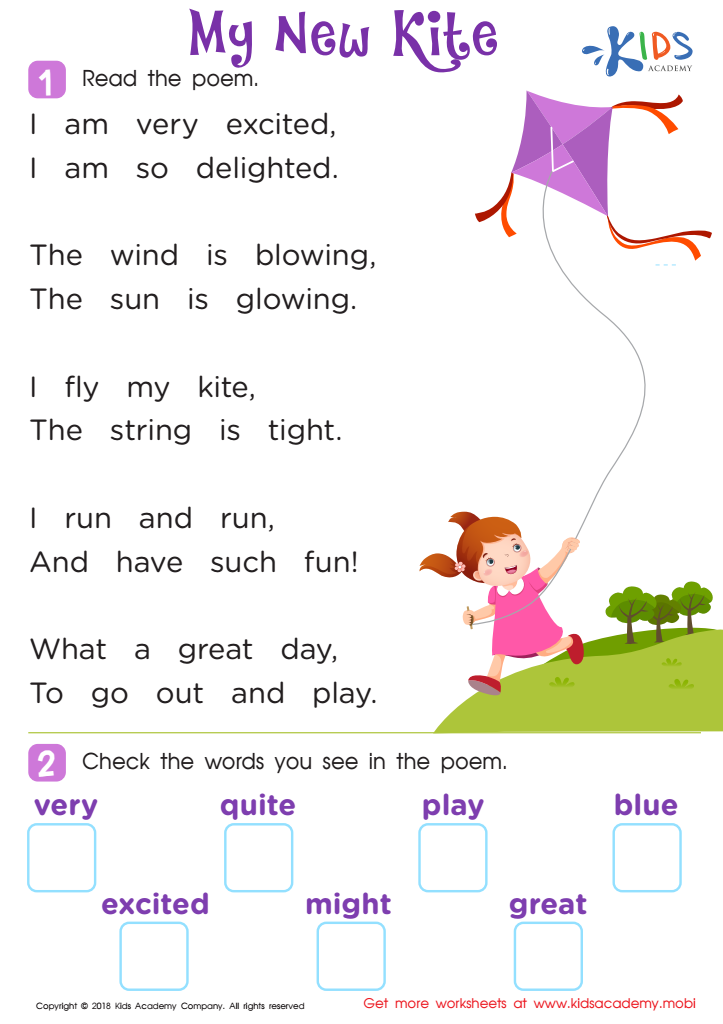
Read a cheerful poem with your child and have them check the boxes next to the words that appear. Then, ask them to identify rhyming words, noting that these won't appear at the bottom of the page. This is a delightful reading activity to help your child remember what they read.
Poem: My New Kite Worksheet
Worksheet
Rhyming Words Worksheet PDF

Rhyming Words Rhyming Worksheet

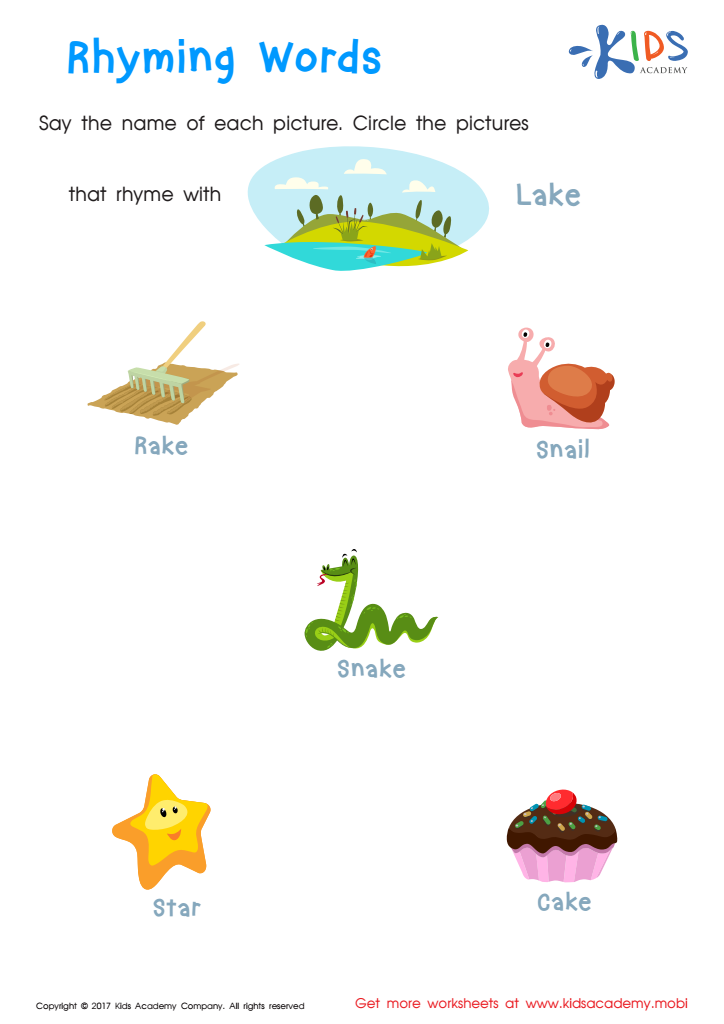
This worksheet is great for honing pre-reading skills. It helps kids make connections between pictures and written words, use problem-solving, and recognize sounds and words that rhyme. Have fun exploring rhyming words with your child, and they'll be rhyming in no time!
Rhyming Words Rhyming Worksheet
Worksheet
Picture Rhymes Printable

First Words: Picture Rhymes Worksheet
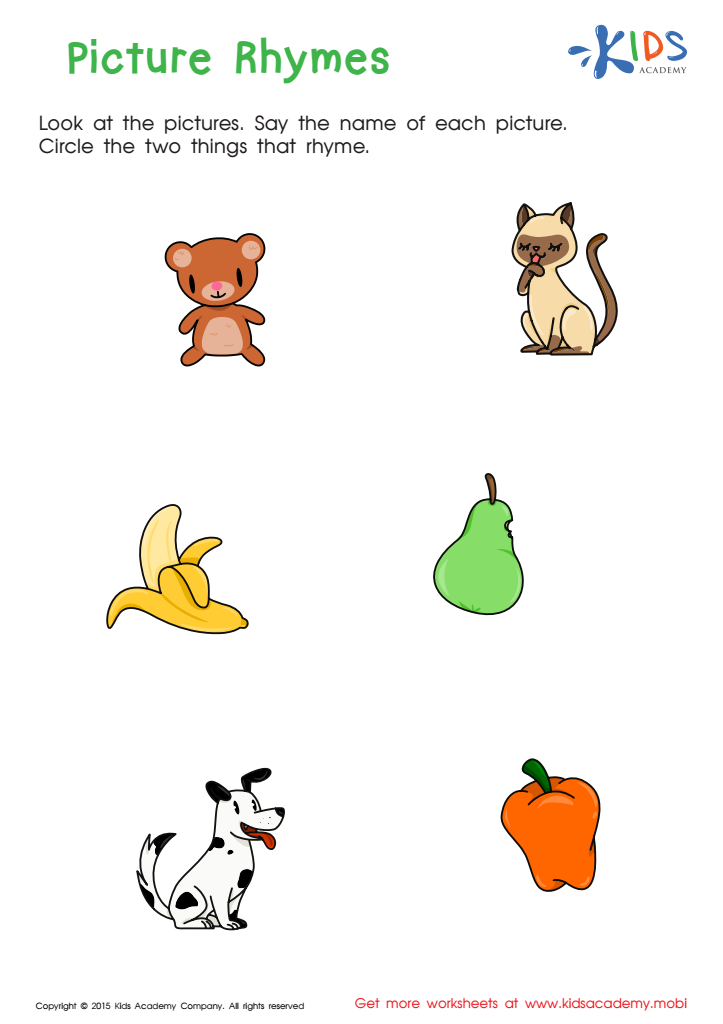
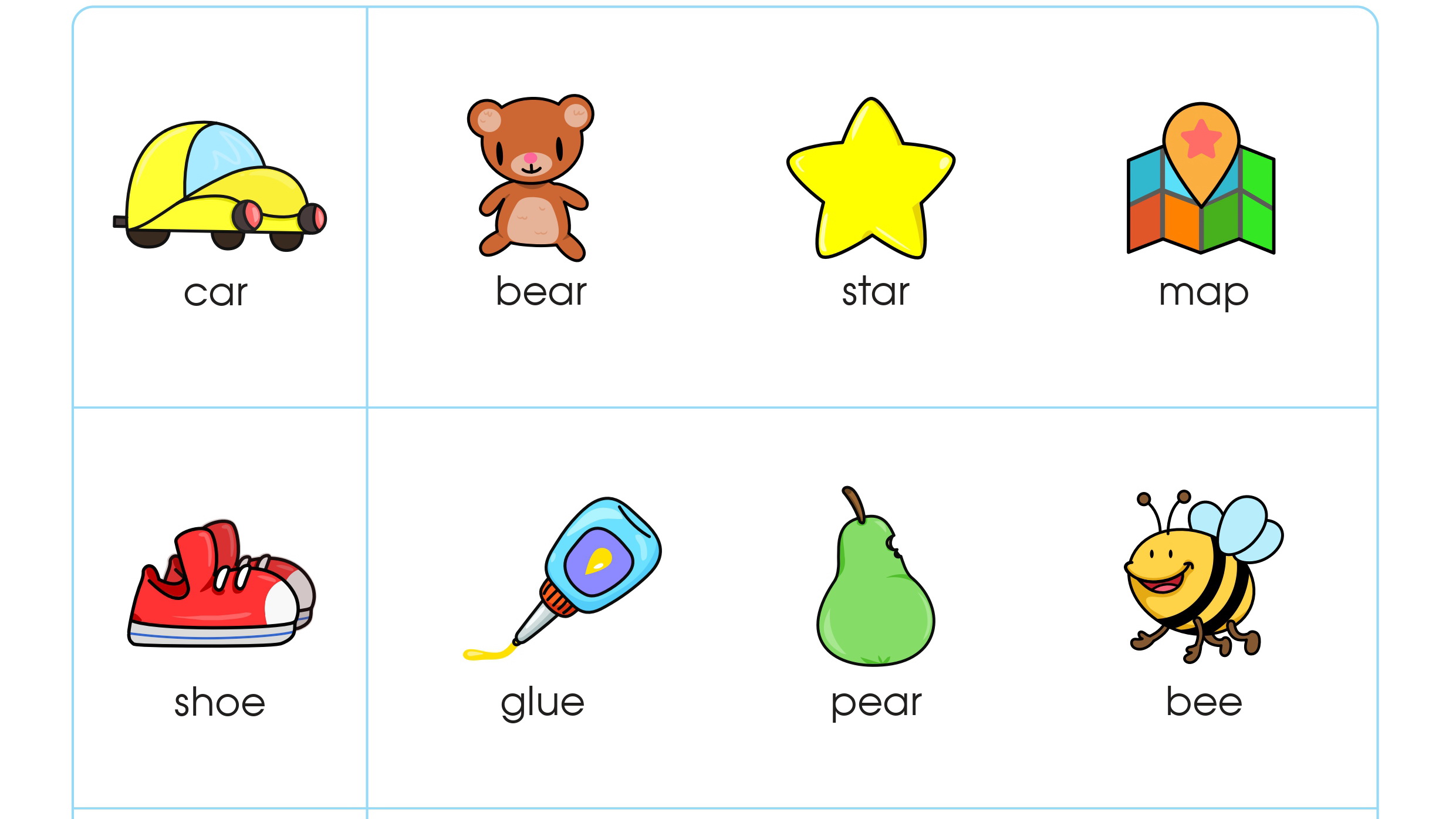
Rhyming helps kids understand language, read and write better. This printable worksheet boosts problem-solving and cognitive skills with vibrant pictures. It teaches kids to identify words, recognize rhymes, complete mental tasks and write words. An extra activity: show them how rhyming words share some of the same letters.
First Words: Picture Rhymes Worksheet
Worksheet
Rhyming Words Worksheet for Kindergarten

Time to Rhyme Rhyming Worksheet

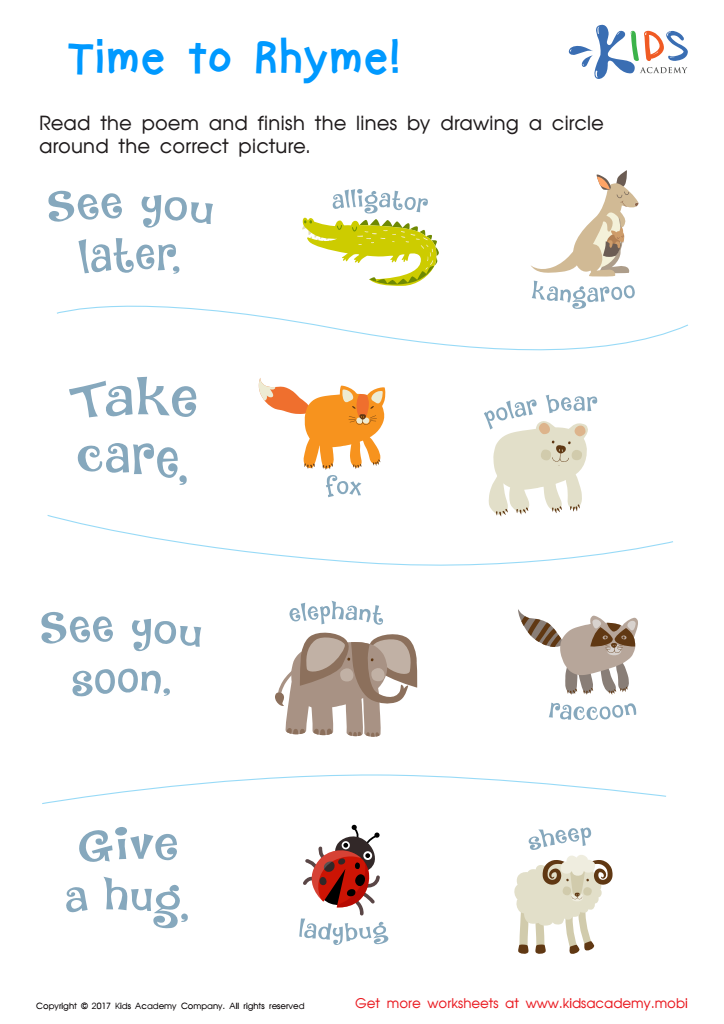
This worksheet helps kids learn catchy sayings with rhymes, notice words and sounds that rhyme, and use problem solving to solve expressions. By using these expressions in everyday talk, kids gain the repetition needed to internalize the skills they've learned. Check out our nursery rhymes to further support them!
Time to Rhyme Rhyming Worksheet
Worksheet
Rhyming Words in Poems Worksheet

Rhyming Words in Poems Worksheet

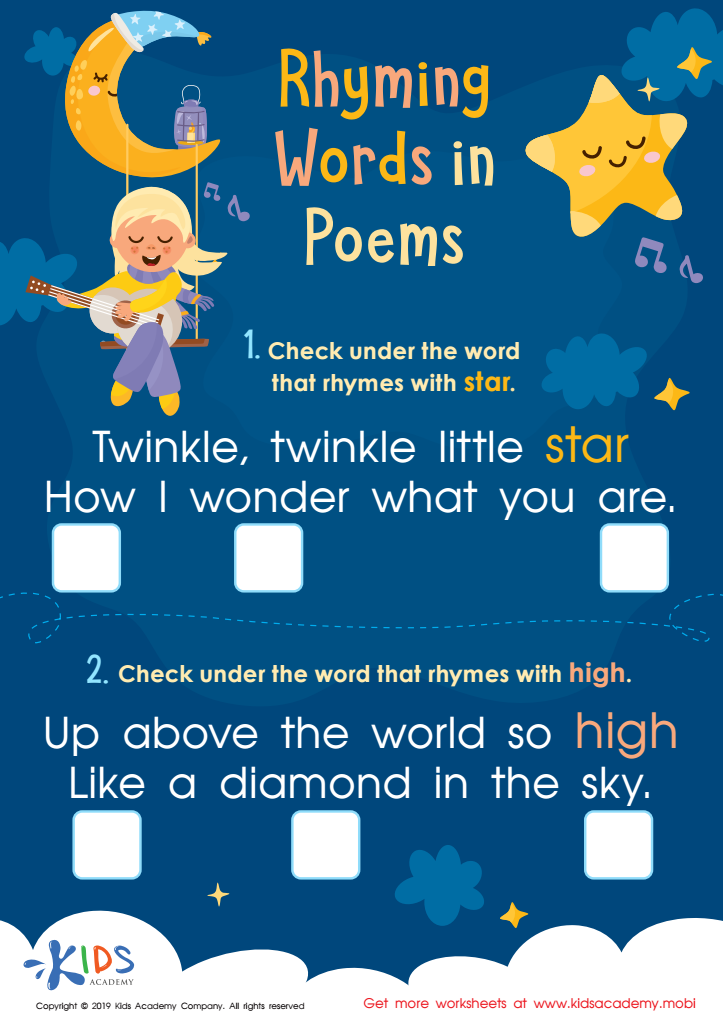
If your kids love poems, get them to recite some to you or have them write their own. Use this worksheet to help them find words that rhyme. Read the short poems and have them check the highlighted words for rhyming.
Rhyming Words in Poems Worksheet
Worksheet
Finish Rhyming Poem Worksheet


Finish Rhyming Poem Worksheet
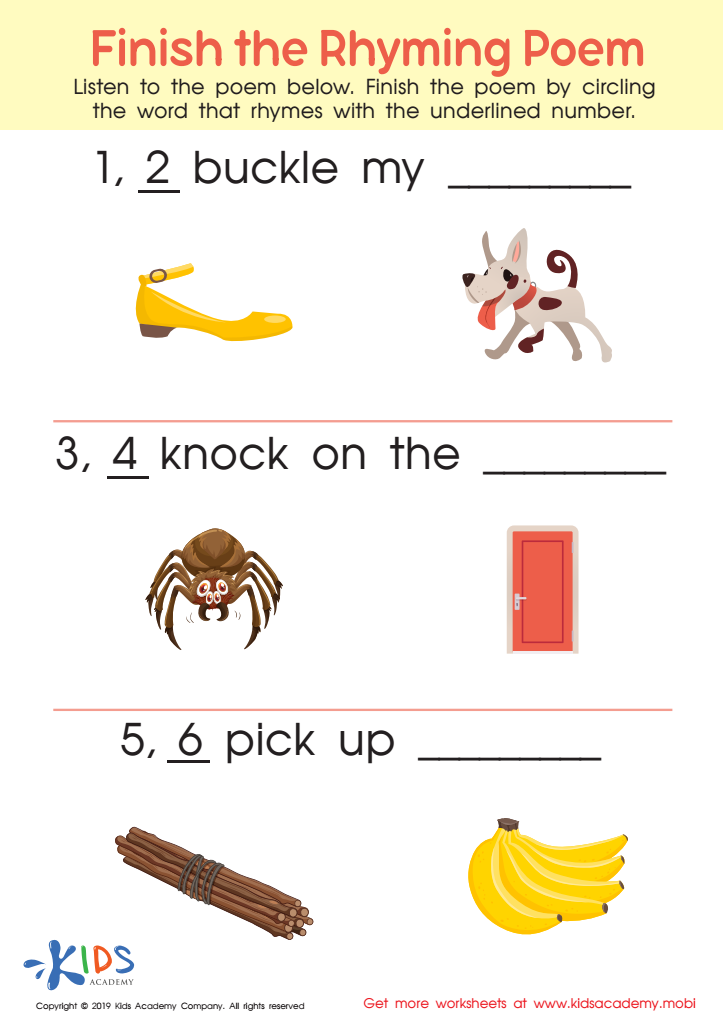
Poems are a great way to express emotions and spark imagination. Does your child enjoy poetry and even have their own creations? If so, they'll love this worksheet. It's a great way to develop their rhyming skills. Challenge them to find and circle the words that rhyme with the ones underlined.
Finish Rhyming Poem Worksheet
Worksheet


Reading comprehension is vital for young learners ages 3-6, and incorporating normal rhyming words can significantly enhance this developmental stage. For parents and teachers, here are compelling reasons to prioritize reading comprehension through rhyming words.

Firstly, rhyming words help to build phonemic awareness, an essential pre-reading skill. By noticing the patterns and sounds in rhymes, children become more attuned to the structure of words. This awareness assists them in decoding words, an initial step in fluent reading.

Additionally, engaging with rhymes enhances vocabulary and language skills. As children listen to and recite rhyming words, they encounter new terms in context, aiding their understanding and retention. Rhyming stories and poems are often more memorable, reinforcing learning through repetition.

Furthermore, enjoying rhymes together can enhance parent-child or teacher-student bonding. The playful, rhythmic nature of rhymes makes reading fun and interactive, fostering a positive attitude toward learning.

Lastly, understanding rhythm and rhyme can improve cognitive abilities and listening skills. Children need to focus on the sounds and meanings, boosting concentration and comprehension.

Parents and teachers should nurture reading comprehension with rhyming words to lay a strong foundation for literacy, a joy for reading, and essential language development.