
Categorization skills Normal Animals Worksheets for Ages 3-6
3 filtered results
Difficulty Level
Grade
Age
-
From - To
Subject
Activity
Standards
Introduce your little explorer to the world of animals with our engaging "Categorization Skills Normal Animals Worksheets" designed for ages 3-6. Perfect for early learners, these worksheets help children develop essential categorization and critical thinking skills by grouping normal household and farm animals. Through fun and interactive activities, youngsters enhance their understanding of animal characteristics, fostering cognitive development and a love for nature. From sorting to matching, these printable worksheets provide endless educational entertainment for curious minds. Start your child's learning journey today with our expertly crafted materials that make mastering categorization both enjoyable and rewarding.
Favorites
With answer key
Interactive
 Assign to My Students
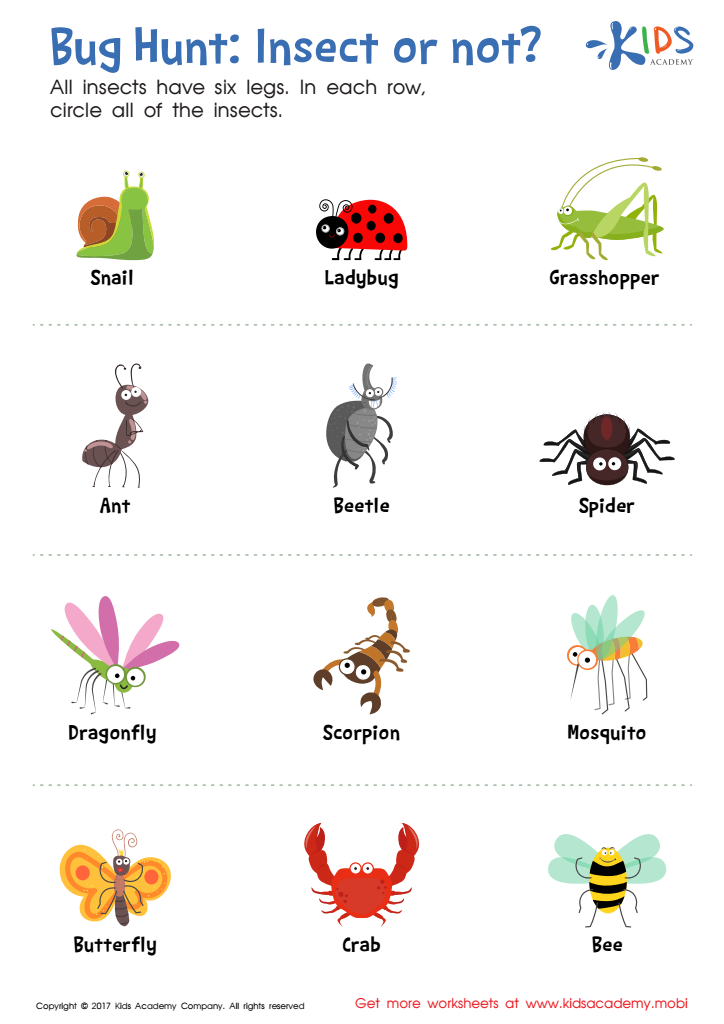
Insect or Not? Worksheet
Worksheet
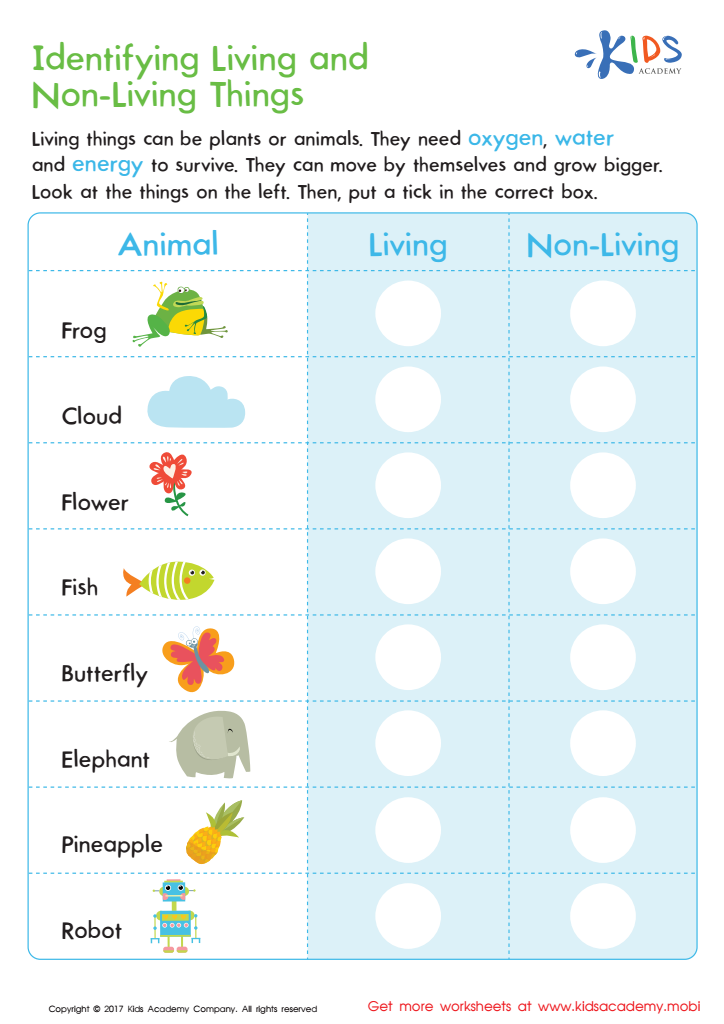
Identifying Living or Non–living Worksheet
Help your child learn to sort and categorize in a new way! Teach them to classify things as living or non-living using this worksheet. It's the perfect way to build their scientific understanding, and to have some learning fun! Print this worksheet and watch them discover the world of science!
Identifying Living or Non–living Worksheet
Worksheet
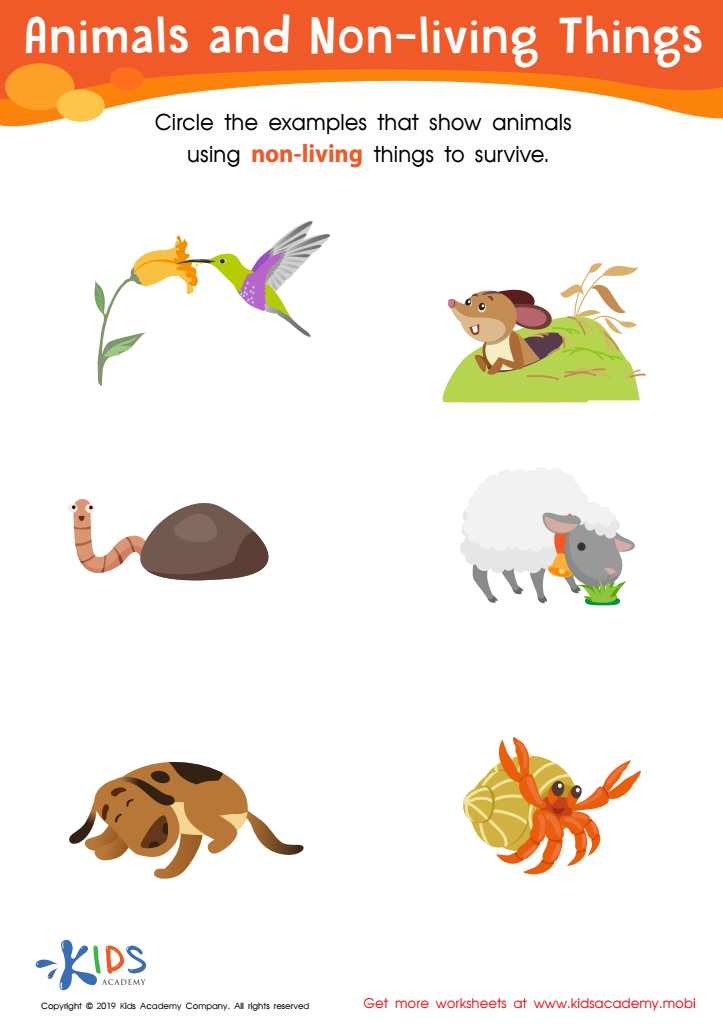
Animals and Non-Living Things Worksheet
People and animals both require more than food to survive. We need shelter, clothing and water, while animals use non-living things like rocks and trees. Ask your kids what else is necessary to survive - then have them identify the objects in the worksheet and circle the examples of animals using non-living things.
Animals and Non-Living Things Worksheet
Worksheet
Join Kids Academy for Free
Who is primarily going to use this learning content?



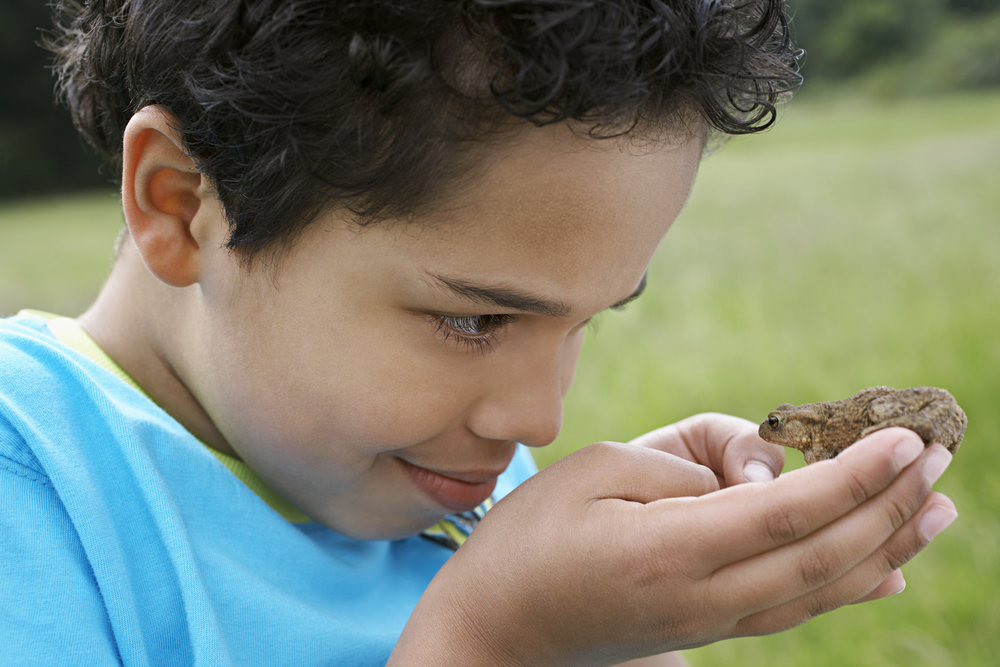




Categorization skills are essential cognitive abilities that enable young children to group objects based on common characteristics. For ages 3-6, developing these skills through normal animal categorization provides a solid foundation for more advanced intellectual functions. Firstly, categorizing animals helps children enhance their organizational and memory skills, as they learn to sort animals by various features such as size, habitat, and type (e.g., mammals, birds).
Secondly, it supports language development. Discussing and identifying different animals encourages children to expand their vocabulary with new words and concepts. They learn to describe similarities and differences, fostering better communication skills. Additionally, recognizing and categorizing animals promotes observational skills. Children become keen observers of the natural world, noticing details that distinguish different species.
Lastly, understanding animal categories helps children make sense of their environment and the world around them. It lays the groundwork for scientific thinking, encouraging curiosity and inquiry. This foundational knowledge is crucial not only for further academic learning but also for practical daily experiences.
Hence, parents and teachers should prioritize cultivating categorization skills through normal animal classification, as it enriches cognitive, linguistic, and observational capabilities, equipping children with tools for future learning and comprehension.








