Basic astronomy knowledge Normal Science Worksheets for Ages 3-6
3 filtered results
-
From - To
Explore the wonders of space with our "Basic Astronomy Knowledge Normal Science Worksheets" designed for ages 3-6! These engaging worksheets introduce young learners to fundamental concepts of astronomy, such as planets, stars, and the moon, fostering a love for science and exploration. Each activity is thoughtfully crafted to promote key skills like observation, critical thinking, and visual recognition, ensuring a hands-on learning experience. Perfect for parents and educators, these printable resources are designed to spark curiosity while developing foundational knowledge about the universe. Ignite your child's imagination and embark on an exciting journey through the cosmos with our fun, colorful worksheets!
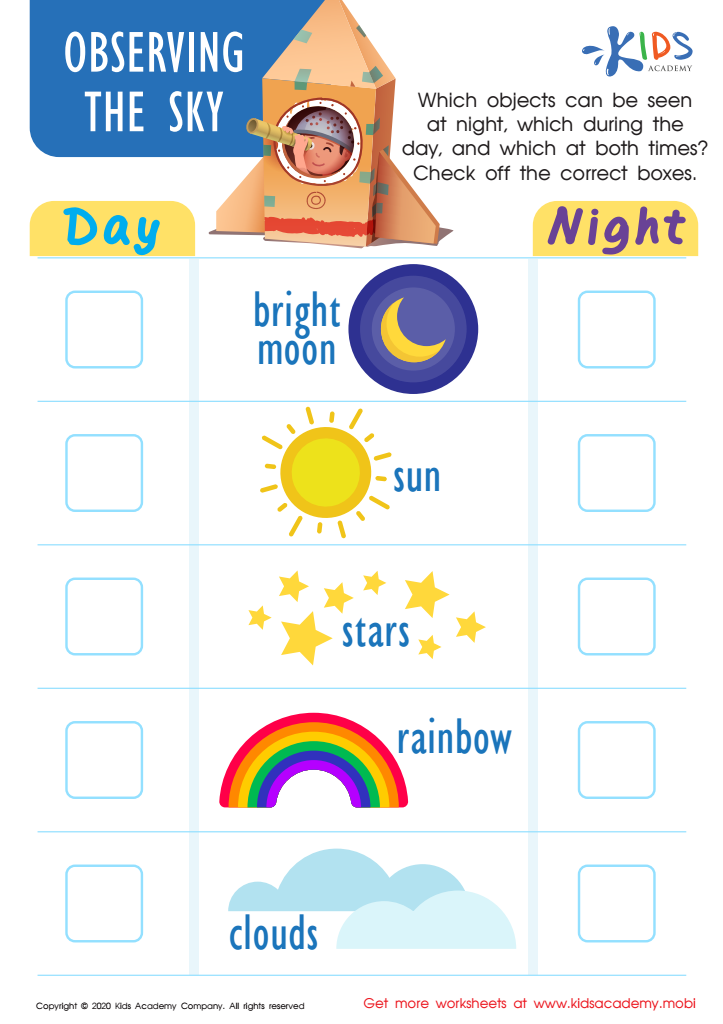
Observing the Sky Worksheet
 Assign to My Students
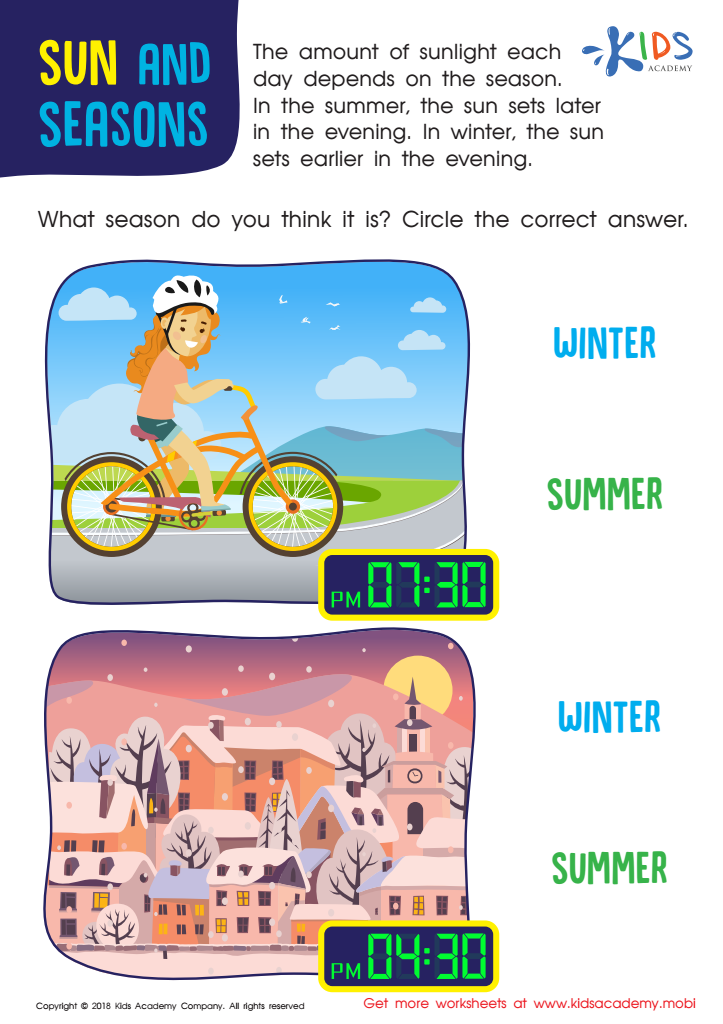
Sun and Seasons Worksheet
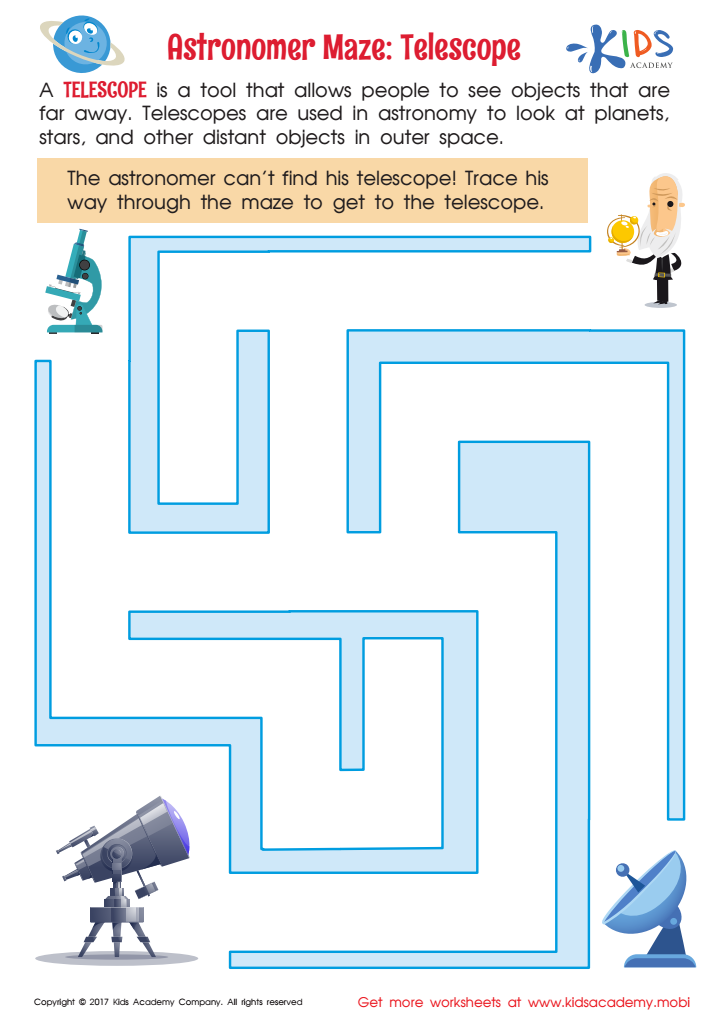
Astronomer Maze: Telescope Worksheet







Basic astronomy knowledge is crucial for young children aged 3-6 as it sparks curiosity and encourages a love for learning about the world beyond our planet. At this age, children are naturally inquisitive, asking questions such as “What is the moon?” or “Why do stars twinkle?” Understanding fundamental concepts of space, like the sun, moon, planets, and stars, fosters critical thinking and imaginative exploration.
Moreover, discussing astronomy aligns with early literacy and numeracy skills. Children can learn new vocabulary related to space, enhancing their language development, and they can explore shape and movement by identifying celestial bodies. Activities centered on astronomy, such as simple crafts or storytelling about constellations, promote creativity while reinforcing basic science concepts.
Additionally, knowledge of basic astronomy can lay the groundwork for values such as environmental responsibility and global awareness. As children learn about cycles, like day and night or the seasons, they also enhance their understanding of our world's interconnected systems. Therefore, for parents and teachers, fostering an early interest in astronomy not only supports cognitive development but also instills a sense of wonder and appreciation for the universe, encouraging lifelong learning and curiosity in young minds.







