Categorization skills Normal Science Worksheets for Ages 3-6
4 filtered results
-
From - To
Foster your child's cognitive development with our categorization skills worksheets designed for ages 3-6. These engaging Normal Science Worksheets help young learners recognize, sort, and categorize various objects based on attributes such as color, shape, size, and type. By practicing these fundamental skills, children enhance their ability to analyze and organize information, laying a strong foundation for future scientific understanding. Our worksheets are crafted to make learning fun and interactive, ensuring that kids remain engaged while improving key developmental skills. Build your child’s confidence and curiosity with our thoughtfully designed categorization activities.
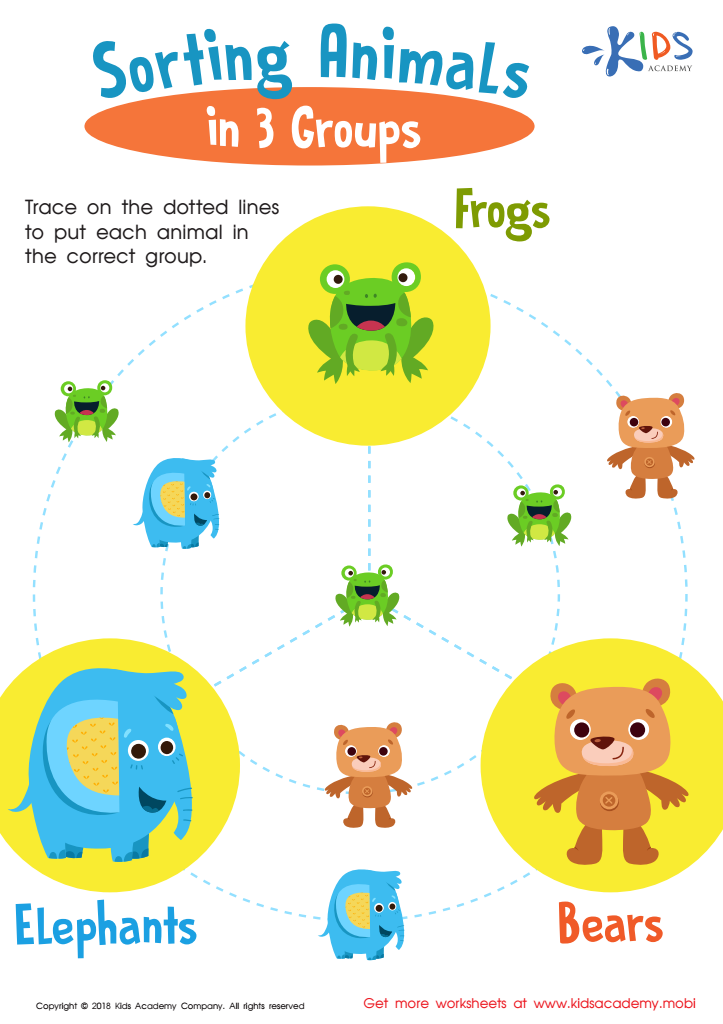
Sorting Animals in 3 Groups Worksheet
 Assign to My Students
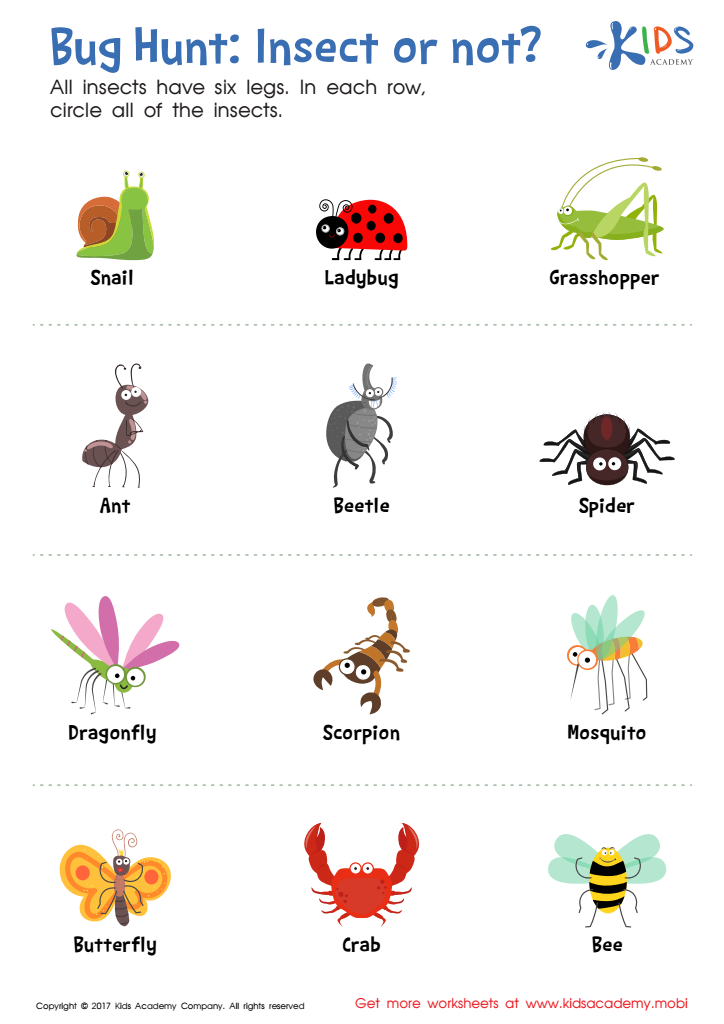
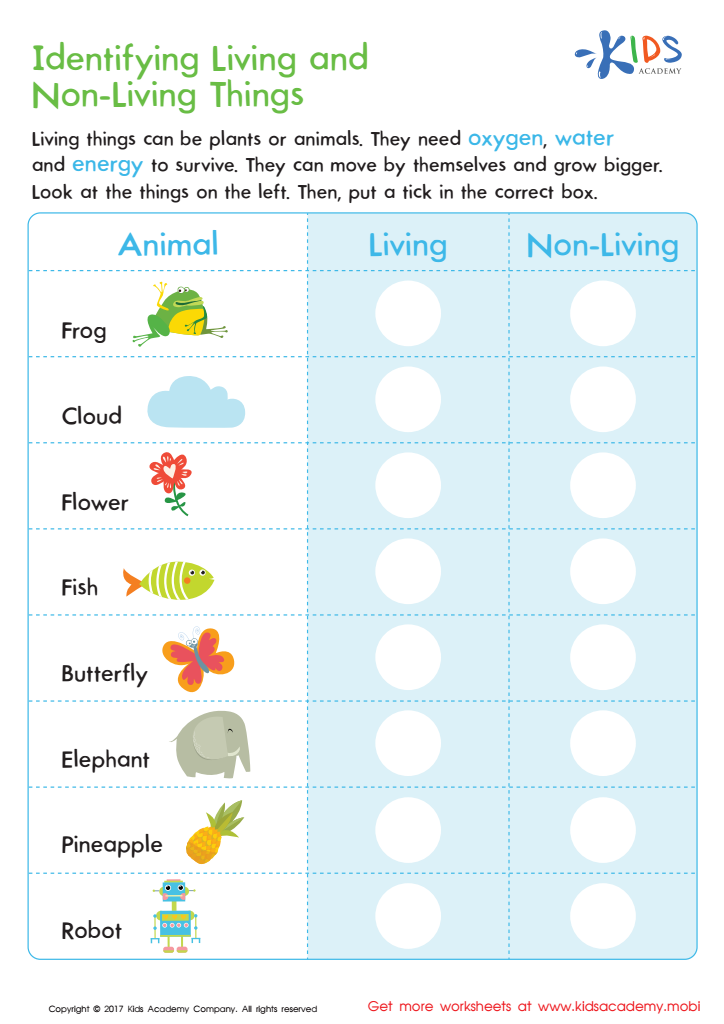
Identifying Living or Non–living Worksheet
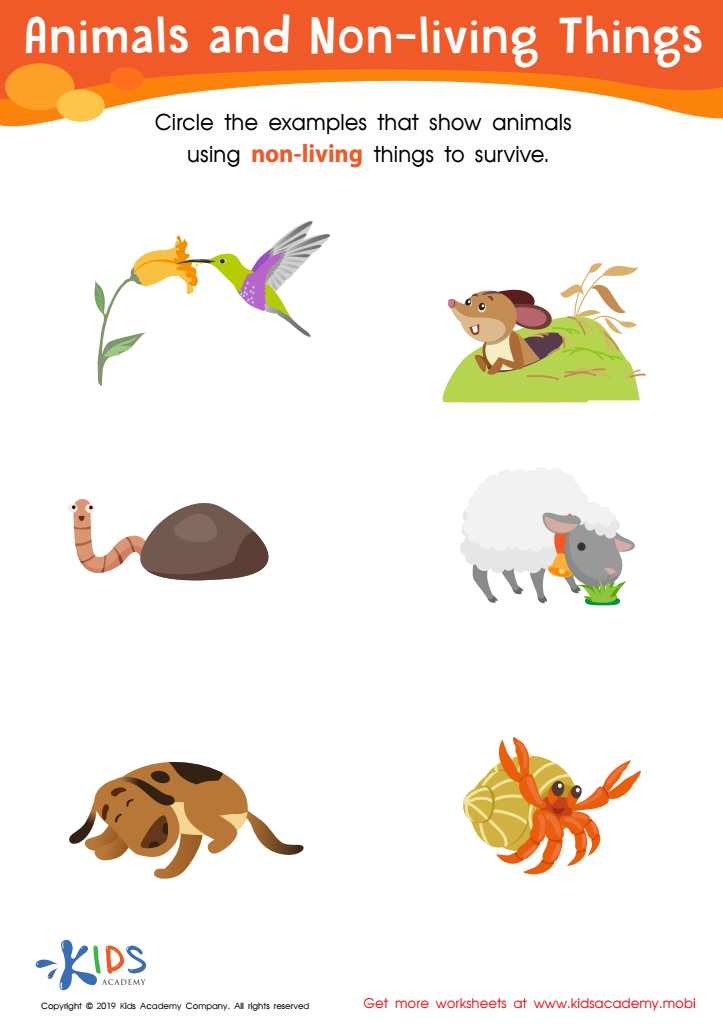
Animals and Non-Living Things Worksheet







Categorization skills are essential cognitive abilities that enable children to organize and interpret the vast amount of information they receive from their environment. For children aged 3-6, developing categorization skills lays the foundation for critical thinking and problem-solving in later years. By learning to group objects, ideas, and information based on shared attributes, children enhance their cognitive flexibility, pattern recognition, and memory.
Categorization in early childhood education, often referred to as "Normal Science," involves basic scientific thinking and processing, such as distinguishing sizes, shapes, colors, and functions. These activities not only make learning fun and engaging but also improve a child's attention to detail and observational skills. Moreover, they help children understand relational concepts, such as sorting objects by color or type, which is fundamental for mathematical thinking, literacy, and general knowledge accumulation.
For parents and teachers, fostering categorization skills can lead to heightened language development, as discussing categories expands vocabulary through descriptive and comparative language. Importantly, strong categorization skills also bolster a child’s sense of order and predictability in their world, promoting confidence and reducing anxiety in learning new concepts. Therefore, encouraging such skills through playful, structured activities creates a positive, rich early learning environment pivotal for future educational success.







