Developing analytical skills Normal Science Worksheets for Ages 3-6
3 filtered results
-
From - To
Unlock your child's potential with our "Developing Analytical Skills: Normal Science Worksheets for Ages 3-6" collection. Tailored specifically for early learners, these engaging worksheets foster critical thinking and a love for scientific exploration. Kids learn to observe, compare, and analyze through fun activities and age-appropriate challenges. With colorful illustrations and age-appropriate content, our worksheets offer a playful introduction to the world of science, helping little minds make big connections. Ideal for use at home or in the classroom, watch as your child's curiosity blooms and foundational skills flourish. Begin their scientific journey today!
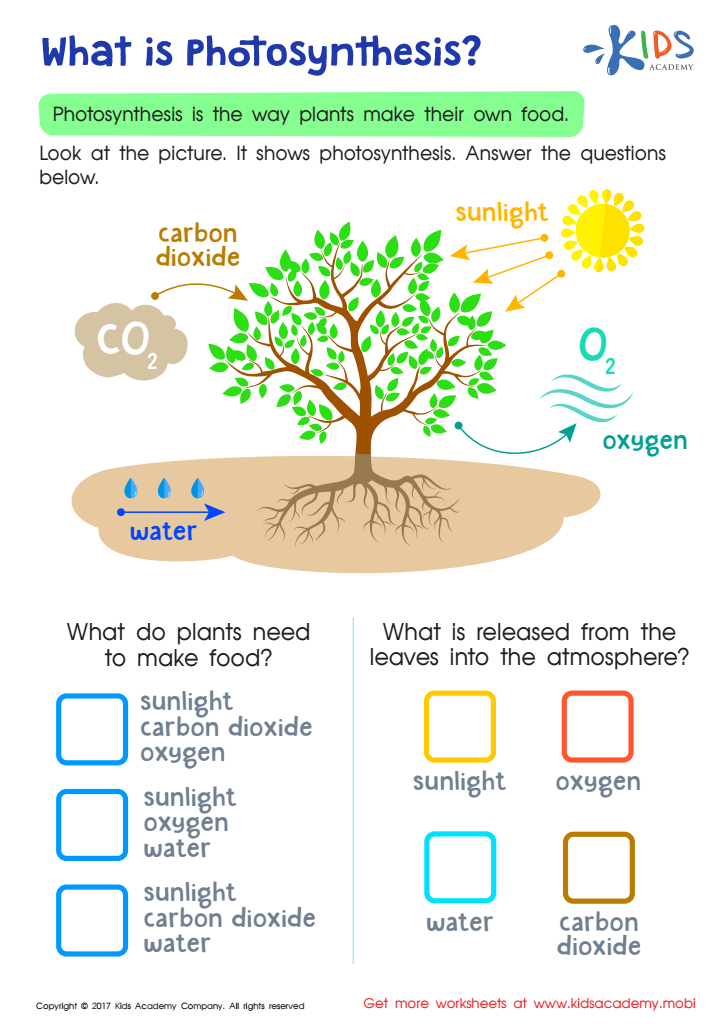
What is Photosynthesis Printable
 Assign to My Students
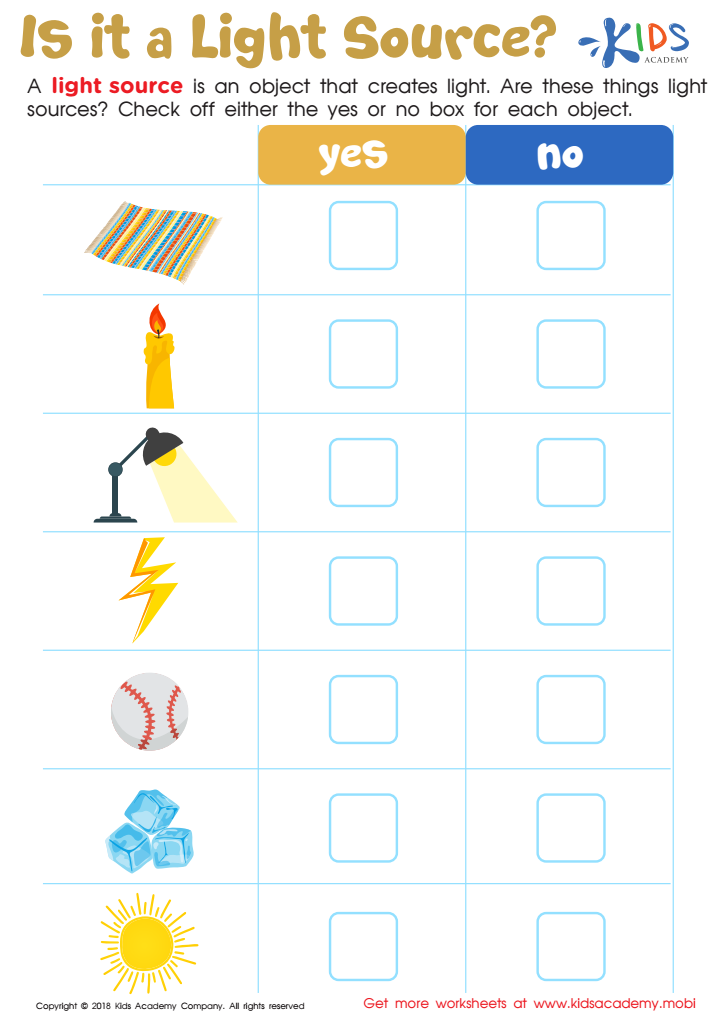
Is It a Light Source? Worksheet

How Light Travels Worksheet



.jpg)




Developing analytical skills in young children, ages 3-6, is crucial because it lays the foundation for critical thinking and problem-solving abilities that are essential for future academic success and everyday life. At this early stage, children's brains are highly malleable, meaning that experiences and learning play a significant role in cognitive development. By engaging with normal science—such as basic experiments, observations, and exploration—kids can develop curiosity and a systematic approach to understanding the world around them.
When parents and teachers encourage children to ask questions like "Why?" and "How?" they help kids become active learners. Analytical skills are not just about finding the right answer; they are about understanding processes, patterns, and the steps needed to arrive at a conclusion. This kind of thinking is invaluable as it fosters creativity and resilience.
Moreover, early analytical skill development supports other areas of learning, including reading comprehension and math. It also boosts confidence, as children learn that they are capable of figuring things out on their own. In an ever-evolving world driven by information and technology, these foundational skills help prepare children for challenges and opportunities in their educational journey and beyond. Therefore, it is essential for parents and teachers to nurture analytical abilities from a young age.







