Visual perception improvement Normal Science Worksheets for Ages 3-6
3 filtered results
-
From - To
Enhance your child's visual perception skills with our engaging Normal Science Worksheets designed for ages 3-6! These specially crafted worksheets incorporate fun activities that help develop visual discrimination, shape recognition, and spatial relations. Perfect for early learners, each worksheet promotes critical thinking and observation skills through colorful images and interactive exercises. By completing these worksheets, children will become more adept at identifying patterns and differences, essential skills for future learning. Ideal for parents and educators alike, our resources foster a love for science while improving visual perception. Explore the exciting world of learning today and set the foundation for your child’s educational journey!
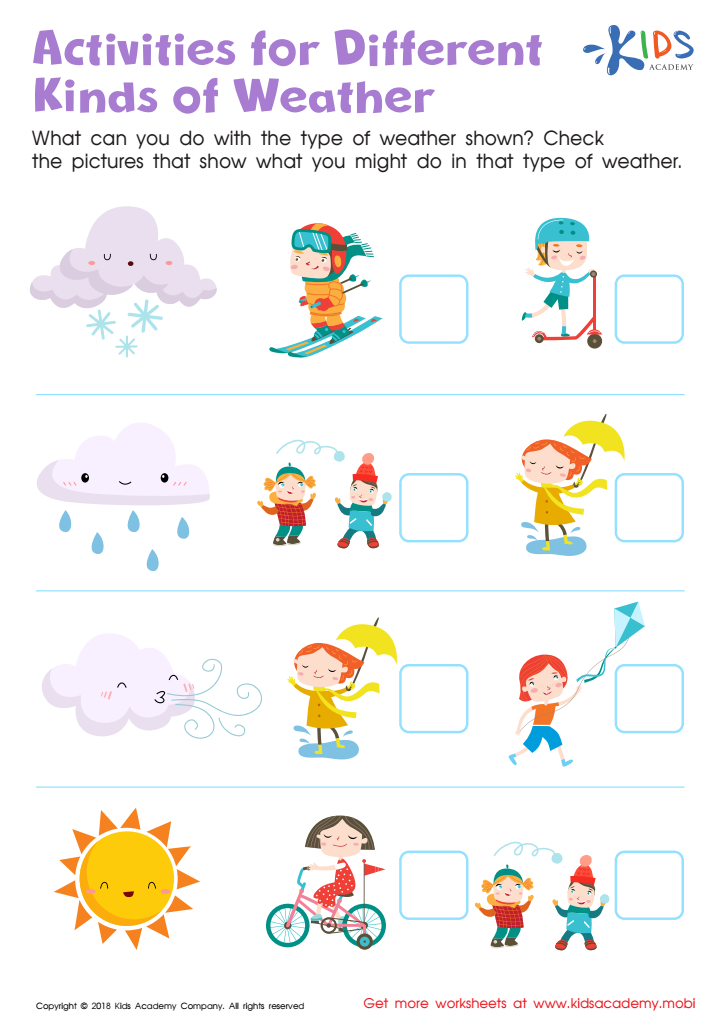
Activities for Different Kinds of Weather Worksheet
 Assign to My Students
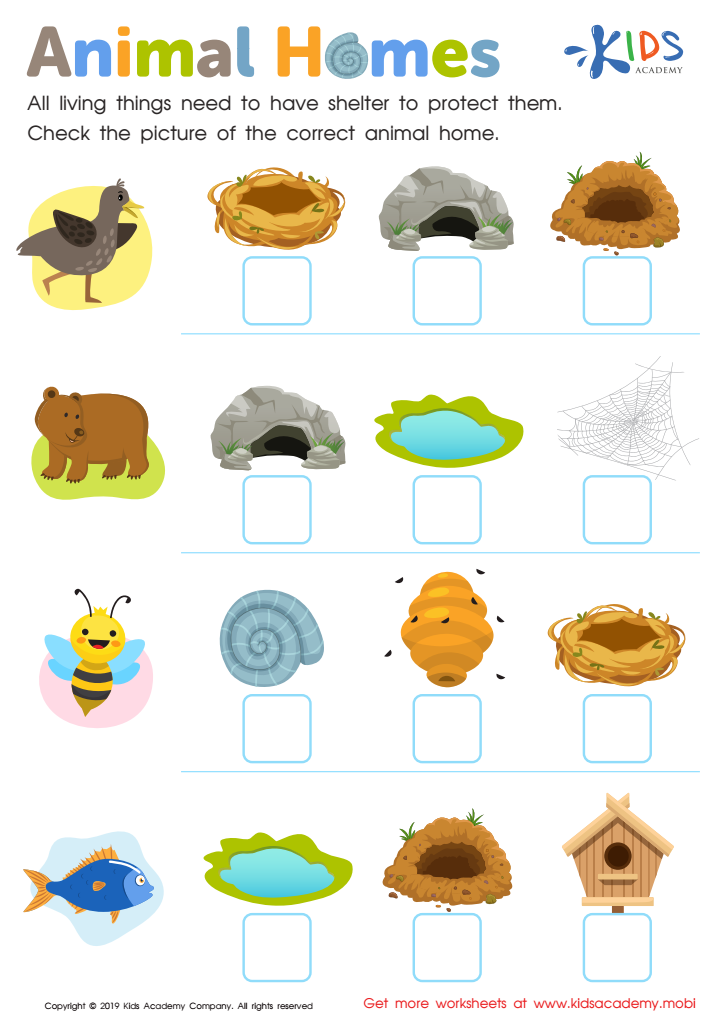
Animal Homes Worksheet
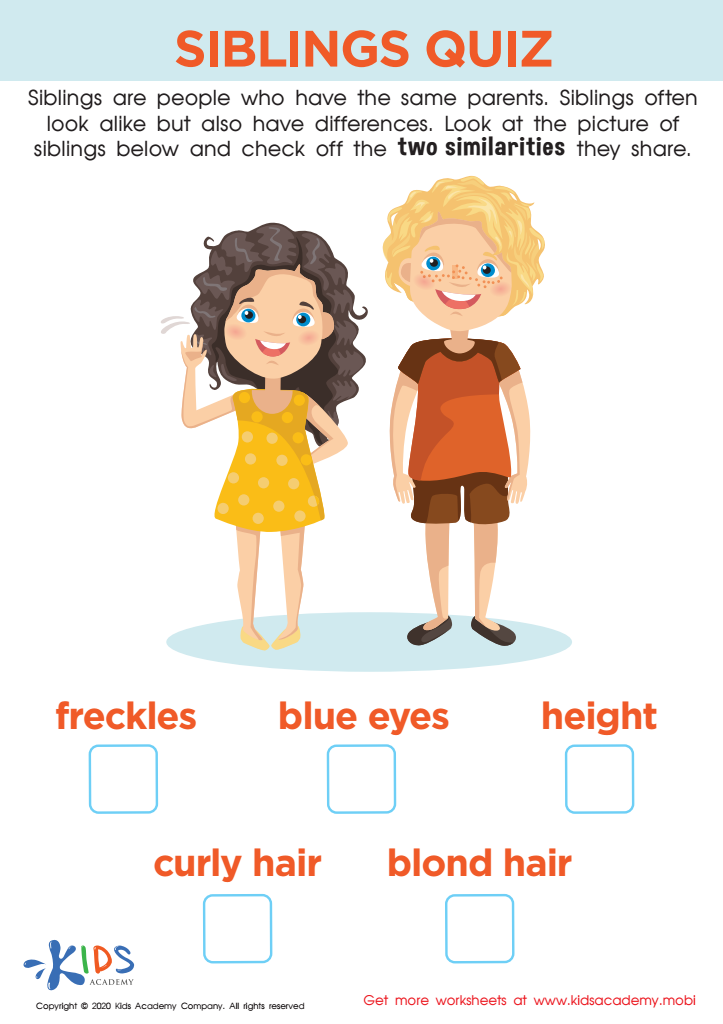
Siblings Quiz Worksheet



.jpg)




Visual perception is crucial for young children as it significantly impacts their learning and developmental milestones, especially for ages 3-6. During these formative years, children are continually interpreting visual information, which aids in understanding their environment and enhances cognitive development. Parents and teachers should care about improving visual perception in children, as it lays the foundation for essential skills in literacy and mathematics, impacting their academic success.
Improved visual perception allows children to recognize letters, numbers, shapes, and patterns more efficiently, facilitating reading and writing skills. Moreover, these skills help them follow multi-step instructions and engage in activities that require hand-eye coordination, crucial for tasks like cutting with scissors and tying shoelaces.
Physical activities, arts and crafts, and educational games can significantly enhance visual perception abilities, yielding long-term benefits. Parents and teachers play a vital role in providing supportive environments and resources that encourage exploration and development in this area. By prioritizing visual perception improvement, they contribute to children's overall learning readiness, boost their confidence, and prepare them for future academic challenges, nurturing a love for learning that lasts a lifetime.







