
Weather Vocabulary Normal Science Worksheets for Ages 3-6
3 filtered results
Difficulty Level
Grade
Age
-
From - To
Subject
Activity
Standards
Enhance your child’s understanding of weather with our Weather Vocabulary Normal Science Worksheets designed for ages 3-6. These engaging worksheets introduce young learners to essential weather terms through fun activities and vibrant illustrations. Perfect for early learners, they'll explore concepts like rain, sunshine, clouds, and more, helping to develop their scientific curiosity and vocabulary. Our printable worksheets are a fantastic resource for both teachers and parents seeking to make early science education interactive and enjoyable. Cultivate your child's interest in the world around them while building foundational science skills with Kids Academy's premium educational resources.
Favorites
With answer key
Interactive
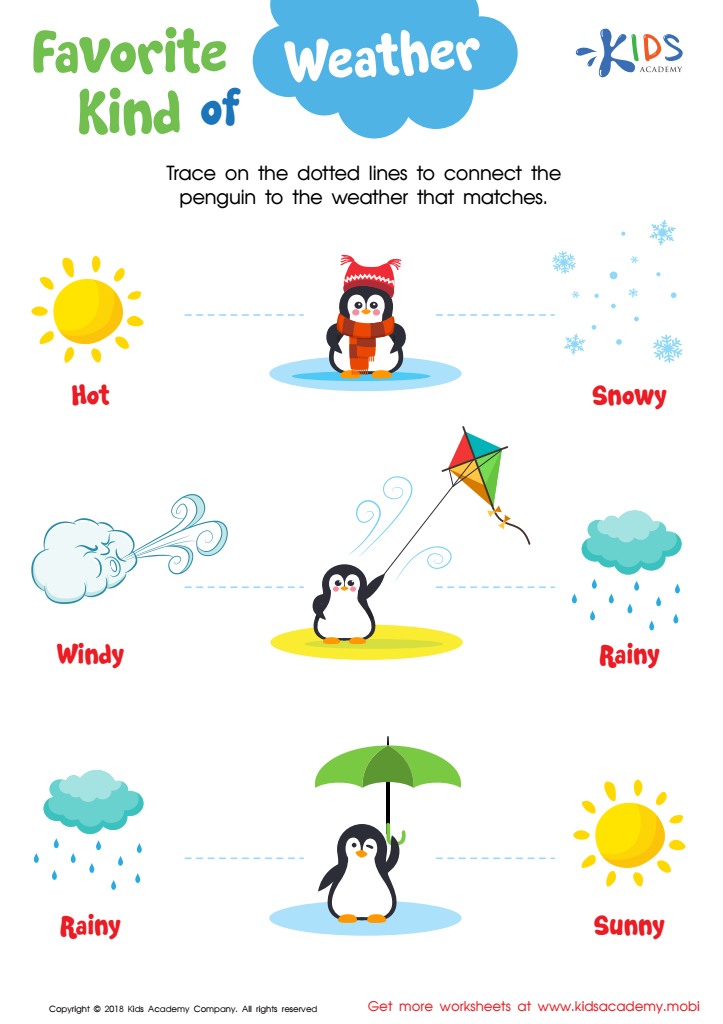
Favorite Kind of Weather Worksheet
!
Help your child understand weather and seasons with this fun worksheet featuring a cute penguin. They'll learn to recognize types of weather and associate them with seasons. To practice their fine motor skills, they'll trace lines to select the right seasons and weather. Kids will make a new friend while broadening their knowledge of nature.
Favorite Kind of Weather Worksheet
Worksheet
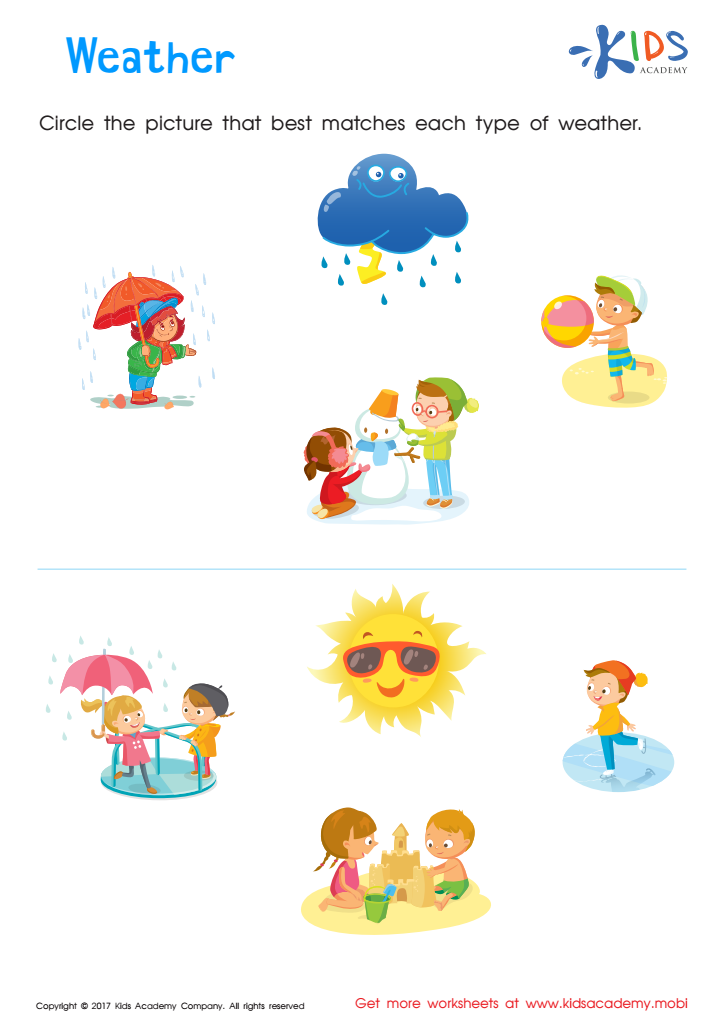
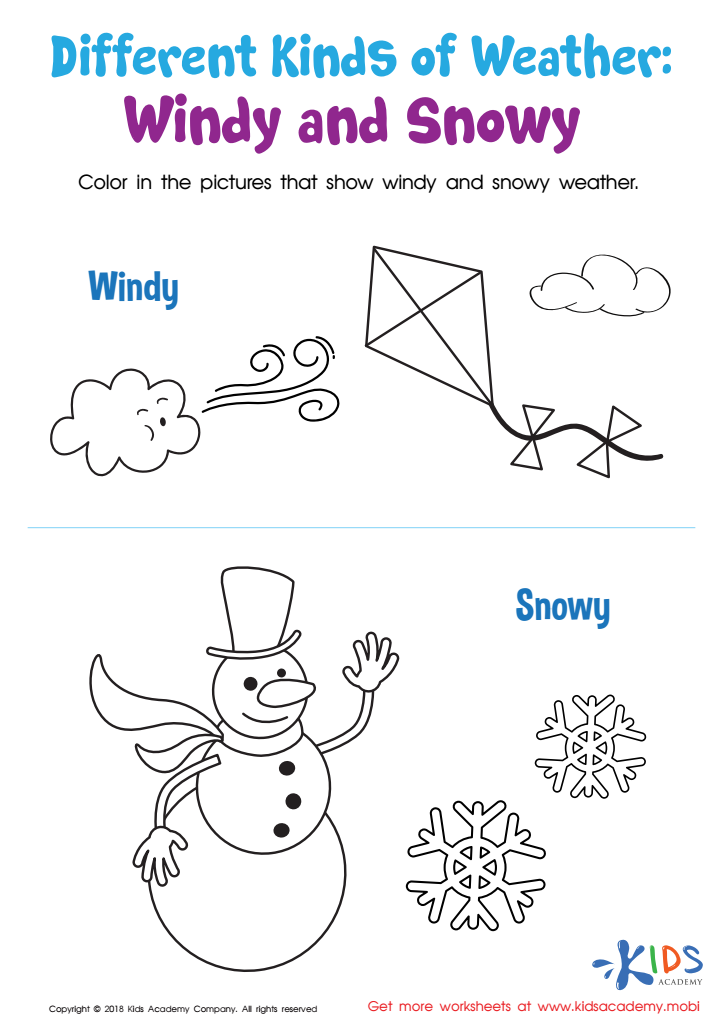
Different Kinds of Weather: Windy and Snowy Worksheet
Invite your little learner to practice their fine motor skills and learn about nature with this fun and charming PDF worksheet! Reinforce weather patterns and examine their environment as they color, giving them a foundation for understanding how weather affects them. No matter the weather, your learner will have a blast!
Download (PDF)
 Assign to My Students
Assign to My Students
Different Kinds of Weather: Windy and Snowy Worksheet
Worksheet
Join Kids Academy for Free
Who is primarily going to use this learning content?



.jpg)




Understanding weather vocabulary is crucial for young children, ages 3 to 6, for several important reasons. First, weather impacts daily life significantly. When children know terms like "sunny," "rainy," "cloudy," and "windy," they can better understand and discuss their daily experiences. This helps in developing their communication and language skills, key components in early childhood education.
Second, learning about weather fosters curiosity and scientific thinking. It prompts children to observe their environment, ask questions, and make simple predictions—skills foundational to the scientific method. Talking about changes in the weather can lead to discussions about cause and-effect, reinforcing critical thinking skills at a time when their brains are most receptive to new information.
Third, it enhances safety awareness. Knowing basic weather terms and concepts helps children comprehend the importance of appropriate clothing and behaviors during different weather conditions, thus promoting their well-being.
Finally, weather topics often interconnect with various educational themes, such as seasons, animals, and daily routines, providing a holistic learning approach. Weather-related activities like weather charts or simple experiments can make learning interactive and fun, thus keeping young learners engaged.
In summary, incorporating weather vocabulary into early education provides linguistic development, stimulates scientific inquiry, enhances safety, and enriches overall learning.







