Phonics Skills Normal Tracing Words Worksheets for Ages 3-6
3 filtered results
-
From - To
Introduce your child to the joy of reading with our Phonics Skills Normal Tracing Words Worksheets for ages 3-6. These beautifully designed worksheets help young learners master essential phonics skills through the engaging activity of tracing words. Each worksheet supports visual recognition, improves fine motor skills, and strengthens early reading abilities. Aligned with educational standards, our tracing words phonics worksheets are perfect for the classroom or at-home learning, providing a solid foundation for your child's literacy journey. Fun, effective, and developmentally appropriate, our resources ensure your little one enjoys learning phonics!
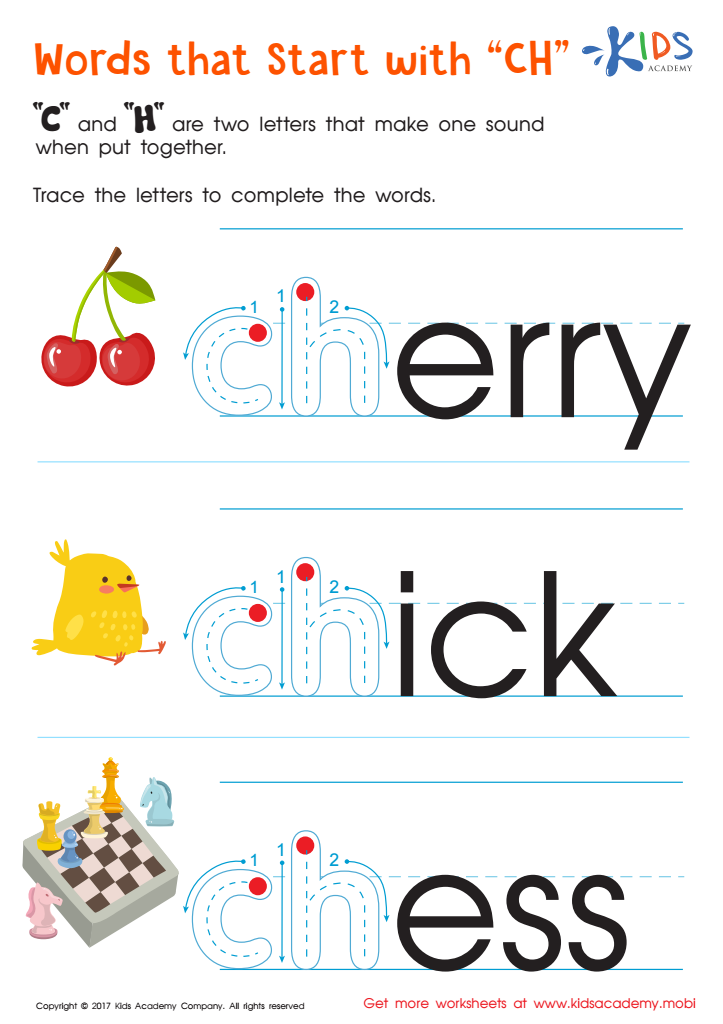
Words That Start with "ch" Spelling Worksheet
 Assign to My Students
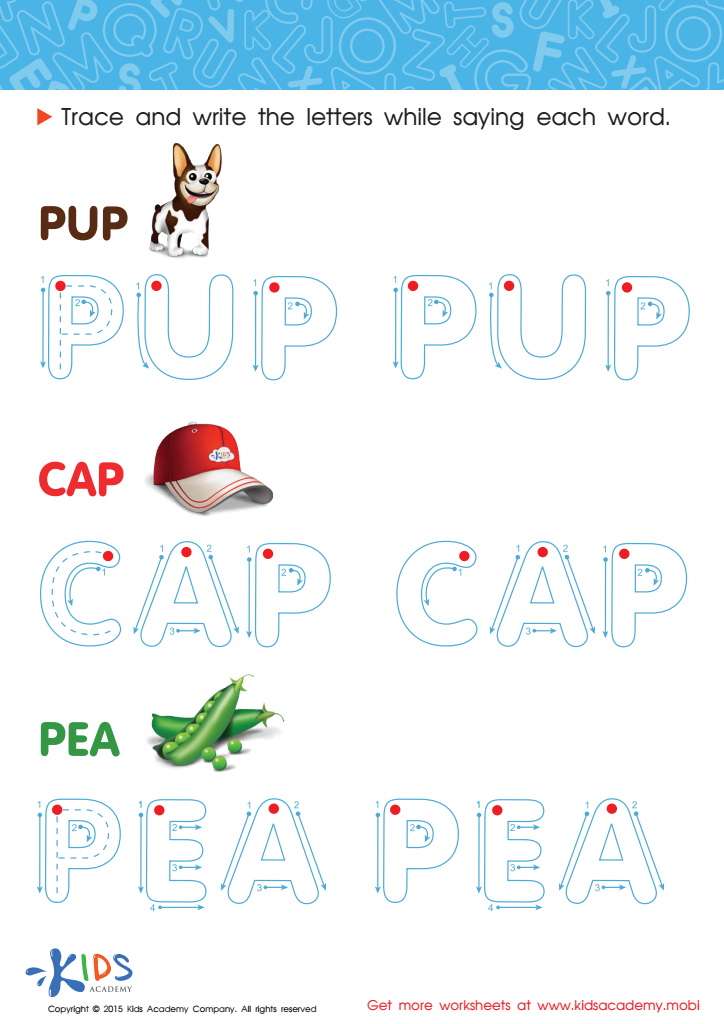
A Pup, a Cap and a Pea Spelling Worksheet
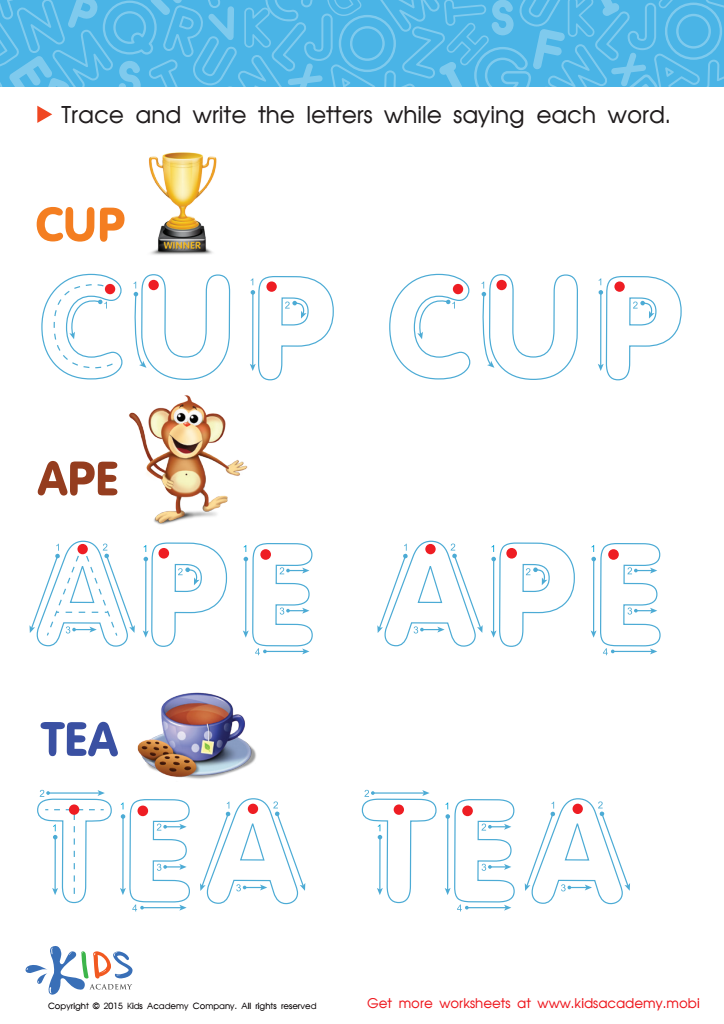
A Cup, an Ape and Tea Spelling Worksheet








Parents and teachers should place significant importance on developing phonics skills and normal tracing words for children aged 3-6, as these foundational skills play a crucial role in literacy and overall cognitive development. At this critical age, young minds are highly receptive to learning new sounds and letter patterns, which serves as the building blocks for reading and writing proficiency. Phonics involves the relationship between sounds and their corresponding letters, helping children decode new words and improve their reading fluency.
Introducing tracing activities further reinforces this understanding by allowing children to practice proper letter formation and fine motor skills. When children trace words, they begin to recognize common letter patterns, associate sounds with specific letters, and improve their hand-eye coordination. This tactile experience helps solidify what they see and hear, creating a multisensory approach to learning which is highly effective for young children.
Early mastery of these skills predicts later academic success. Children with strong phonics foundations tend to read more fluently and accurately, which boosts their confidence and fosters a love of reading. This not only aids their immediate learning but also promotes long-term educational achievements, preparing them for more advanced literacy challenges. Therefore, parents and teachers should actively engage in phonics and tracing activities, laying a solid groundwork for future academic success and lifelong learning.