Phonics development Normal Alphabet Worksheets for Ages 3-7
3 filtered results
-
From - To
Enhance your child's phonics skills with our engaging Normal Alphabet Worksheets, designed specifically for ages 3-7. Our dynamic resources promote early literacy by introducing letter sounds and helping young learners connect letters to their corresponding phonetic sounds in an enjoyable way. Aligned with educational standards, these worksheets feature a variety of activities, including tracing, matching, and sound recognition, catering to different learning styles. Perfect for parents and educators alike, these printable worksheets foster a solid foundation in phonics, boost confidence, and make learning fun through colorful illustrations and interactive tasks. Start your child's journey to reading success today!
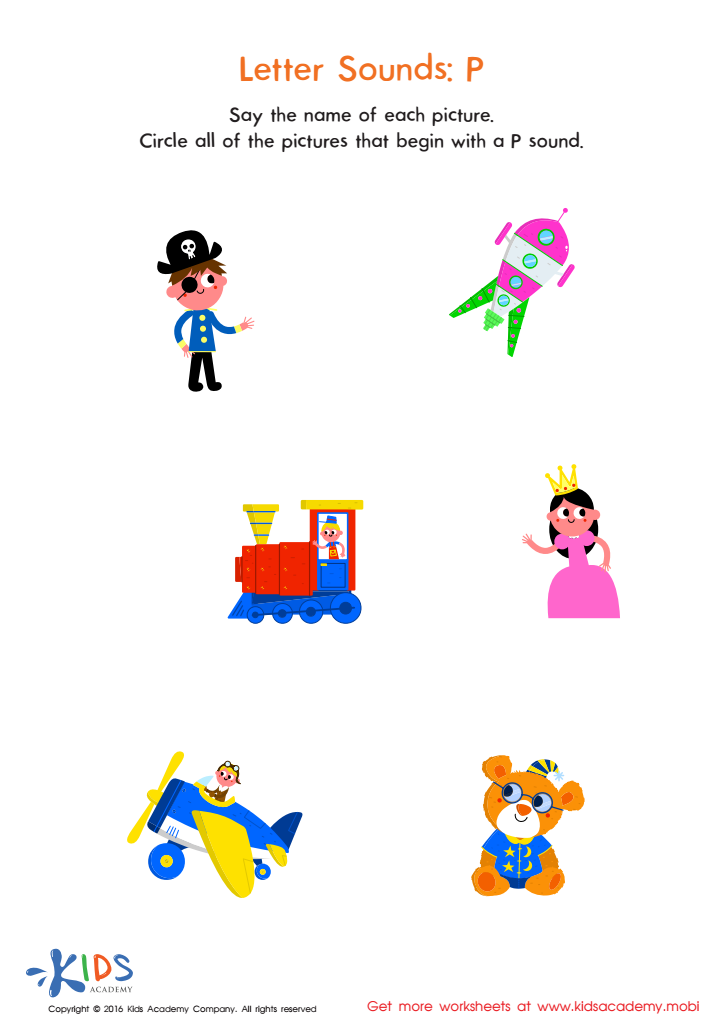
Letter P Sound Worksheet
 Assign to My Students
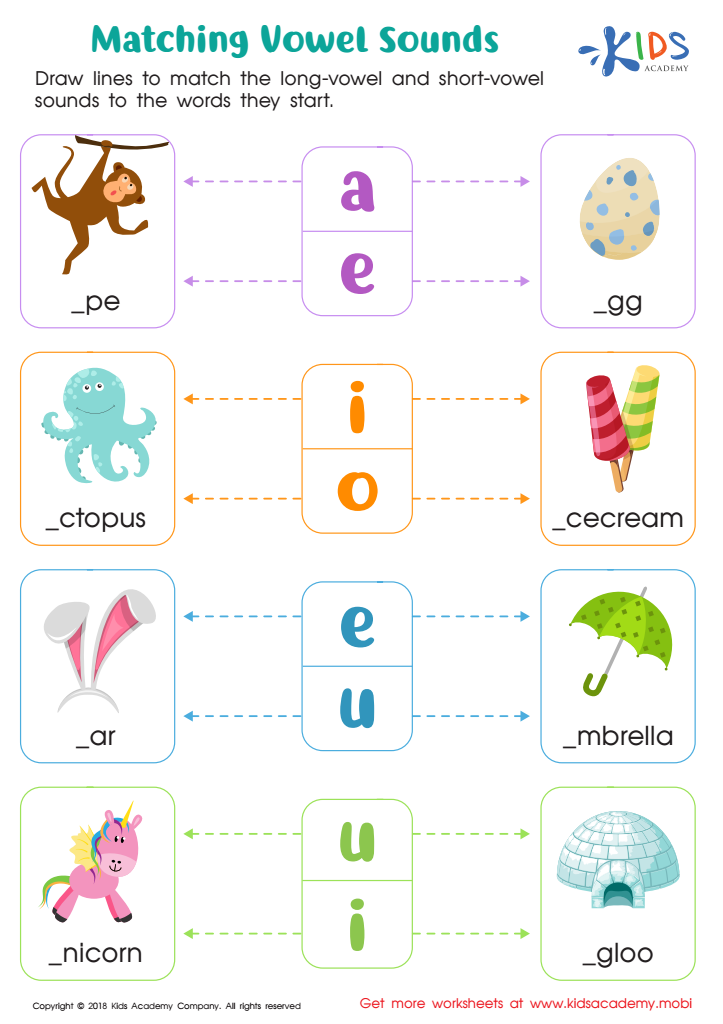
Matching Vowel Sounds Worksheet
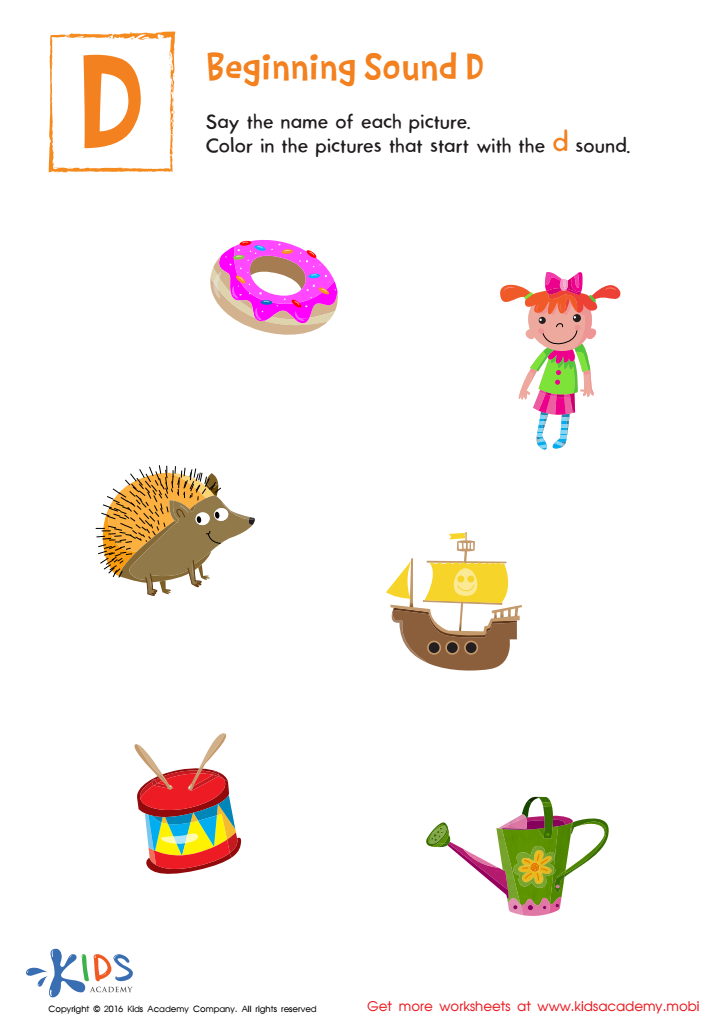
Beginning Sound D Worksheet








Phonics development is crucial for children aged 3-7 as it forms the foundation for literacy skills that will support their academic journey. During these formative years, children begin to connect sounds with letters, which is essential for decoding words when reading. Understanding phonics helps children recognize patterns in language, enabling them to read unfamiliar words independently and enhancing their overall reading fluency.
Parents and teachers should prioritize phonics development as it significantly impacts a child's confidence and success in reading. Early exposure to phonics not only strengthens a child's ability to read but also fosters a love for reading, which is vital for lifelong learning. Engaging children in phonics through fun activities, songs, or storytime allows them to develop essential skills in an enjoyable manner.
Moreover, strong phonics skills can prevent future reading difficulties, helping to close achievement gaps and ensuring that all children have the opportunity to thrive academically. By nurturing phonics development, adults play a measurable role in shaping a child's educational trajectory and self-esteem. In summary, supporting phonics development is an investment in every child's future literacy and overall well-being.







