Visual discrimination skills Normal Letter Recognition Worksheets for Ages 3-7
5 filtered results
-
From - To
Enhance your child's visual discrimination skills with our engaging Normal Letter Recognition Worksheets, designed specifically for children aged 3-7. These worksheets are an excellent resource for fostering essential skills needed for early literacy. By focusing on differentiating similar-looking letters and recognizing unique letter shapes, kids will build a strong foundation for reading and writing. Each worksheet features fun and interactive activities that captivate young learners, keeping them motivated and excited. Perfect for home or classroom use, these worksheets are essential tools for early childhood educators and parents alike. Unlock your child's potential with our thoughtfully crafted letter recognition practice!
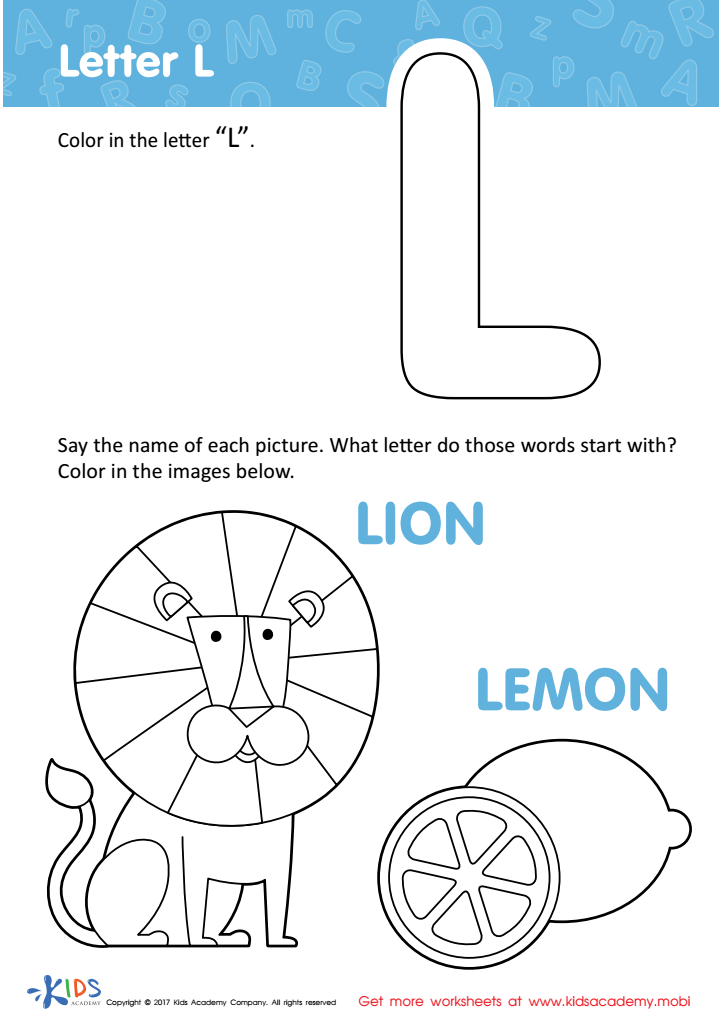
Letter L Coloring Sheet
 Assign to My Students
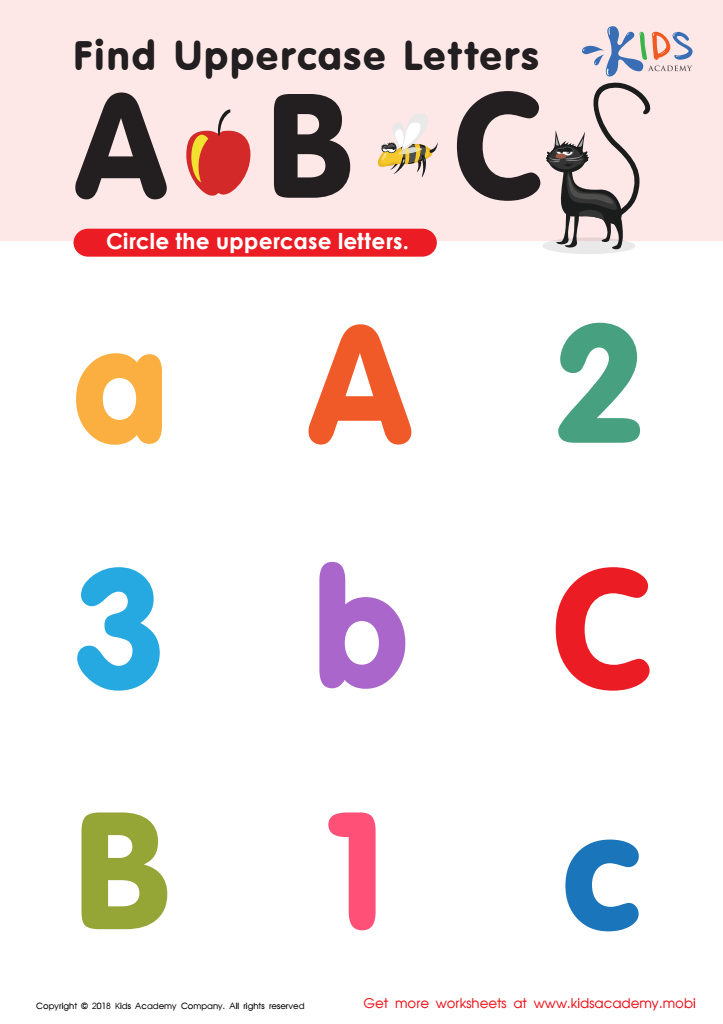
Find Uppercase Letters A, B, and C Worksheet
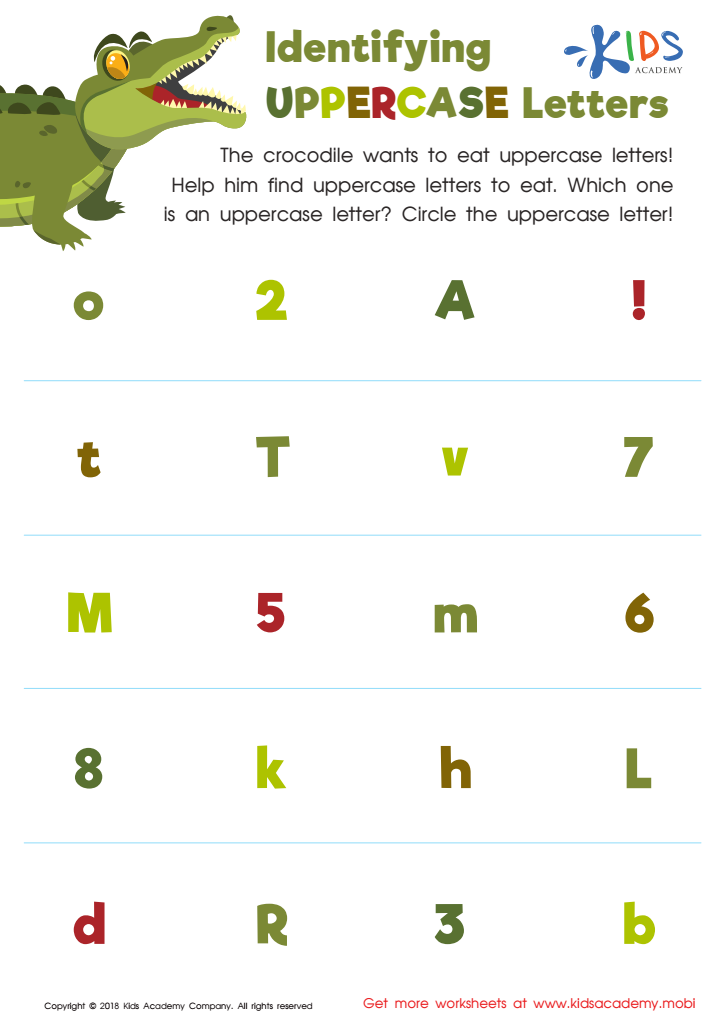
Identifying Uppercase Letters Worksheet
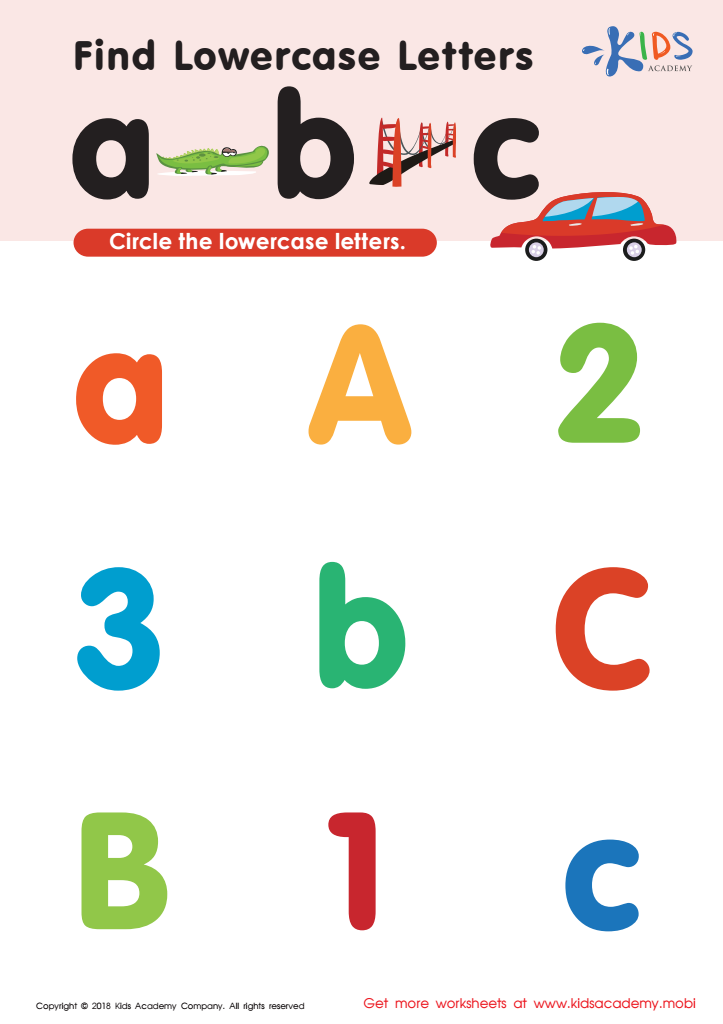
Find lowercase letters a b c Worksheet
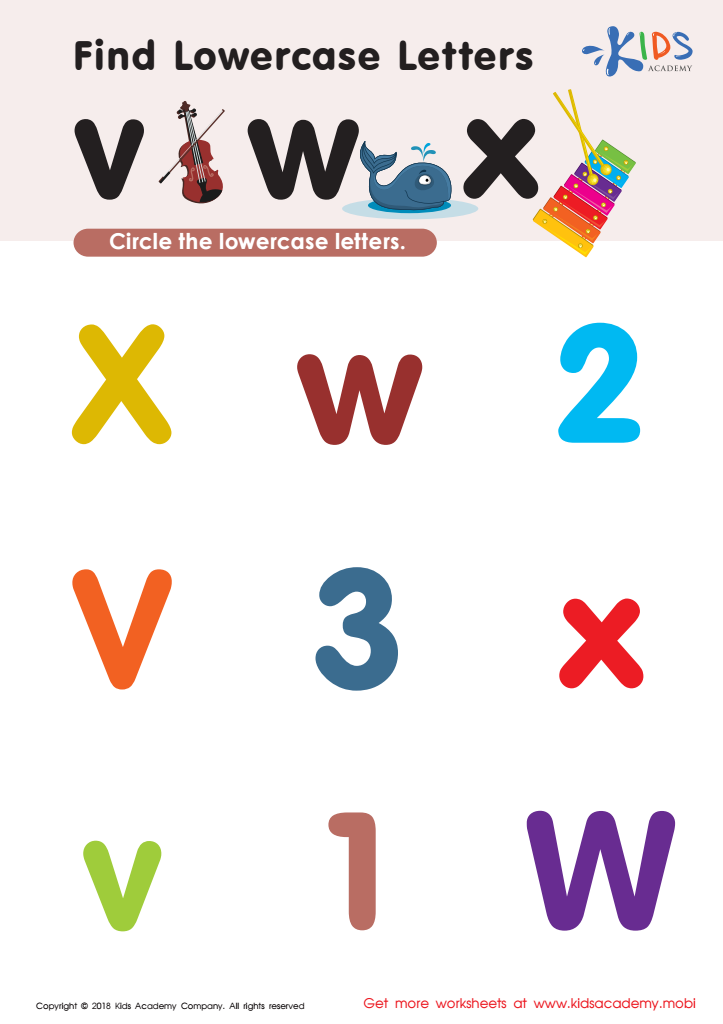
Find Lowercase Letters v w x Worksheet








Visual discrimination skills and normal letter recognition are essential for children's early literacy development, particularly for ages 3-7. Parents and teachers should prioritize these skills because they form the foundation for reading, writing, and overall academic success.
Visual discrimination enables children to differentiate between similar letters and shapes. This ability is critical for recognizing letters and understanding their forms, which helps in alphabetic knowledge. When children can effectively notice differences and similarities in letters, they become better equipped to decode words while reading, fostering confidence and fluency.
Moreover, normal letter recognition helps children quickly identify letters, facilitating early reading experiences. Recognizing that "b" is different from "d" or "p" ensures that children articulate sounds correctly and spell words accurately.
By investing in developing these skills, caregivers and educators can promote literacy, enhance cognitive development, and encourage critical thinking. Strengthening visual discrimination and letter recognition also builds children's self-esteem and motivation, setting a positive trajectory for their future learning experiences. Furthermore, cultivating these skills creates a smoother transition into more complex literacy tasks, thereby minimizing potential learning challenges later on. Ultimately, supporting these foundational skills leads to lifelong readers and learners.








