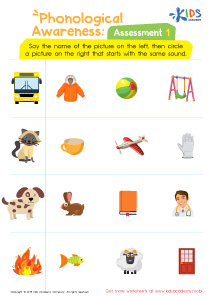
Rhyming skills development Normal Rhyming Worksheets for Ages 3-7
4 filtered results
-
From - To
Enhance your child's language abilities with our engaging Rhyming Worksheets, specially designed for ages 3-7. These worksheets introduce young learners to the fun world of rhymes, improving phonemic awareness and vocabulary. By exploring rhyming patterns and sound relationships, kids will develop essential skills that are vital for reading and writing. Our activities are not only educational but also enjoyable, encouraging children to recognize words that sound alike and sparking their creativity. Perfect for homeschooling or supplementary learning, these resources provide a solid foundation for early literacy. Start fostering your child's rhyming skills today and watch their confidence grow!

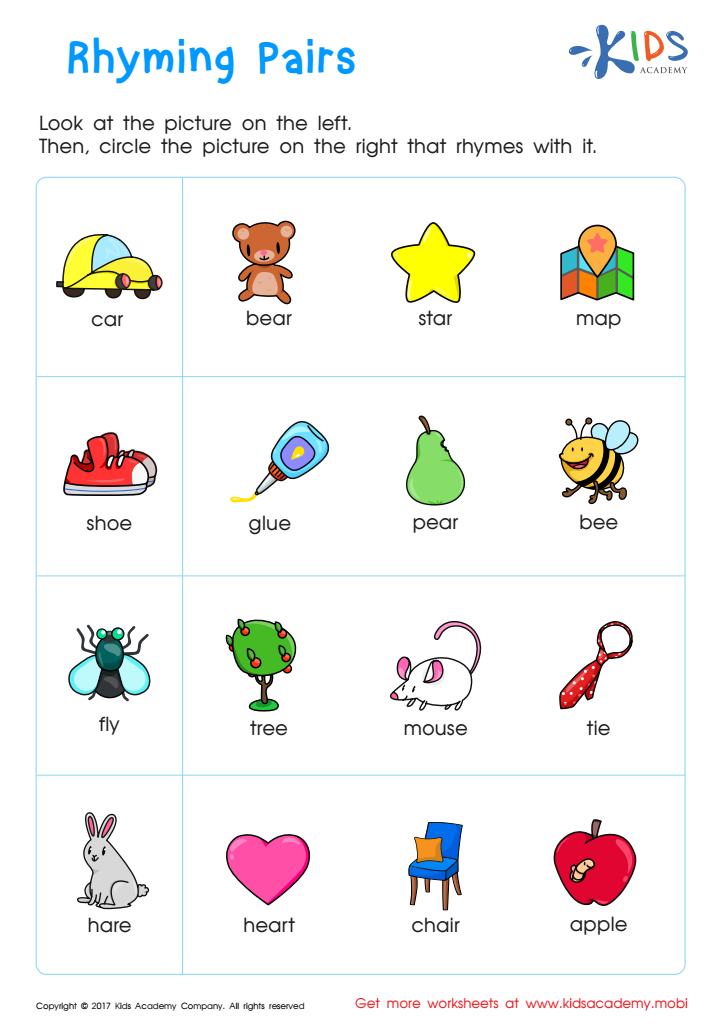
Rhyming Words Rhyming Worksheet
 Assign to My Students
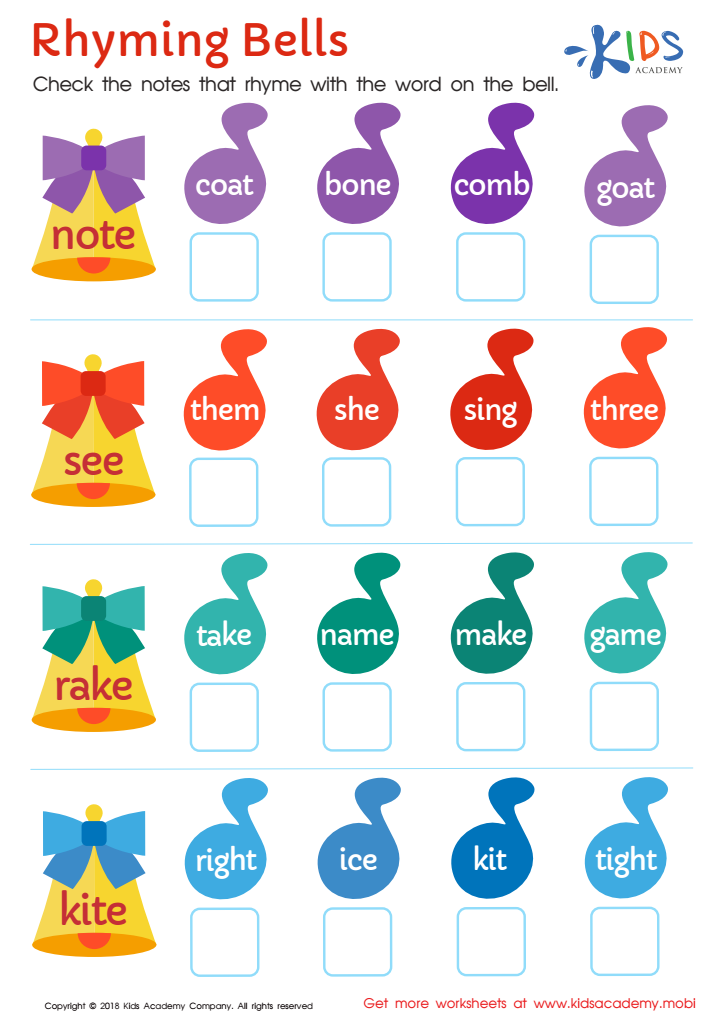
Rhyming Bells Worksheet
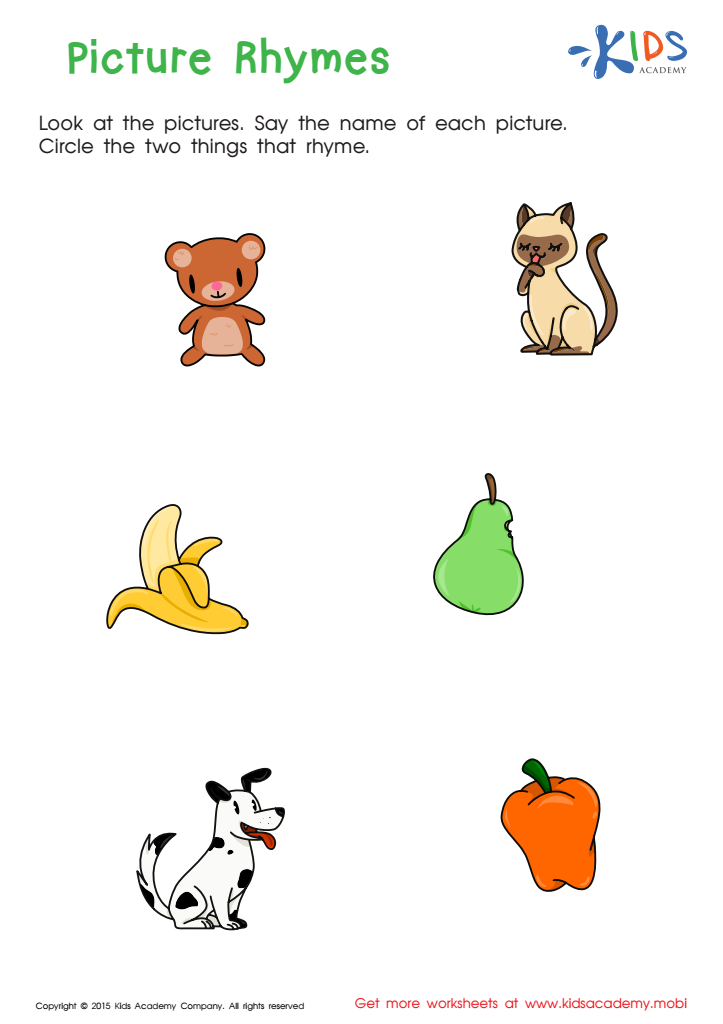
First Words: Picture Rhymes Worksheet








Rhyming skills play a crucial role in early childhood literacy and language development. For children ages 3 to 7, engaging in rhyming activities helps them develop phonemic awareness, which is the ability to hear and manipulate sounds in words. This skill is foundational for reading because it enhances their ability to decode words, recognize patterns, and understand that words are made up of sounds.
Beyond phonetics, rhyming enriches vocabulary, boosts comprehension, and fosters creativity. When children encounter rhymes, they learn to identify similar sounds, encouraging language play and improving their verbal skills. These playful interactions with language help build confidence in speaking and storytelling.
Moreover, rhyming contributes to social-emotional development by providing shared experiences. Singing, reciting nursery rhymes, or playing rhyming games together strengthens parent-child or teacher-student bonds, making learning enjoyable and memorable.
Introducing rhyming at an early age can pave the way for a fluent reader and effective communicator. Teachers and parents should prioritize rhyming activities, as they not only support literacy but also instill a love for language that lasts a lifetime. Investing time in rhyming today lays the essential groundwork for a child's ongoing learning journey.