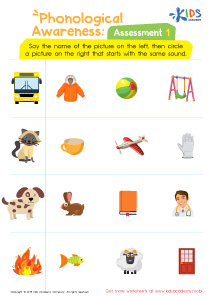
Vocabulary enhancement Normal Rhyming Worksheets for Ages 3-7
6 filtered results
-
From - To
Unlock your child's language potential with our Vocabulary Enhancement Rhyming Worksheets, designed for ages 3-7. These engaging activities make learning fun and effective by introducing rhyming words through playful exercises. Our worksheets help children enhance their vocabulary, boost phonemic awareness, and develop a love for language. Ideal for early learners, each printable sheet combines colorful illustrations with practical word pairings to create an enjoyable educational experience. Foster your child's linguistic skills and prepare them for future reading success with our expertly crafted worksheets at Kids Academy!
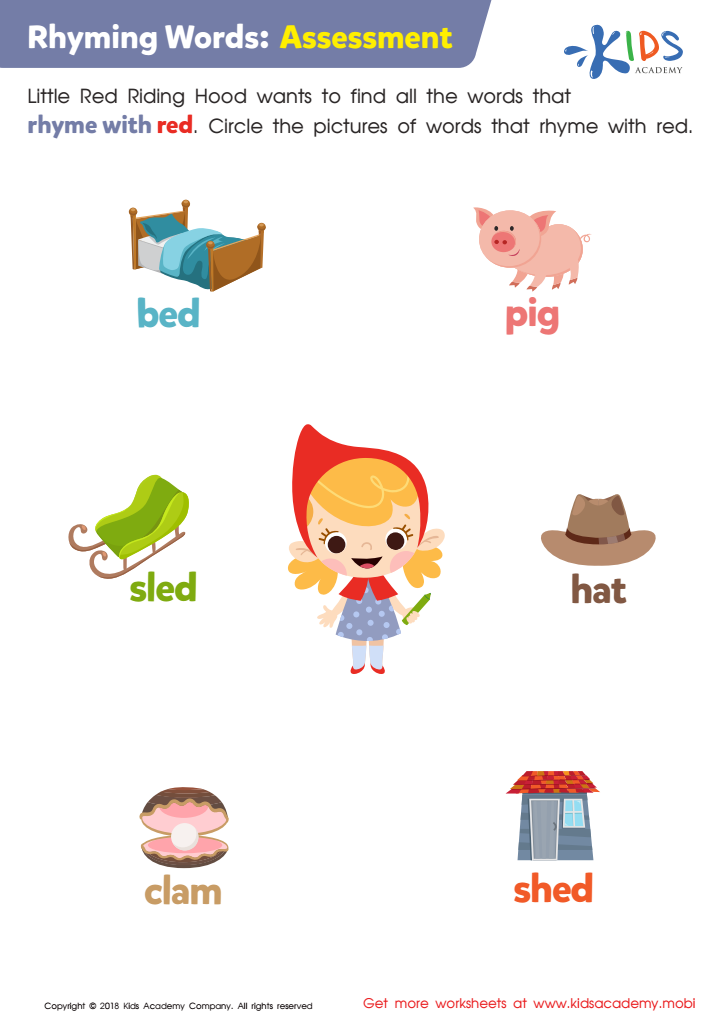
Rhyming Words: Assessment Worksheet
 Assign to My Students
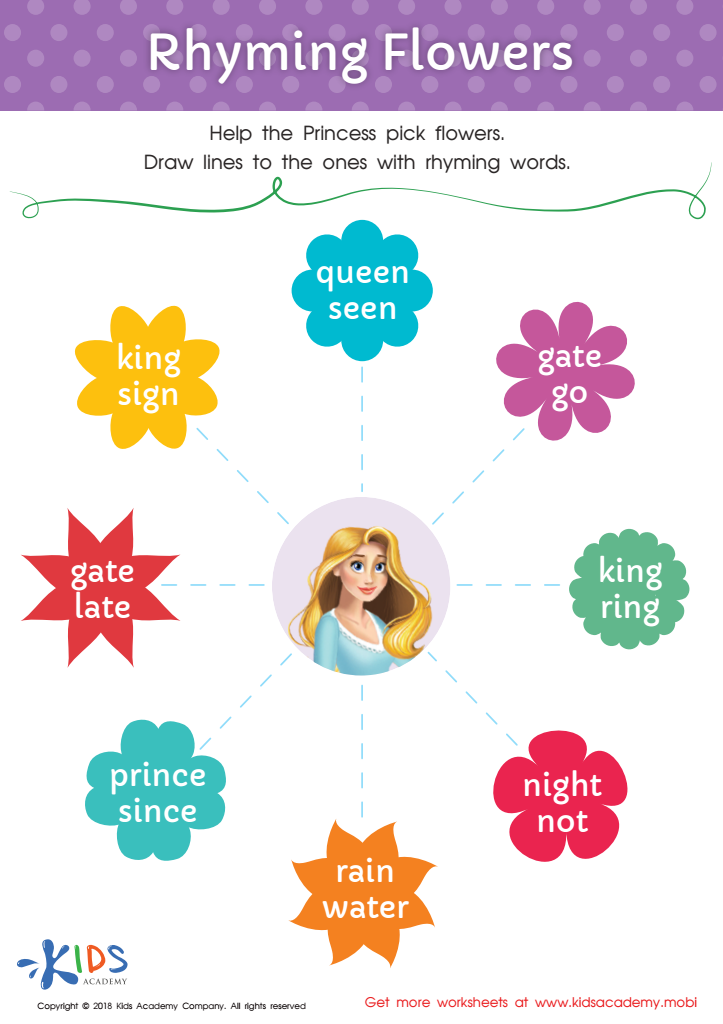
Rhyming Flowers Worksheet
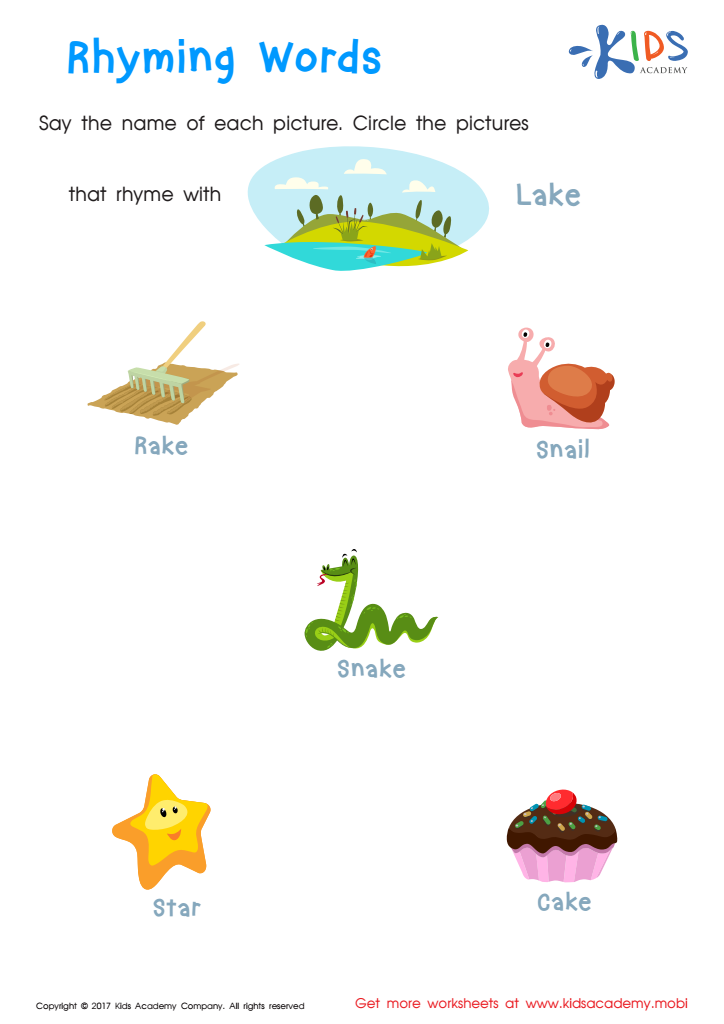
Rhyming Words Rhyming Worksheet
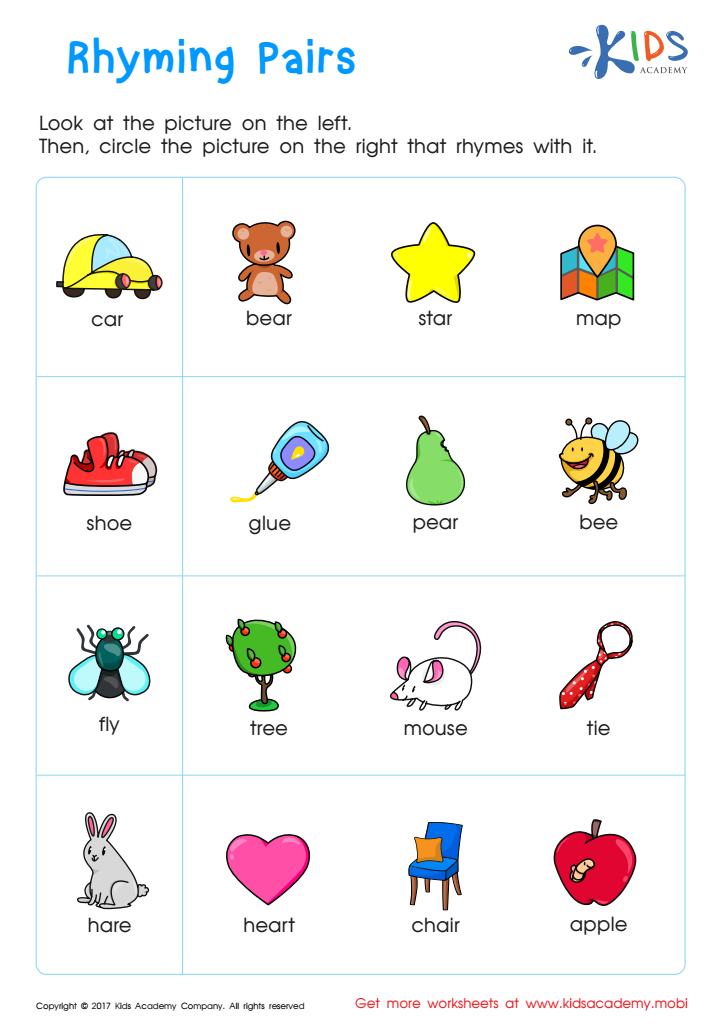
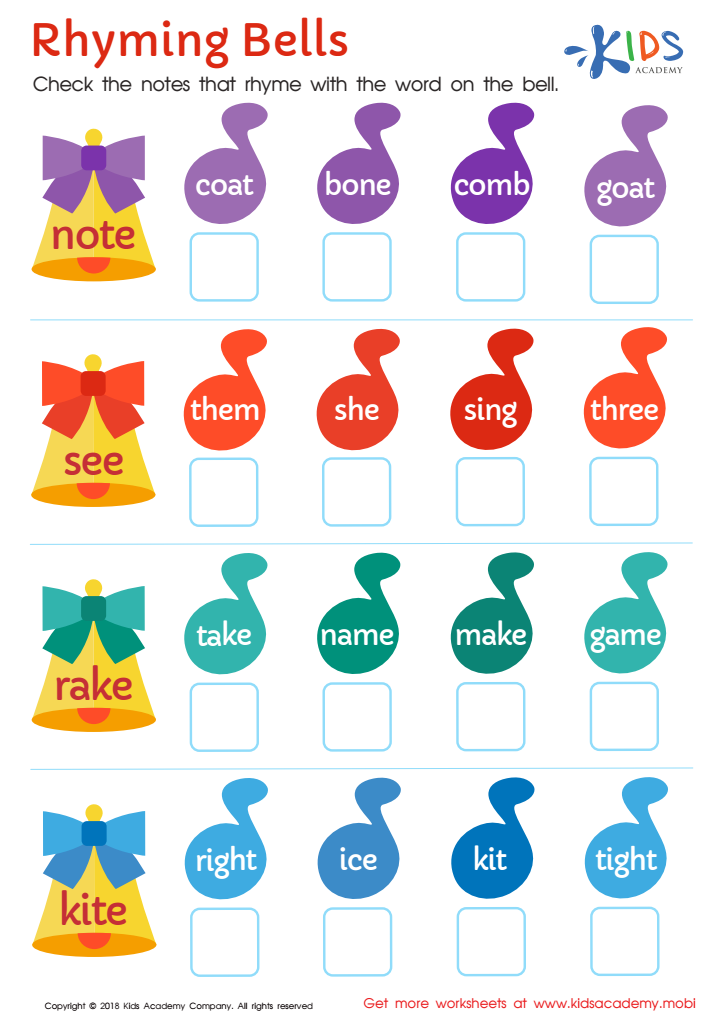
Rhyming Bells Worksheet
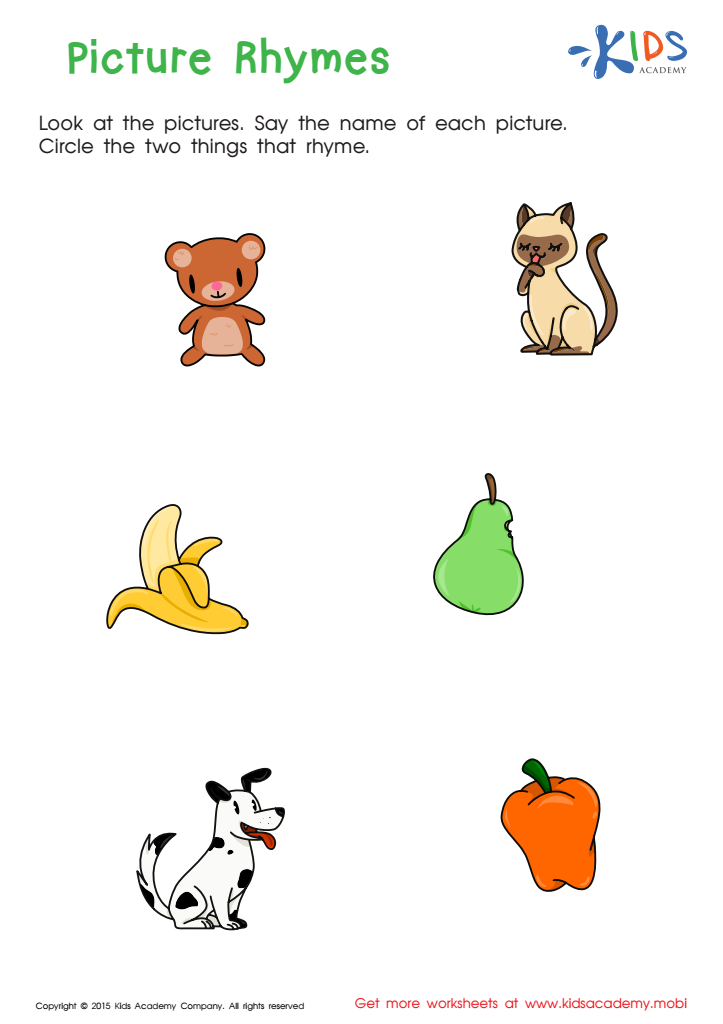
First Words: Picture Rhymes Worksheet







Parents and teachers play pivotal roles in building a child's foundation for literacy, and vocabulary enhancement through normal rhyming is integral, particularly for ages 3-7. At this critical developmental stage, children are like sponges, rapidly absorbing and processing new information. Rhyming isn't just a fun activity; it has tremendous educational benefits.
Firstly, rhyming helps kids recognize phonemic patterns, enhancing their phonemic awareness—a crucial pre-reading skill. Understanding how sounds work together sets the groundwork for effective decoding skills, necessary for reading proficiency. For instance, hearing words like "cat," "bat," and "hat" lets children grasp how similar sounds connect to create different meanings.
Additionally, rhyming enriches vocabulary. Children learn new words within a memorable and engaging context, making it easier to remember and recall them. Activities involving rhyming also stimulate creativity and language play, encouraging kids to experiment with language, thus expanding their verbal expression.
Furthermore, rhymes are usually embedded in songs, nursery rhymes, and poems, which makes learning interactive and enjoyable. This positive atmosphere fosters a love for reading and learning, which is essential for lifelong educational success.
By prioritizing vocabulary enhancement through rhyming, parents and teachers ensure children develop strong linguistic and cognitive skills, laying a solid foundation for future academic success.