Handwriting Skills Normal Tracing Letters Worksheets for Ages 3-7
5 filtered results
-
From - To
Enhance your child's handwriting skills with our engaging Handwriting Skills Normal Tracing Letters Worksheets, designed for ages 3-7. Our worksheets offer a fun and interactive way for young learners to practice tracing uppercase and lowercase letters, fostering fine motor skills and letter recognition. Each worksheet is thoughtfully crafted to keep children motivated and excited about learning as they build confidence in their writing abilities. With a variety of colorful designs and themes, these tracing worksheets complement any preschool or kindergarten curriculum. Help your child develop essential handwriting skills while making learning enjoyable and effective! Start tracing today for a brighter writing future!
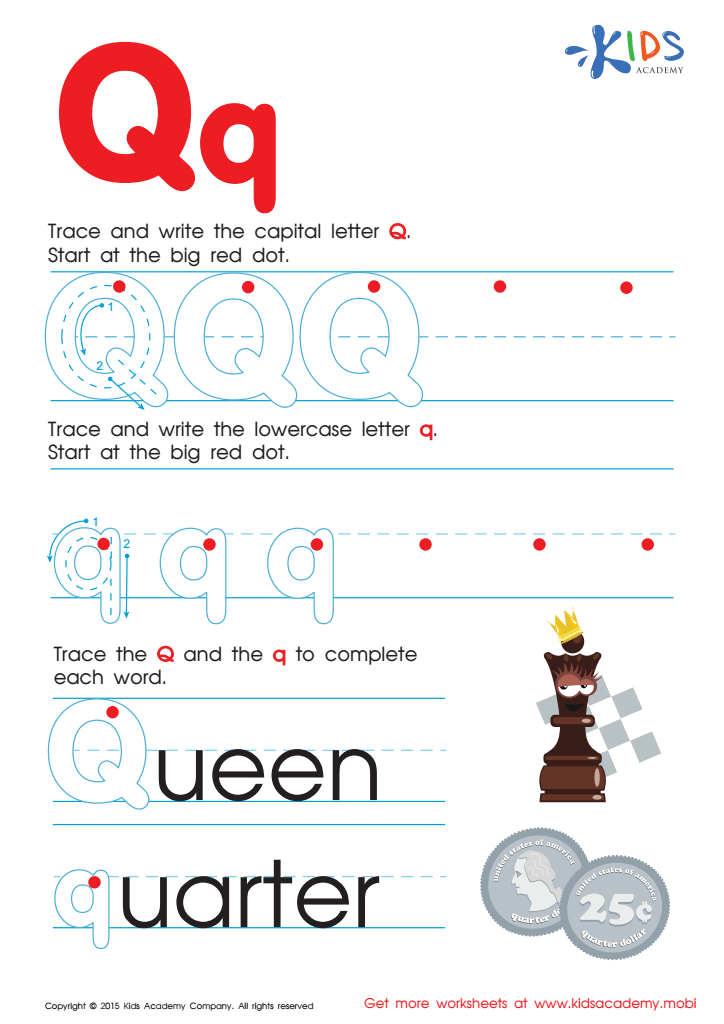
Letter Q Tracing Page
 Assign to My Students
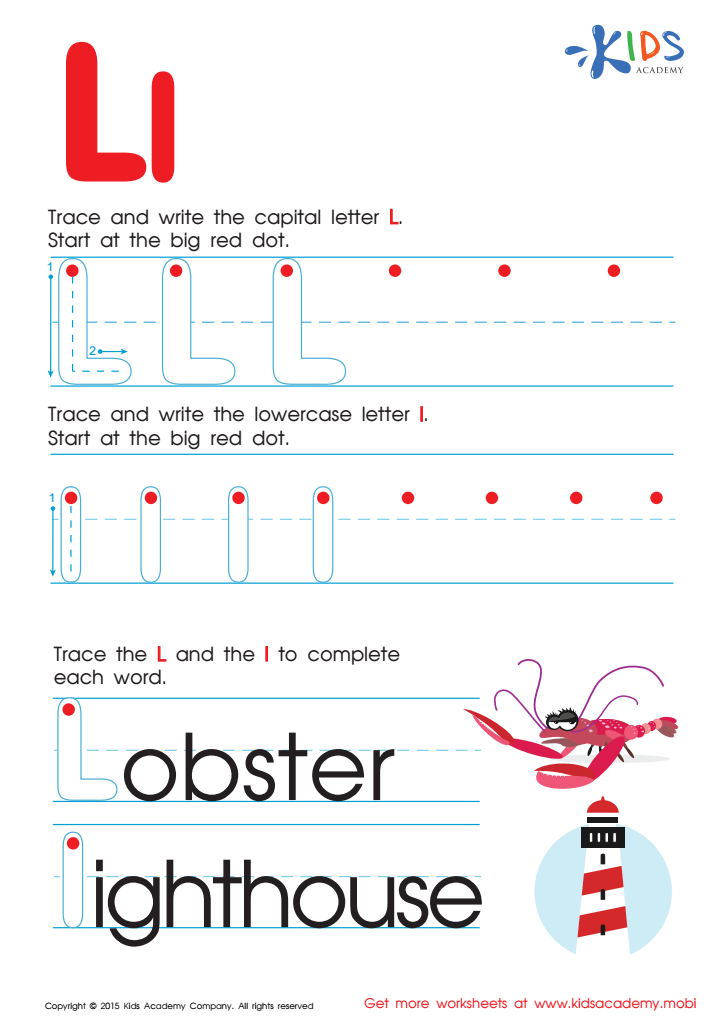
Letter L Tracing Page
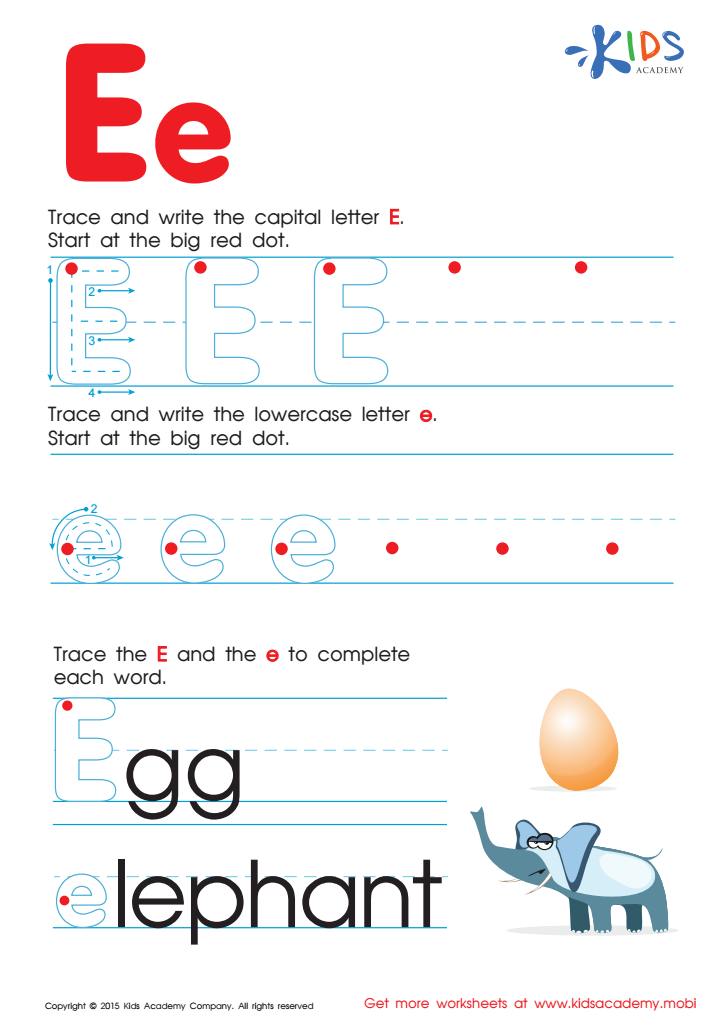
Letter E Tracing Page
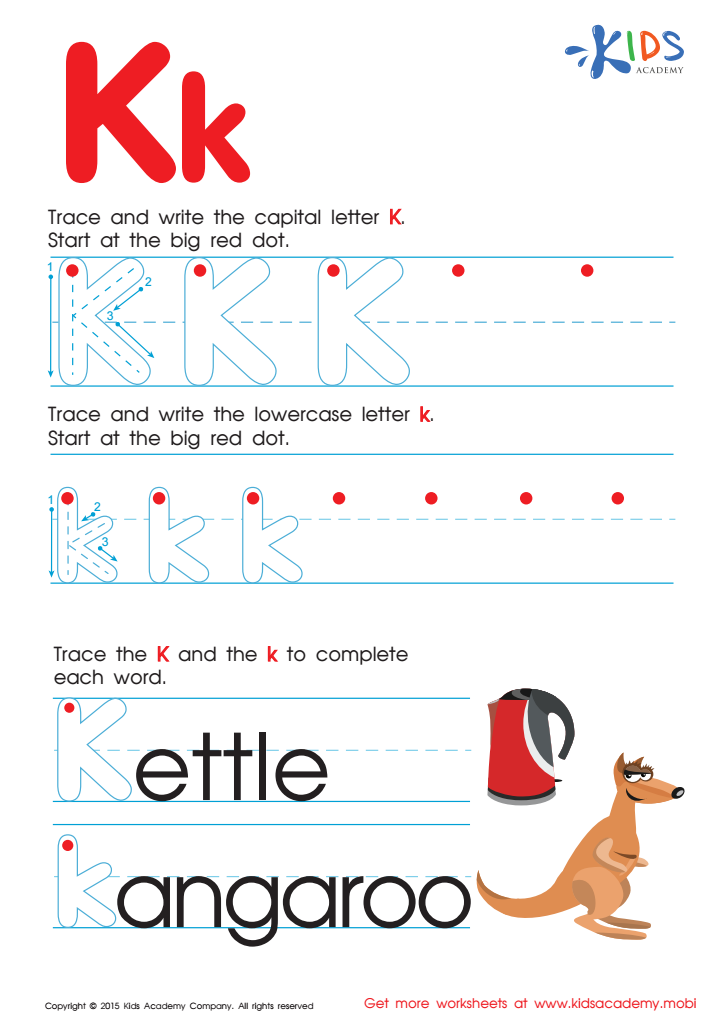
Letter K Tracing Page
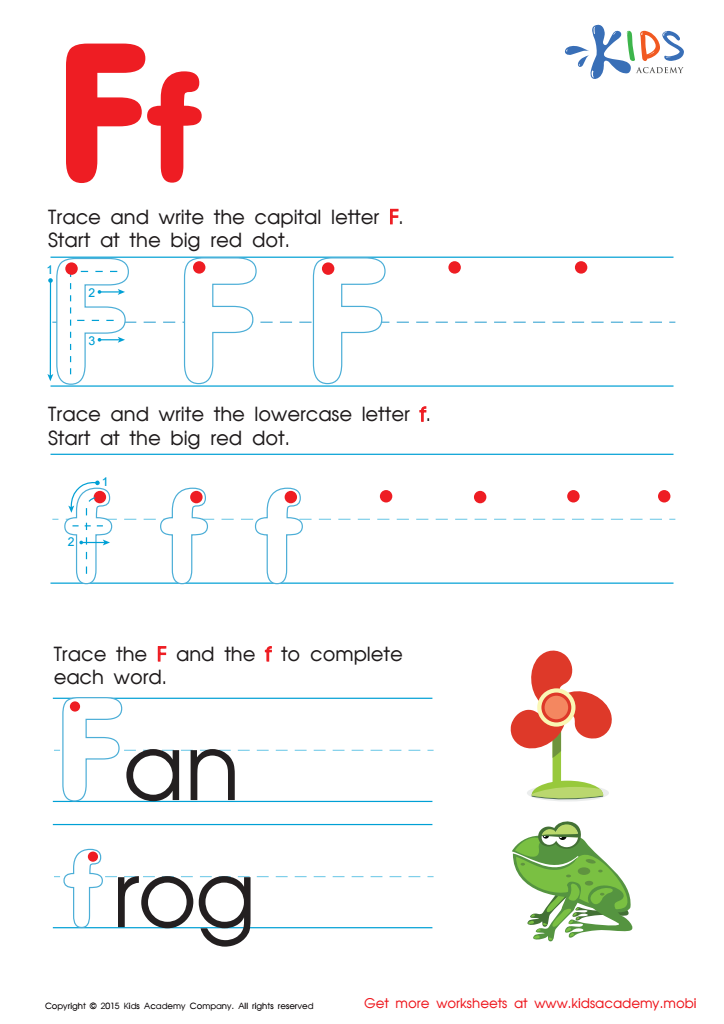
Letter F Tracing Page








Handwriting skills, particularly the normal tracing of letters for children aged 3 to 7, play a vital role in cognitive and motor development. At this crucial stage, fine motor skills are still being refined, and tracing letters helps strengthen hand and finger coordination. This precision is not only vital for writing but also lays the groundwork for other activities like drawing and self-care tasks.
Moreover, tracing letters engages multiple senses, which can enhance memory recall and understanding of letter shapes and sounds. Early exposure to handwriting promotes literacy, helping children recognize and reproduce letters, aiding in their reading readiness. It provides a sense of achievement and confidence as they notice their own progress and improvements.
From a developmental perspective, handwriting fosters focus and patience. The practice requires children to slow down and concentrate, skills that are foundational for future learning. Parents and teachers can create a nurturing environment that emphasizes the importance of handwriting, thereby helping children develop a more substantial connection with written communication. Ultimately, investing time in handwriting skills during these formative years contributes significantly to a child's overall educational journey and personal growth, equipping them for successful future learning experiences.








