
Phonics Skills Normal Two Letter Phonics Worksheets for Ages 3-7
6 filtered results
Difficulty Level
Grade
Age
-
From - To
Subject
Activity
Standards
Discover our engaging Two Letter Phonics Worksheets, designed specifically for children aged 3-7! These worksheets aim to enhance phonics skills through interactive activities that make learning fun. Each worksheet focuses on essential two-letter combinations, helping young learners develop sound recognition and pronunciation while building their reading skills. The colorful illustrations and age-appropriate exercises encourage independent learning and reinforce the connection between letters and sounds. Whether used in the classroom or at home, these worksheets provide a solid foundation for early literacy. Start your child's phonics journey today and watch them gain confidence in their reading abilities with our carefully crafted materials!
Favorites
With answer key
Interactive
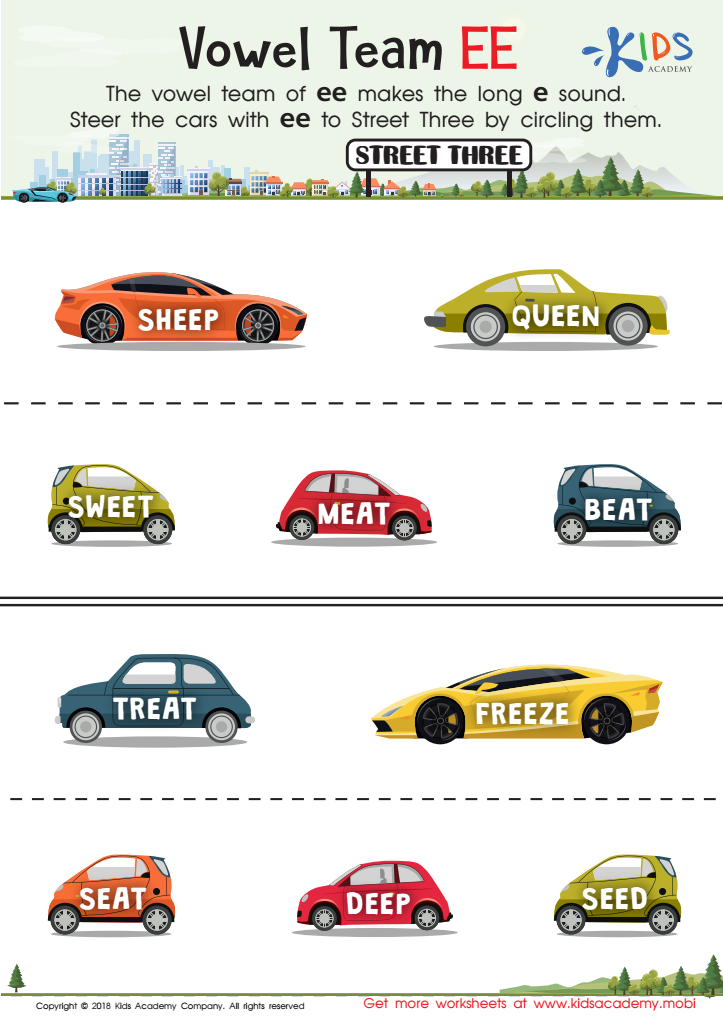
Vowel team ee Worksheet
Revised:
Kids will have a blast steering cars with the -ee digraph towards Street Three! This fast-paced worksheet reinforces that -ee makes the long -e sound while boosting fine motor skills. Kids will love the bright colors and stay engaged with this fun printable. Get ready for hours of off-road excitement!
 Assign to My Students
Vowel team ee Worksheet
Worksheet
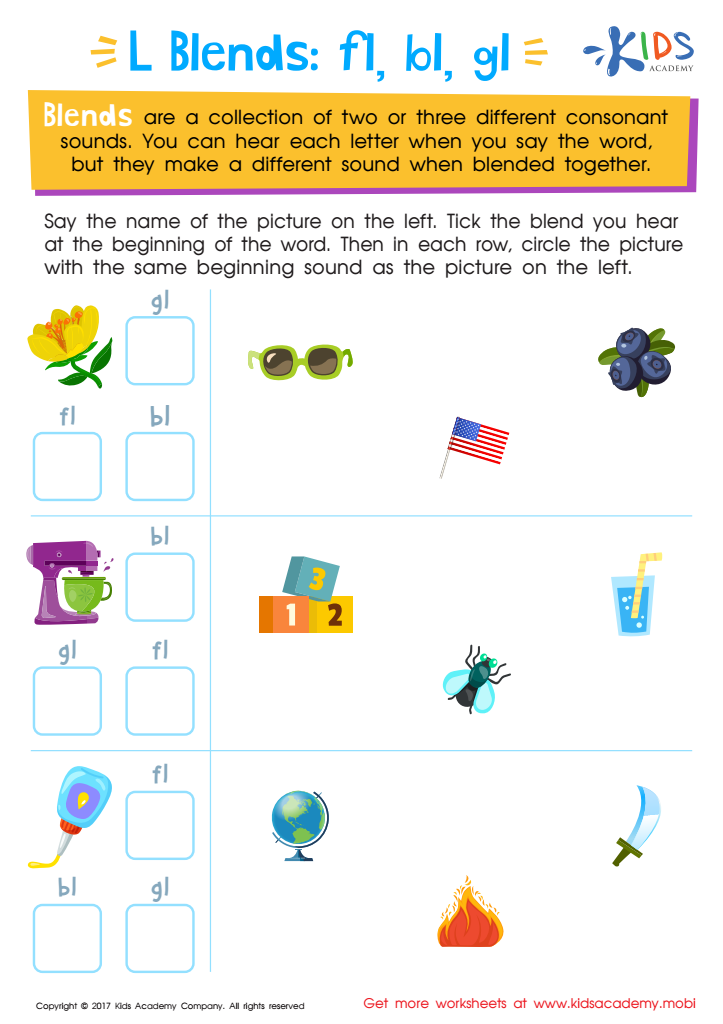
Blending Consonants: "Fl", "Bl" and "Gl" Printable
Help your child master consonant blends Fl, Bl, and Gl with this printable worksheet. Find words associated with the pictures and learn to better understand the difference between consonant blends. Vibrant images motivate and aid in learning. Download now for improved phonics success!
Blending Consonants: "Fl", "Bl" and "Gl" Printable
Worksheet
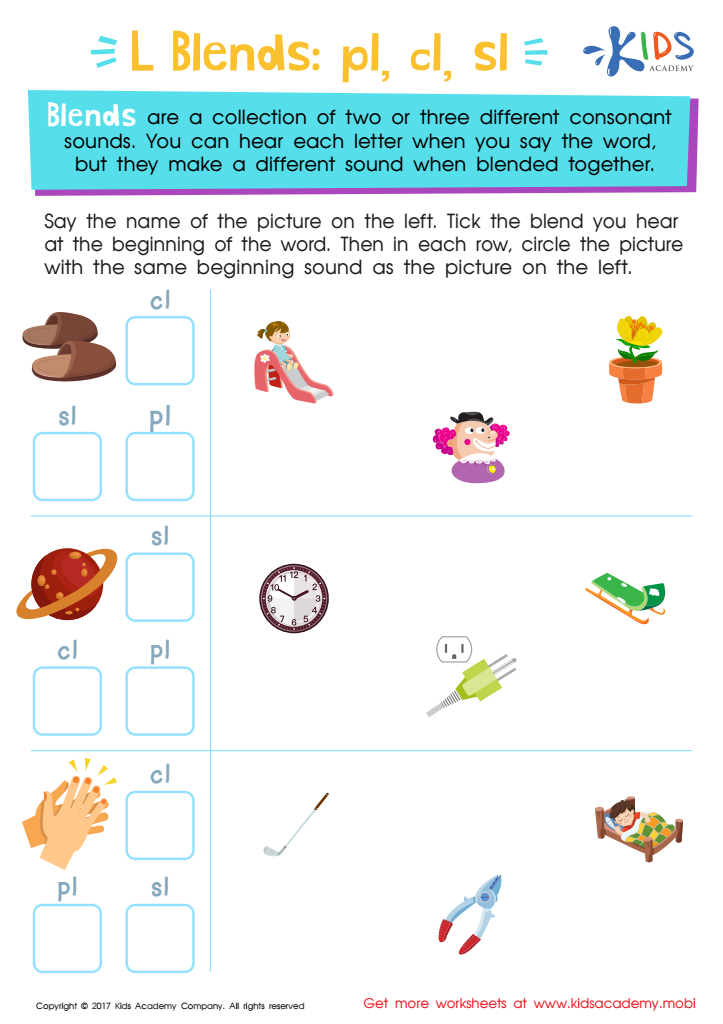
L Blends: "Pl", "Cl" and "Sl" Printable
This printable worksheet will help your child recognize and identify the Pl, Cl, and Sl consonant blends, sound them out, and identify them in print. Improve your child's reading and writing skills with fun and colorful phonics practice!
L Blends: "Pl", "Cl" and "Sl" Printable
Worksheet
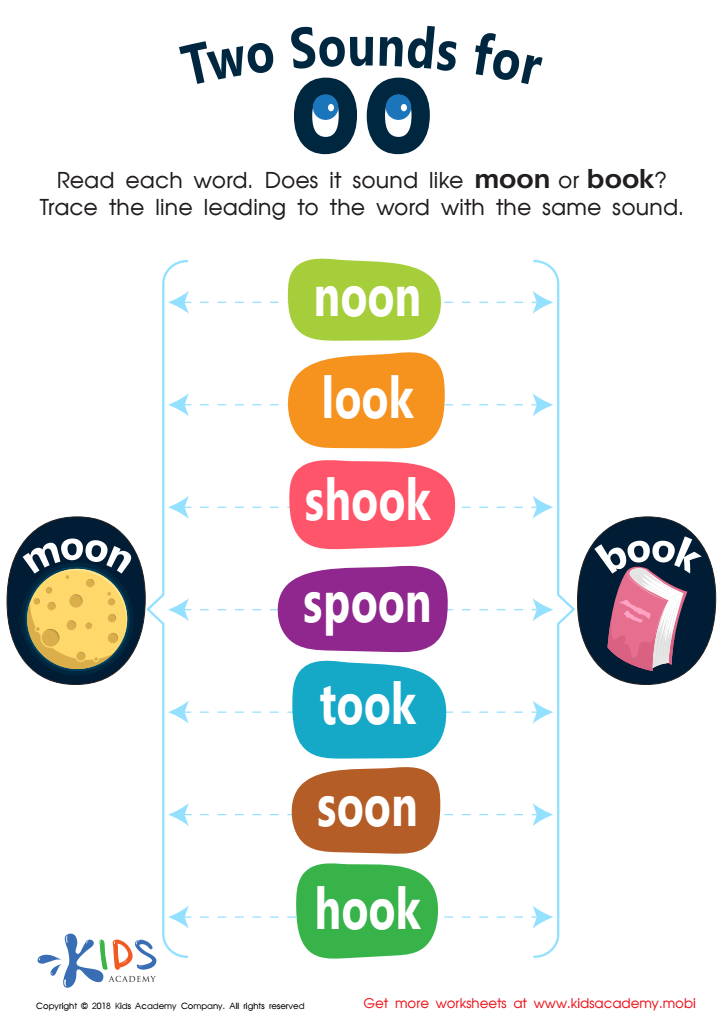
Two Sounds for OO Worksheet
This worksheet helps kids learn the different sounds of the -oo digraph. They match words based on whether they sound like moon or book, plus practice fine motor skills tracing lines. Fun and educational!
Two Sounds for OO Worksheet
Worksheet
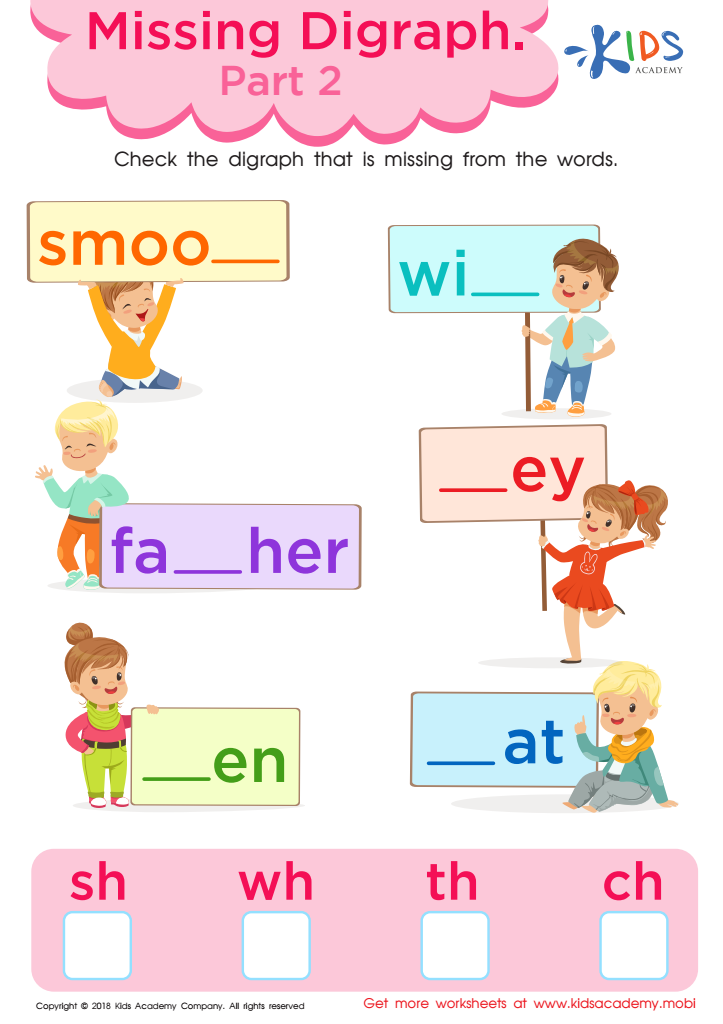
Missing Digraph: Part 2 Worksheet
Practice the "th" digraph with this fun worksheet from Kids Academy! See how it appears at the beginning, middle, or end of words and help learners fill in the blanks. Check if they got it right by finding the th digraph at the bottom!
Missing Digraph: Part 2 Worksheet
Worksheet
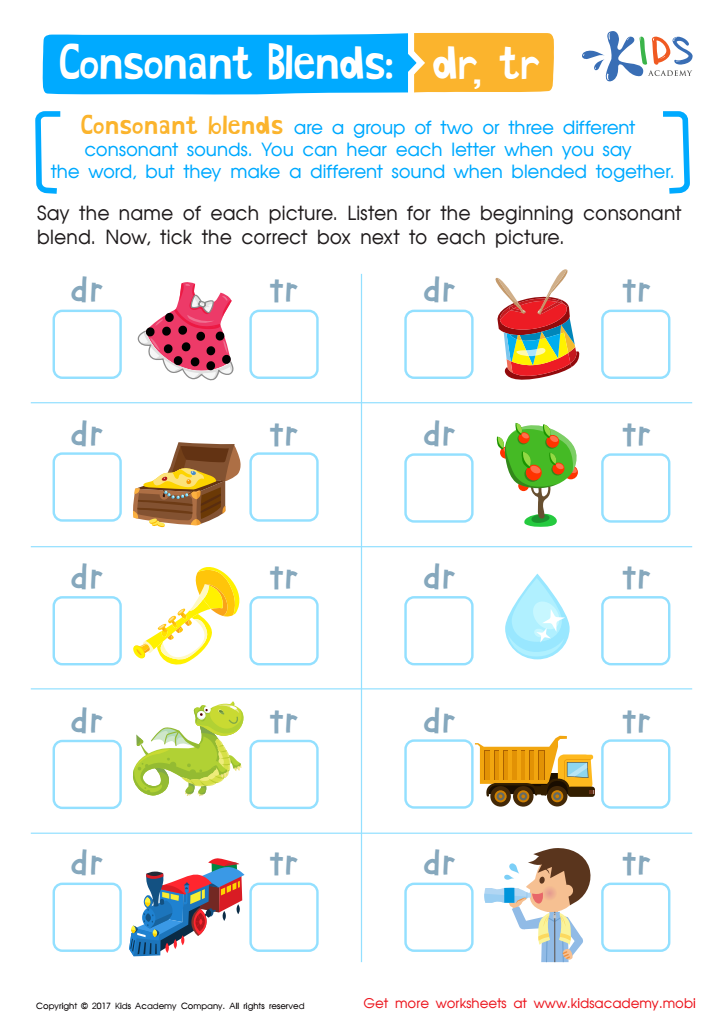
Consonant Blends: "Dr" and "Tr" Printable
Pictures of the words provide a visual cue, and sound-outs help with auditory cues.
Consonant Blends: "Dr" and "Tr" Printable
Worksheet
Join Kids Academy for Free
Who is primarily going to use this learning content?



Phonics skills, particularly those involving normal two-letter combinations, are crucial for children aged 3-7 as they lay the foundation for effective reading and writing. During these formative years, children develop essential literacy skills, and understanding phonics helps them decode words, recognize letter patterns, and improve their spelling abilities.
Normal two-letter phonics, like "at," "it," and "an," are fundamental building blocks that enable young learners to sound out and blend words. This early knowledge fosters a sense of confidence in students, encouraging them to engage with books and reading materials. Additionally, phonics skills contribute to a stronger vocabulary and better comprehension, essential for academic success across all subjects.
When parents and teachers prioritize phonics, they empower children to become independent readers, which enhances their critical thinking and communication skills. Furthermore, developing phonics skills can help identify and prevent reading difficulties later on, ensuring every child has the opportunity to thrive in their educational journey. By nurturing these phonetic abilities, caregivers and educators can support children's overall language development and instill a lifelong love of learning.






