Phonics Skills Normal Vowel Digraphs Worksheets for Ages 3-7
3 filtered results
Difficulty Level
Grade
Age
-
From - To
Subject
Activity
Standards
Unlock your child's reading potential with our Phonics Skills Normal Vowel Digraphs Worksheets, specially designed for ages 3-7. These engaging, printable worksheets introduce young learners to vowel digraphs, helping them recognize and sound out combinations like "ea," "ai," and "oa." Each worksheet focuses on fun activities that enhance phonemic awareness and boost vocabulary, making learning both enjoyable and effective. Parents and teachers will appreciate the easy-to-follow format that promotes independent practice. Perfect for home or classroom use, our vibrant worksheets lay a solid foundation for early literacy skills. Start your child's journey to reading success with these delightful resources today!
Favorites
With answer key
Interactive
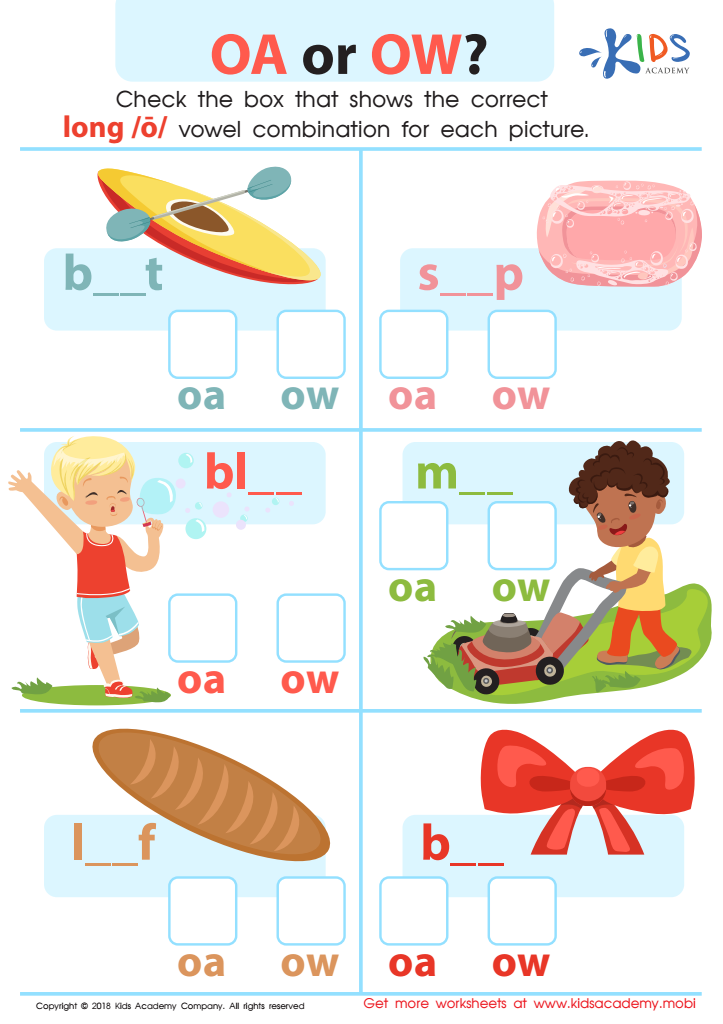
Reading: OA or OW Worksheet
This printable worksheet helps young and emergent readers with decoding words and understanding digraphs (two letters with one sound). It requires students to complete the spelling for each word based on the picture, focusing on /oa/ and /ow/ spellings. It's ideal for a reading classroom and for spelling practice.
 Assign to My Students
Reading: OA or OW Worksheet
Worksheet
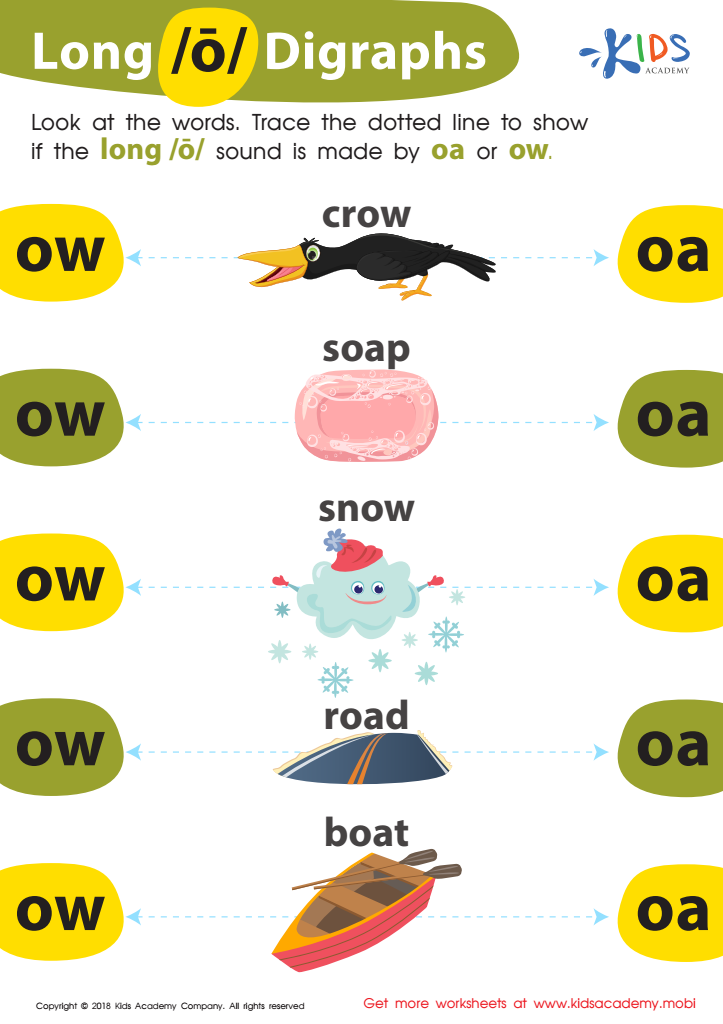
Reading: Long O Digraphs Worksheet
Reading and decoding words can be complex for learners when they start studying digraphs, two letters that make one sound. This worksheet focuses on the long O sound, /oa/ and /ow/. With the understanding of digraphs, students can decode more words and build their reading confidence.
Reading: Long O Digraphs Worksheet
Worksheet
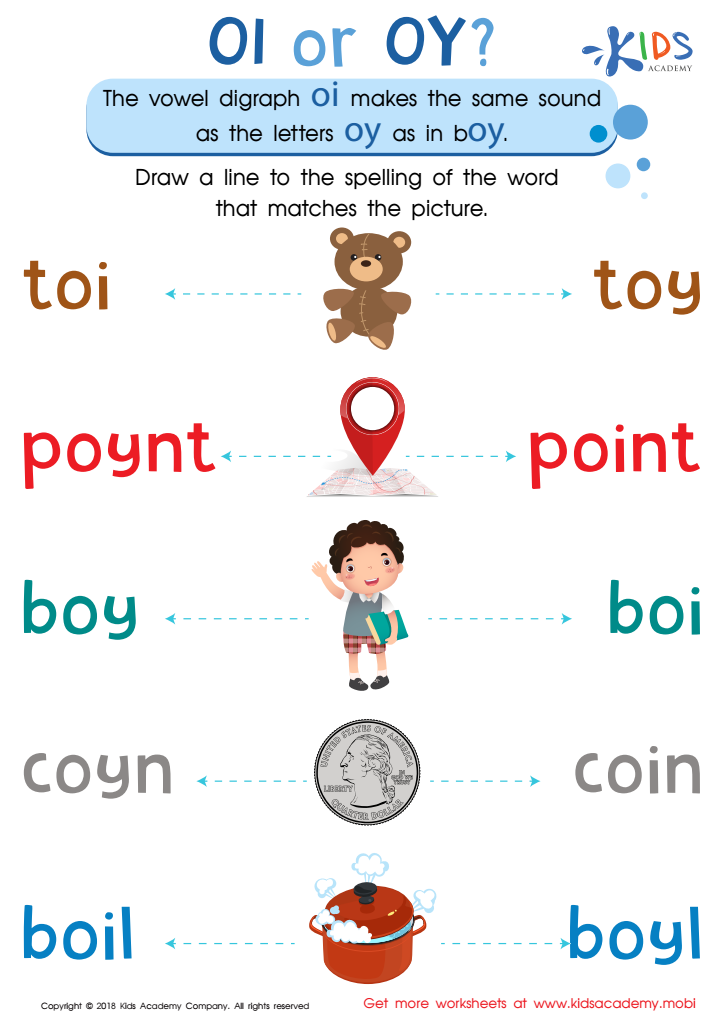
Reading: OI and OY Worksheet
Ask your students if they know the rule for words with /oi/ or /oy/ sound. If not, it's easy to learn! Rule: If /oy/ at end of word, spell with 'oy'; if /oi/ in middle of word, spell with 'oi'. Use this worksheet to help them master these digraphs and improve their ability to decode.
Reading: OI and OY Worksheet
Worksheet
Join Kids Academy for Free
Who is primarily going to use this learning content?


Phonics skills, particularly normal vowel digraphs, are crucial for children aged 3-7 as they lay the foundation for reading and writing. Vowel digraphs, pairs of vowels that create a single sound (like 'ee' in "seed" or 'oa' in "boat"), help children understand that letters combine to form sounds. Mastery of these skills enhances phonemic awareness, a key component in literacy development.
By emphasizing normal vowel digraphs, parents and teachers support children in decoding words, making reading more accessible and enjoyable. This learning stage is vital, as children's reading scores often align with their understanding of phonics. Early exposure to digraphs fosters confidence in word recognition and pronunciation.
Moreover, strong phonics skills contribute to improved comprehension. Children who grasp how to sound out words are more likely to engage with texts, facilitating a love for reading. This love is crucial, as it often translates into better academic performance across all subjects.
In essence, prioritizing normal vowel digraphs equips young learners with essential tools, ensuring they embark on a successful literacy journey, while also empowering them with the confidence needed to express ideas and emotions through writing. Thus, investing in phonics is investing in a child’s future.