Spelling practice Normal Vowels Worksheets for Ages 3-7 - Page 2
29 filtered results
-
From - To
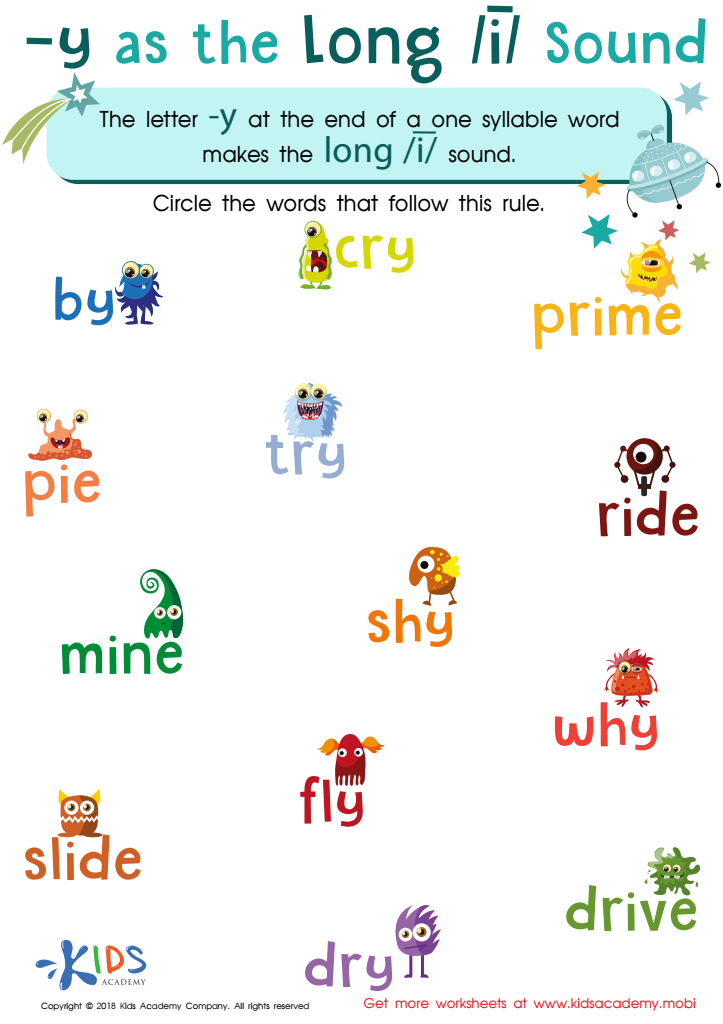
Reading: Y as Long I Worksheet
 Assign to My Students
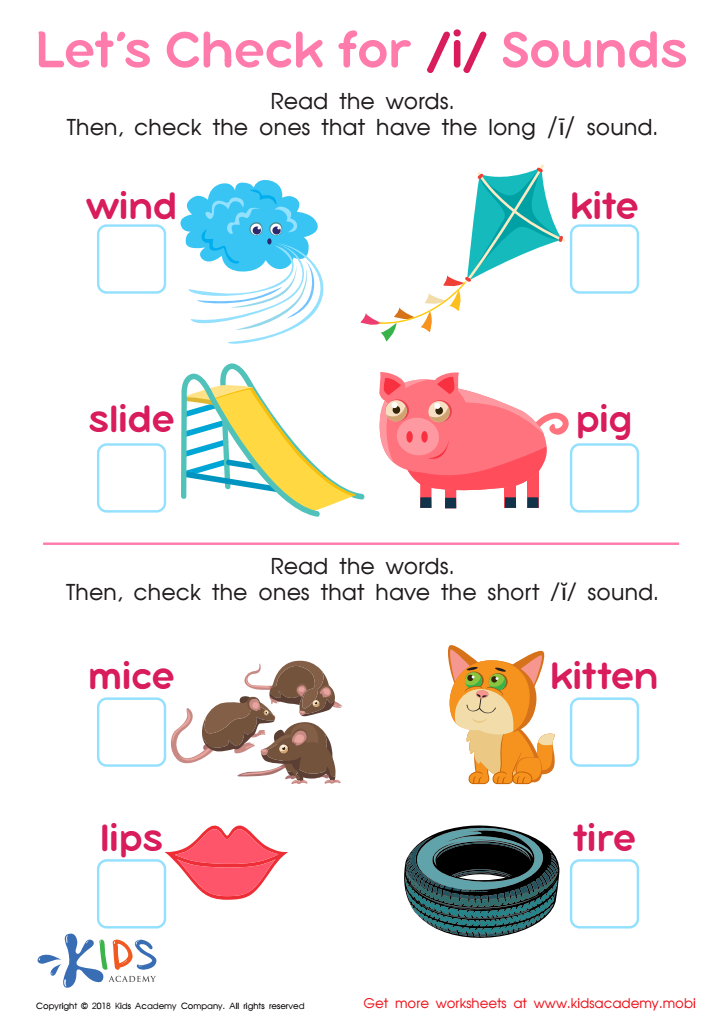
Let's Check for «i» Sounds Worksheet
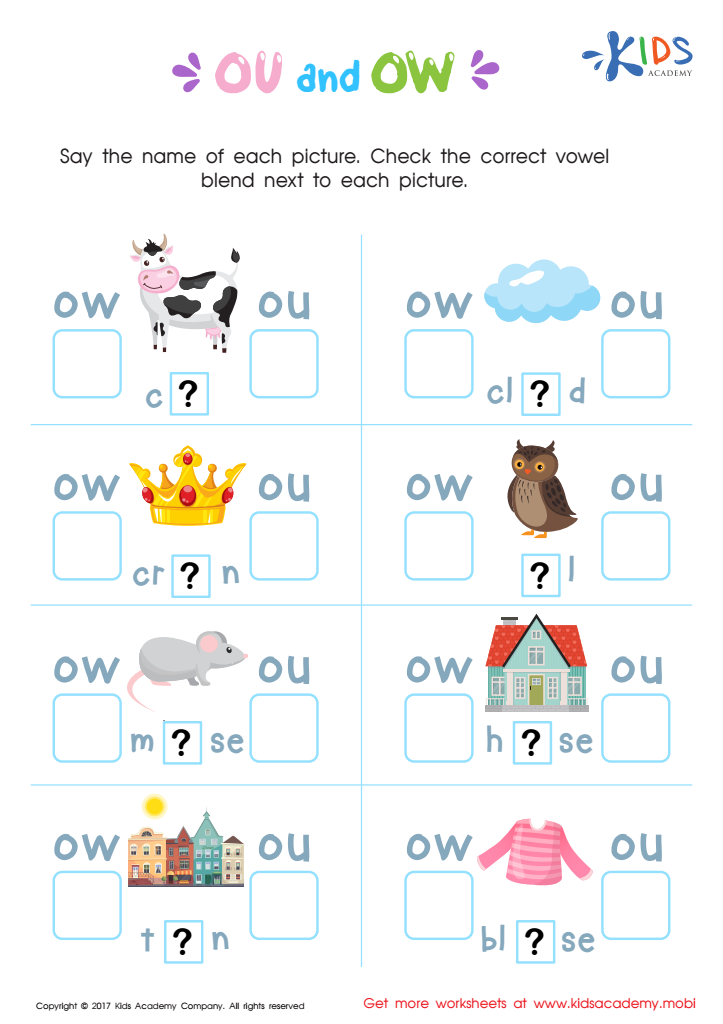
OU and OW Words Worksheet
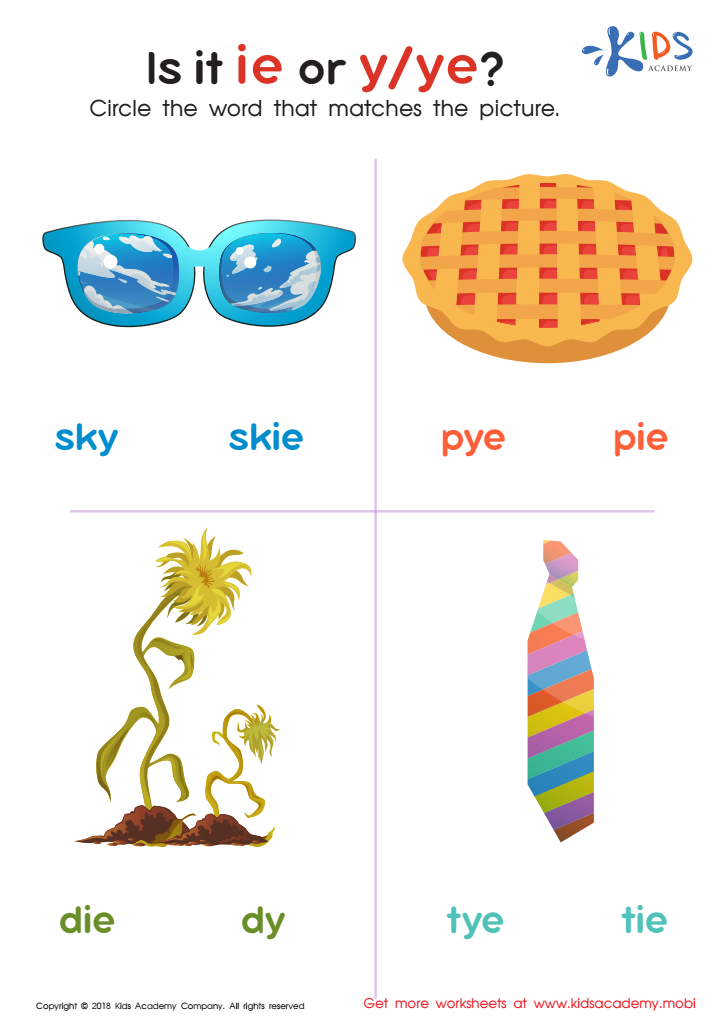
Is It IE or Y/Ye? Worksheet
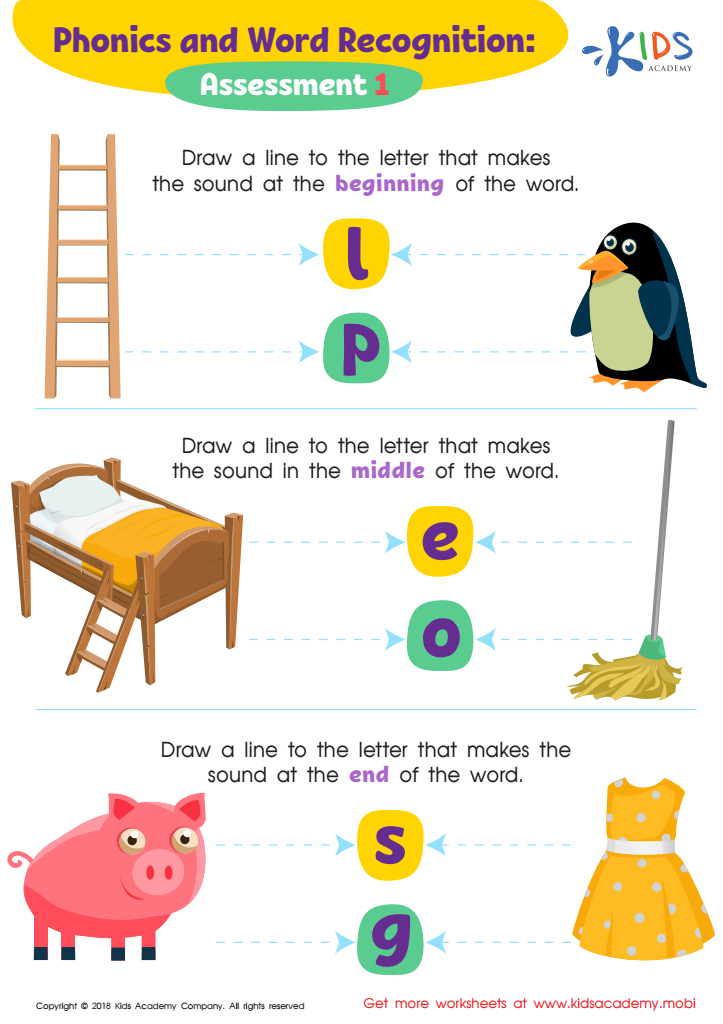
Phonics and Word Recognition: Assessment 1 ELA Worksheet





Spelling practice in normal vowels for ages 3-7 is pivotal for several reasons. First, mastering normal vowels—A, E, I, O, U—forms the foundation of literacy. Children often encounter these vowels in their early reading and writing tasks, making their recognition and sound articulation crucial. By focusing on this element, we can help children decode words more efficiently, enhancing their reading comprehension early on.
Secondly, building strong spelling skills fosters confidence in young learners, asserting that they can communicate effectively. Improved spelling capabilities allow children to express their thoughts and ideas clearly, reducing frustration and building a positive association with language learning.
Moreover, good spelling is linked to overall academic success. Research suggests that strong early literacy skills predict a child's future literacy and learning achievements. Engaging parents in spelling practice reinforces the connection between home and school, promoting a supportive learning environment.
Lastly, incorporating spelling activities into daily routines can make learning fun. Using games, songs, and playful interactions helps solidify the understanding of vowels while catering to young children’s natural curiosity. Overall, emphasizing normal vowel spelling practice nurtures essential language skills, promoting confident communicators and successful students.






