Developing math skills Normal Worksheets for Ages 3-7
6 filtered results
-
From - To
Our "Developing Math Skills: Normal Worksheets for Ages 3-7" provide a fun and engaging way for young learners to boost their math abilities. Tailored for kids aged 3-7, these worksheets cover essential skills like counting, number recognition, basic addition, and subtraction, and shape identification. Each activity is designed to keep children interested and focused, turning math practice into an enjoyable experience. With vibrant visuals and simple instructions, our worksheets support parents and educators in building a strong mathematical foundation. Help your child develop confidence and a love for math with our expertly crafted resources. Unlock a world of numbers today!
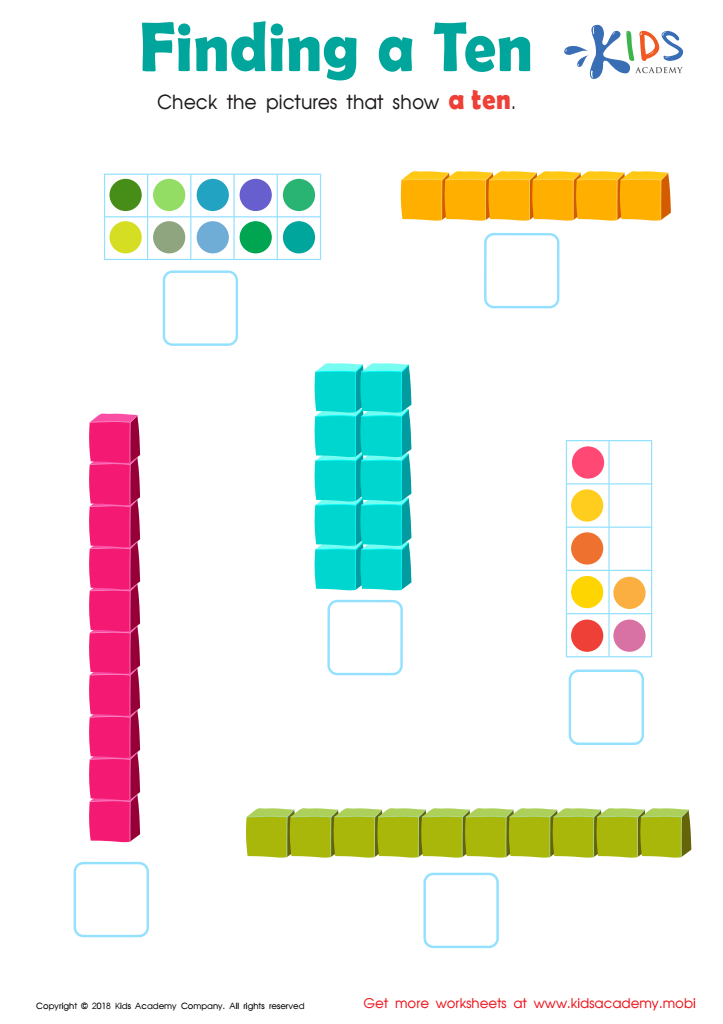
Finding a Ten Worksheet
 Assign to My Students
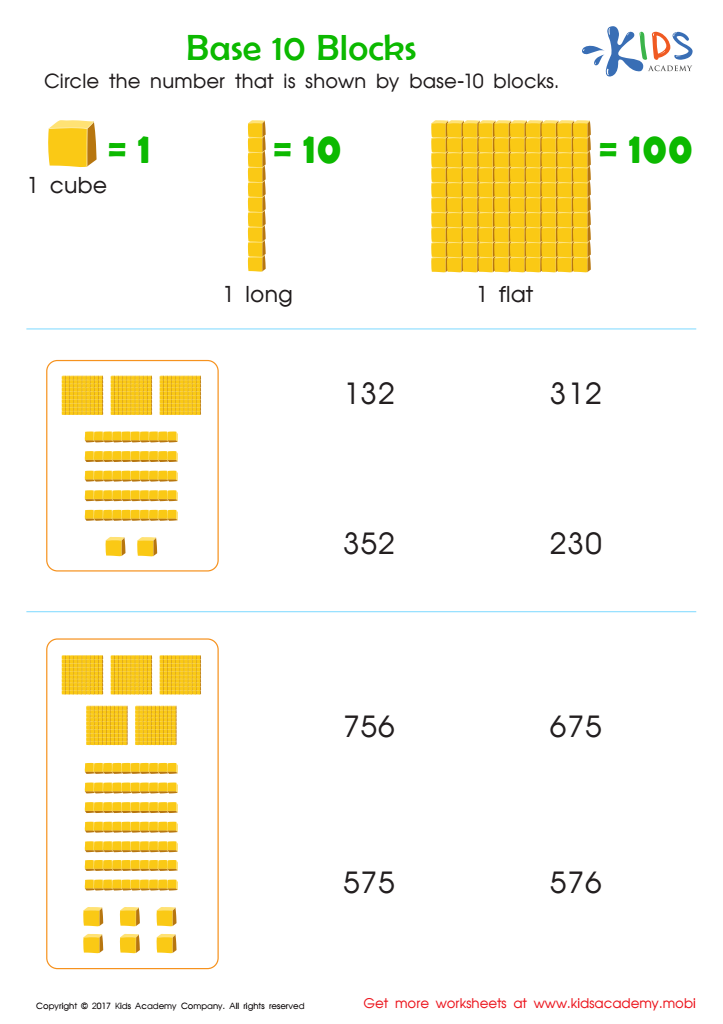
Base Ten Blocks Worksheet
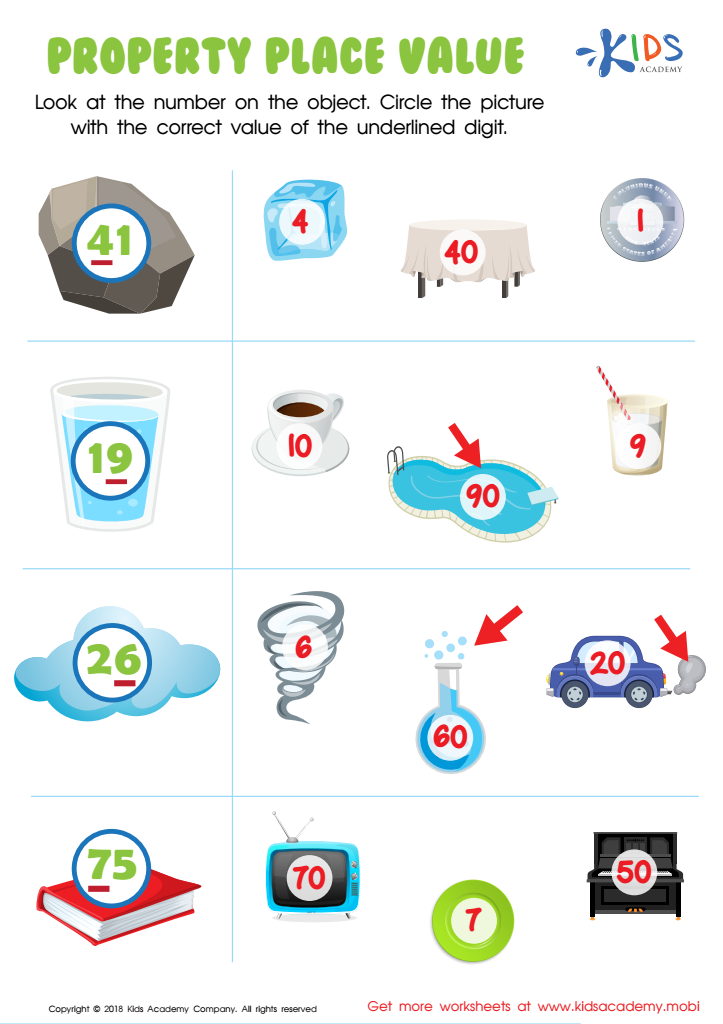
Property Place Value Worksheet
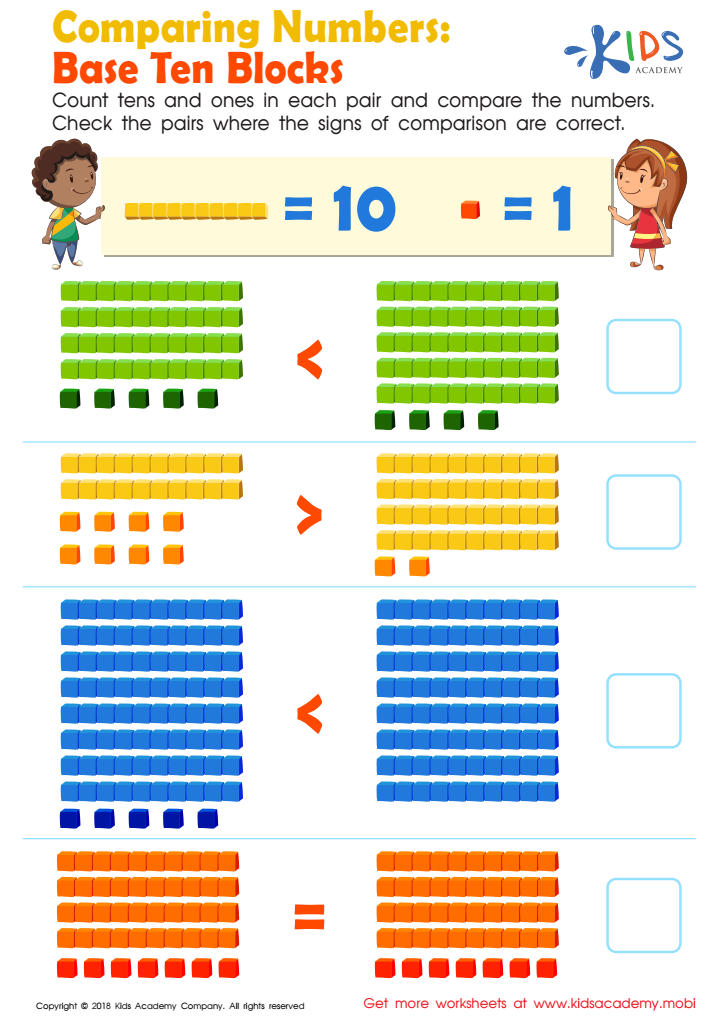
Comparing Numbers: Base Ten Blocks Worksheet
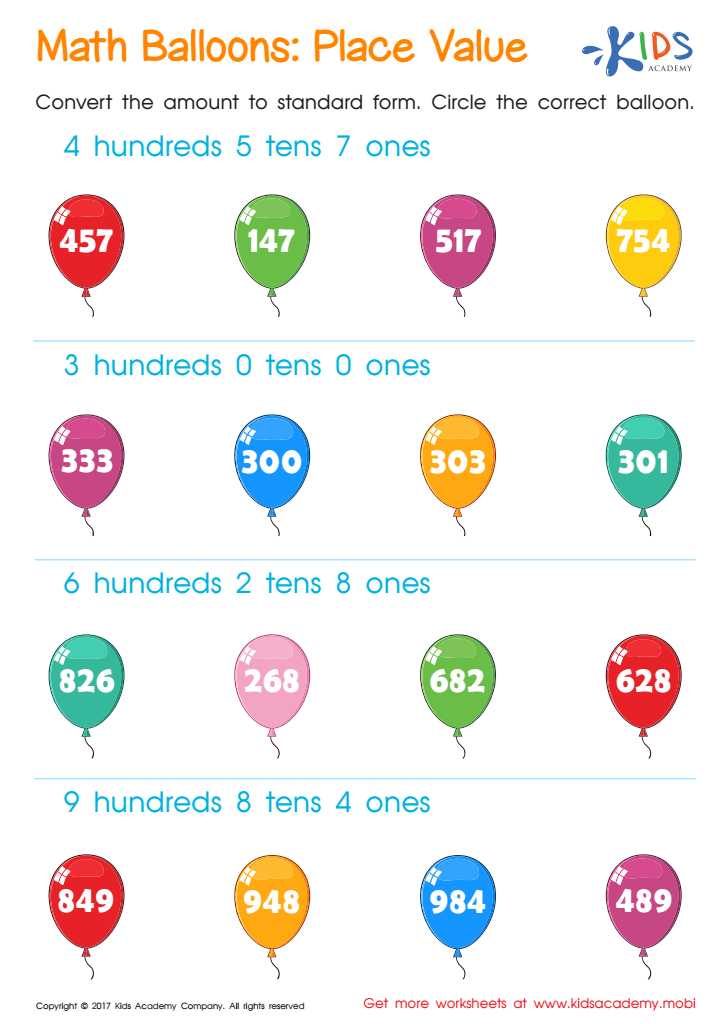
Place Value Printable Worksheet
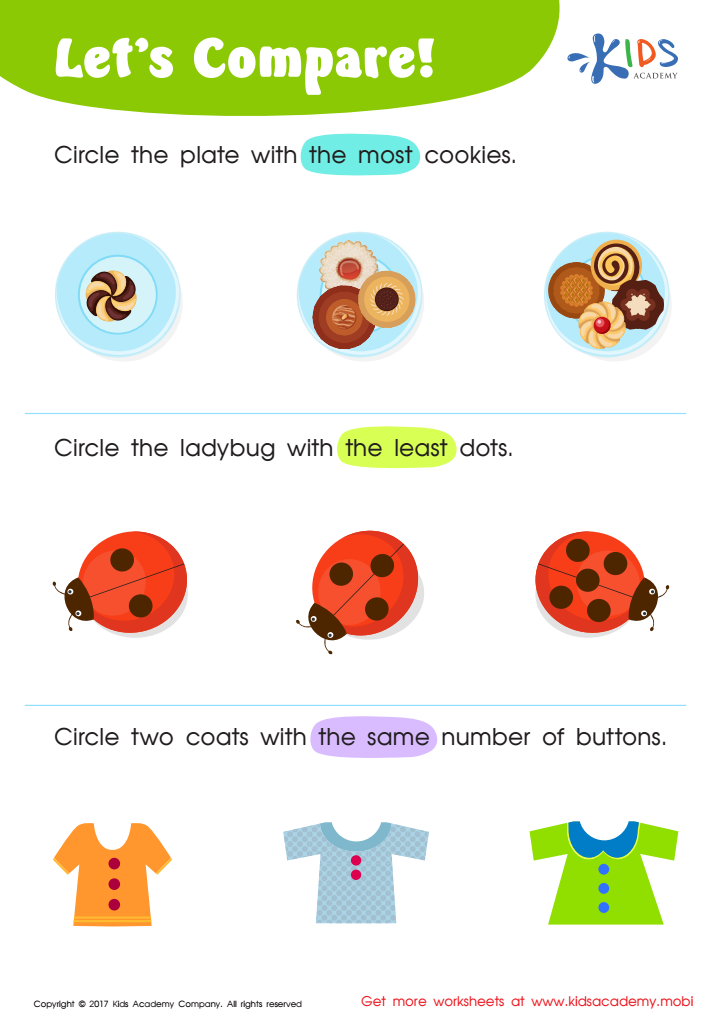
Matching: Classifying Toys by Size Worksheet







Developing math skills for children ages 3-7 is essential because it lays the foundation for future academic success and everyday problem-solving abilities. During these formative years, young minds are incredibly receptive to new information and concepts, making it an ideal time to introduce basic math skills. Early math education promotes numeracy, including counting, understanding shapes, and recognizing patterns, which are crucial building blocks for more complex concepts later on.
For parents and teachers, fostering an environment that encourages math learning can build a child's confidence and curiosity in the subject. This age is also when children learn to enjoy learning and establish positive attitudes towards school. Engaging in age-appropriate math activities — such as playing counting games, identifying shapes, and sorting objects — can make learning fun and interactive, which can lead to a lifelong appreciation for math.
Moreover, early math skills are linked with higher academic achievement not only in math but also in other areas like literacy and science. They help develop critical thinking, problem-solving abilities, and logical reasoning, which are vital for everyday life. By prioritizing math development in early childhood, parents and teachers can provide children with the tools they need for future success both inside and outside the classroom.








