Sentence comprehension Normal Worksheets for Ages 3-7
6 filtered results
-
From - To
Our Sentence Comprehension Worksheets for ages 3-7 are designed to enhance young learners' grasp of language and reading skills. These engaging and interactive worksheets help children understand and interpret simple sentences, fostering their ability to follow instructions and form connections between words and ideas. By offering a foundation in early literacy, these printable resources support vocabulary development, comprehension abilities, and overall communication skills. Perfect for use at home or in the classroom, these worksheets are an ideal tool to build confidence and enjoyment in reading for young learners. Explore our collection today and watch your child's abilities soar!
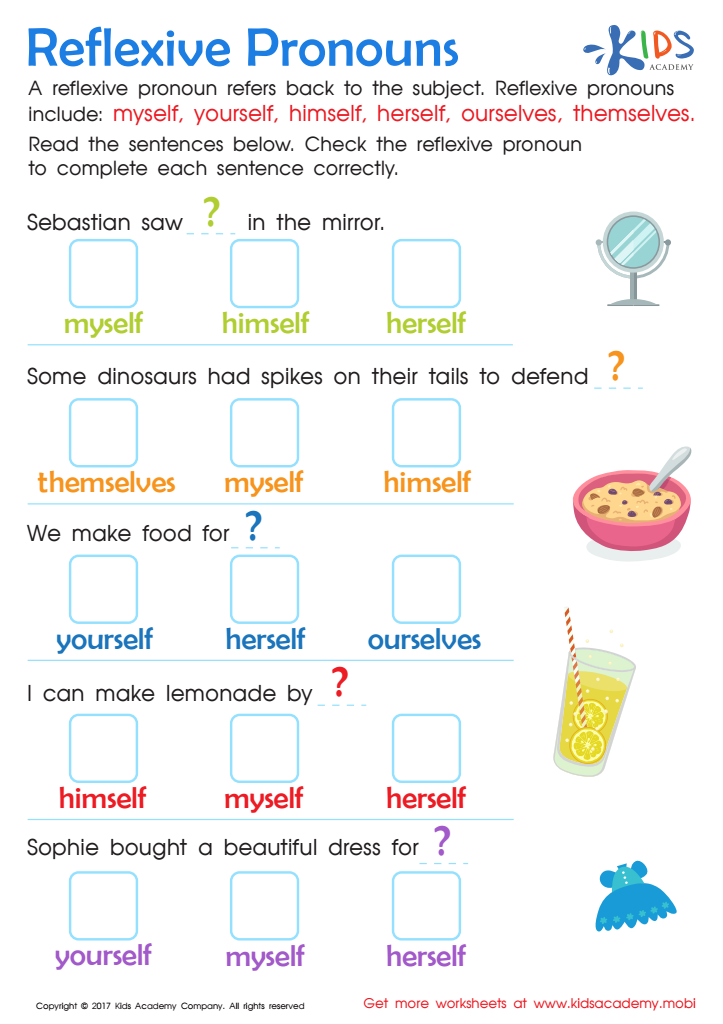
Reflexive Pronouns Worksheet
 Assign to My Students
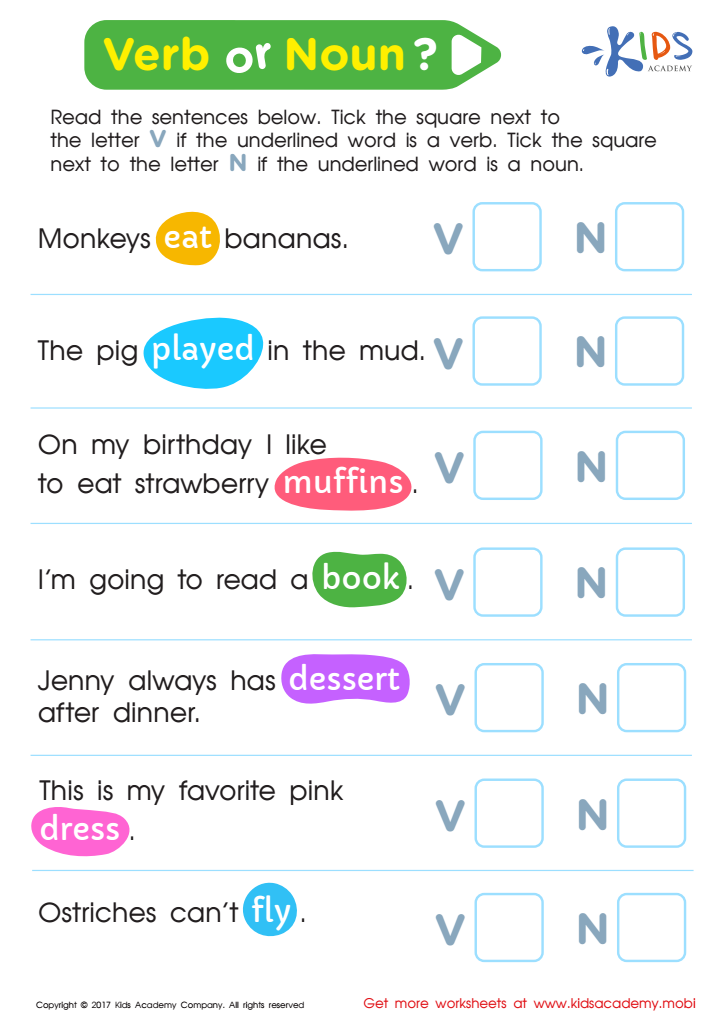
Verb or Noun Worksheet
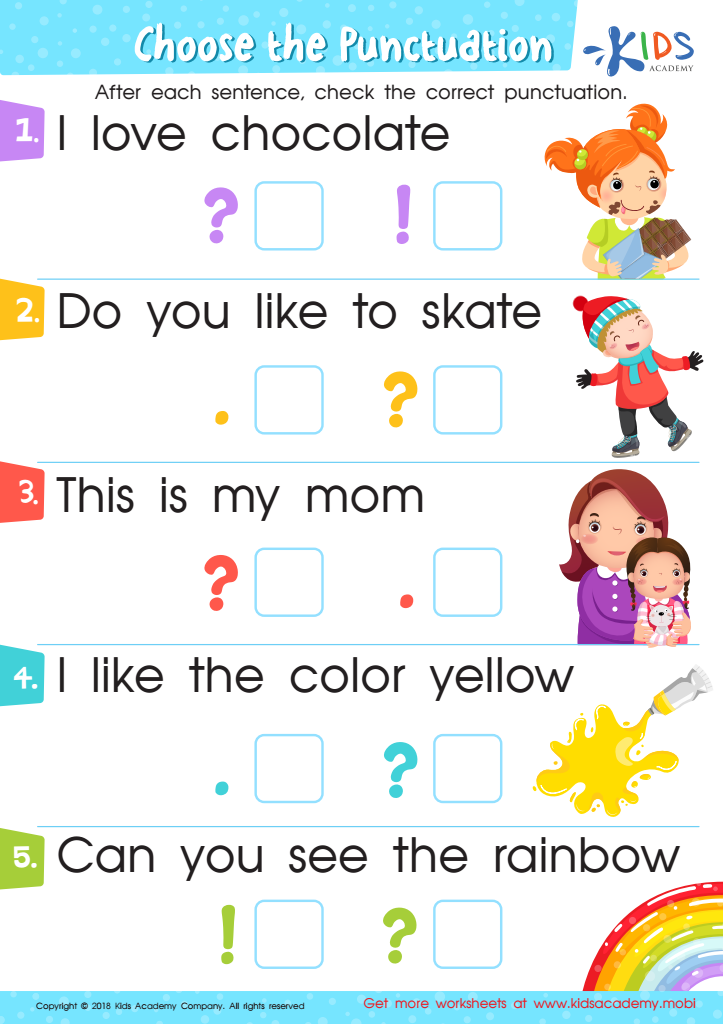
Choose the Punctuation: Assessment Worksheet
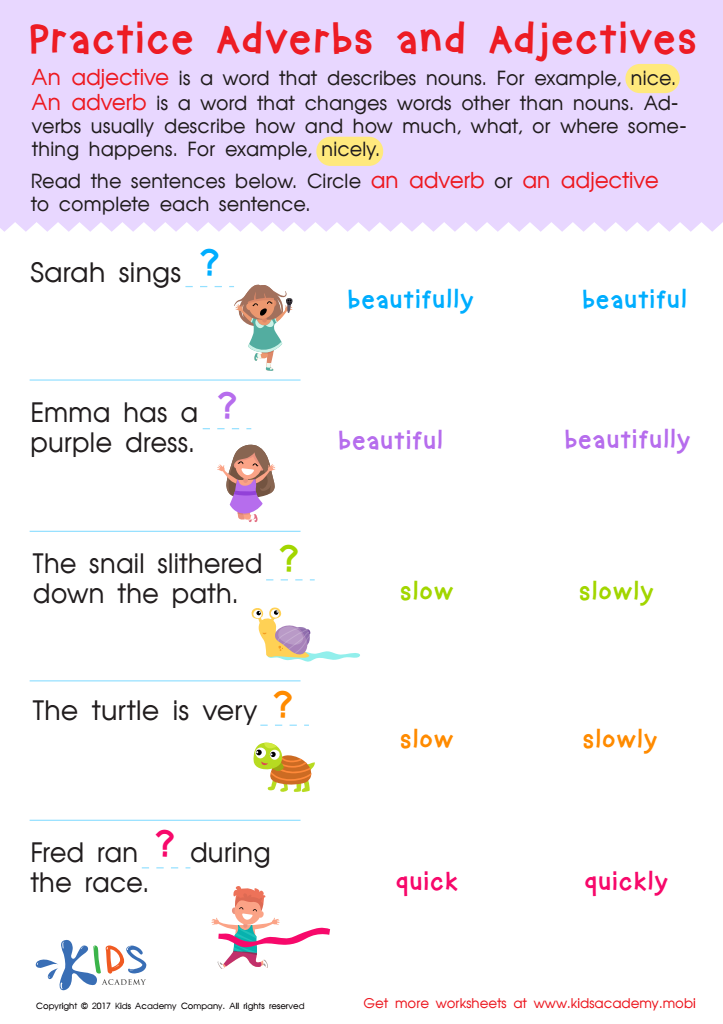
Adverbs and Adjectives Worksheet
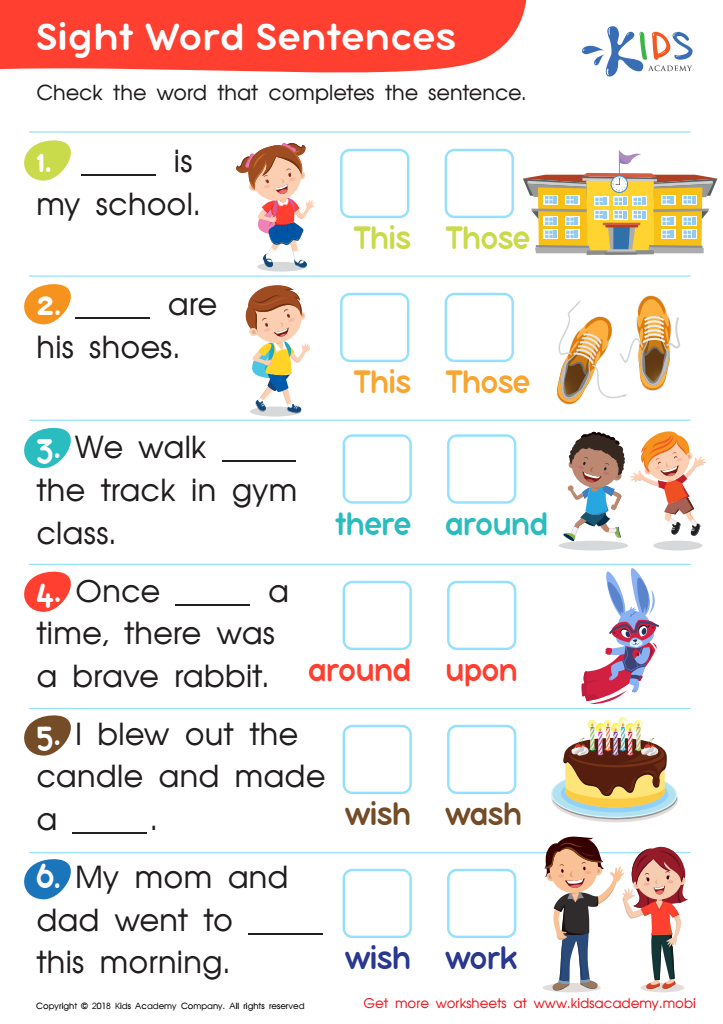
Sight Word Sentences Worksheet
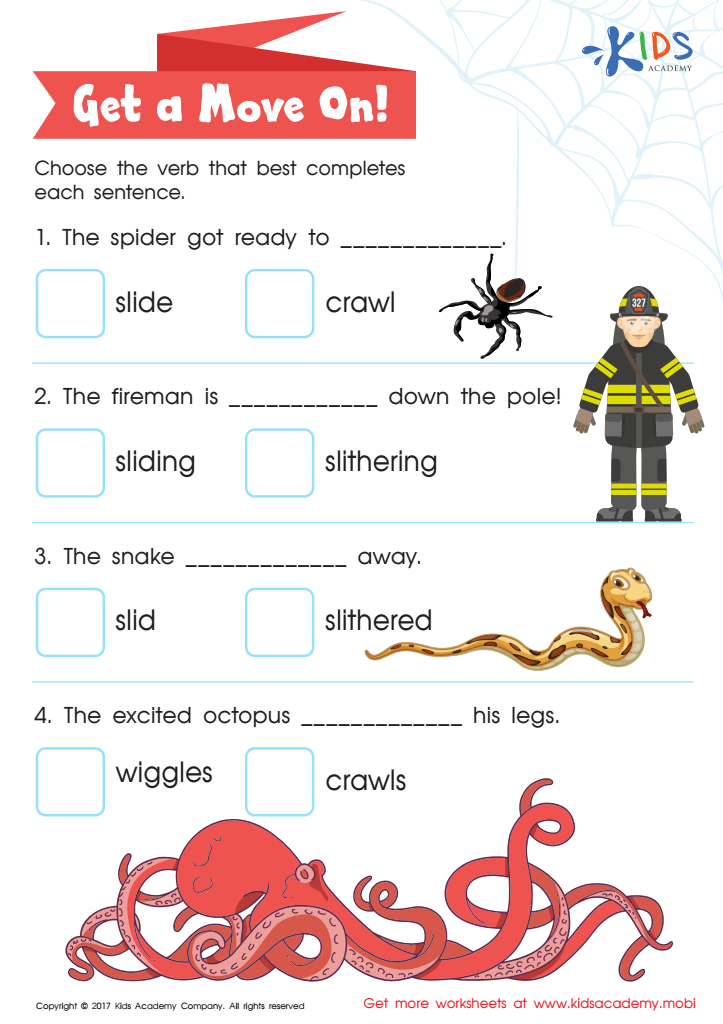
Verb Worksheet



.jpg)




Sentence comprehension is crucial for children aged 3-7 as it lays the foundation for language development and cognitive growth. During these formative years, children rapidly acquire linguistic skills, acquiring the ability to understand and construct sentences. Parents and teachers should prioritize sentence comprehension to foster effective communication abilities, critical for both academic and social success.
Understanding sentences allows children to follow instructions, comprehend stories, and interact meaningfully with peers and adults, enhancing their overall learning experience. Intact comprehension promotes cognitive development by enabling children to process information, reason, and make connections between concepts. This skill also supports the acquisition of other academic skills, including reading and writing, as reading comprehension relies heavily on the understanding of sentence structures and meanings.
Furthermore, strong sentence comprehension can impact a child’s confidence and self-expression, reducing frustration and encouraging curiosity and engagement in the learning process. Early educational interventions and activities that enhance sentence comprehension can address potential deficits early on, preventing future academic challenges.
In summary, prioritizing sentence comprehension for young children ensures a robust foundation for future learning and success, benefiting their academic performance, social interactions, and overall cognitive development. Parents and teachers play a pivotal role in nurturing these essential skills through attentive, interactive, and supportive educational practices.








