Sound Association Normal Worksheets for Ages 3-7 - Page 2
27 filtered results
-
From - To
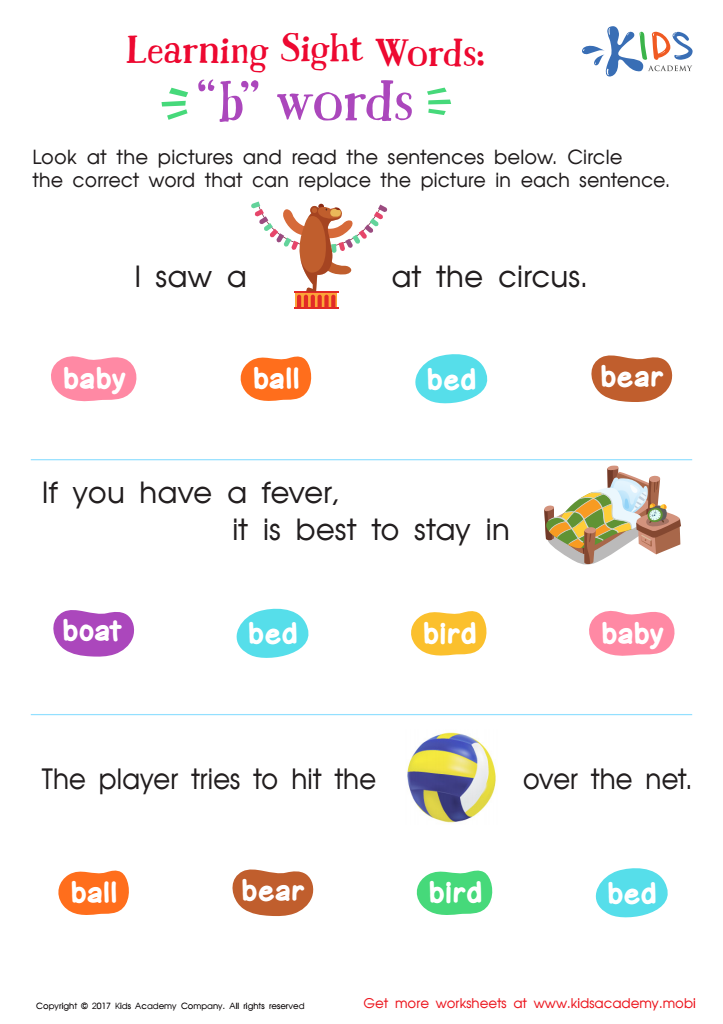
"B" Words Printable Sight Words Worksheet
 Assign to My Students
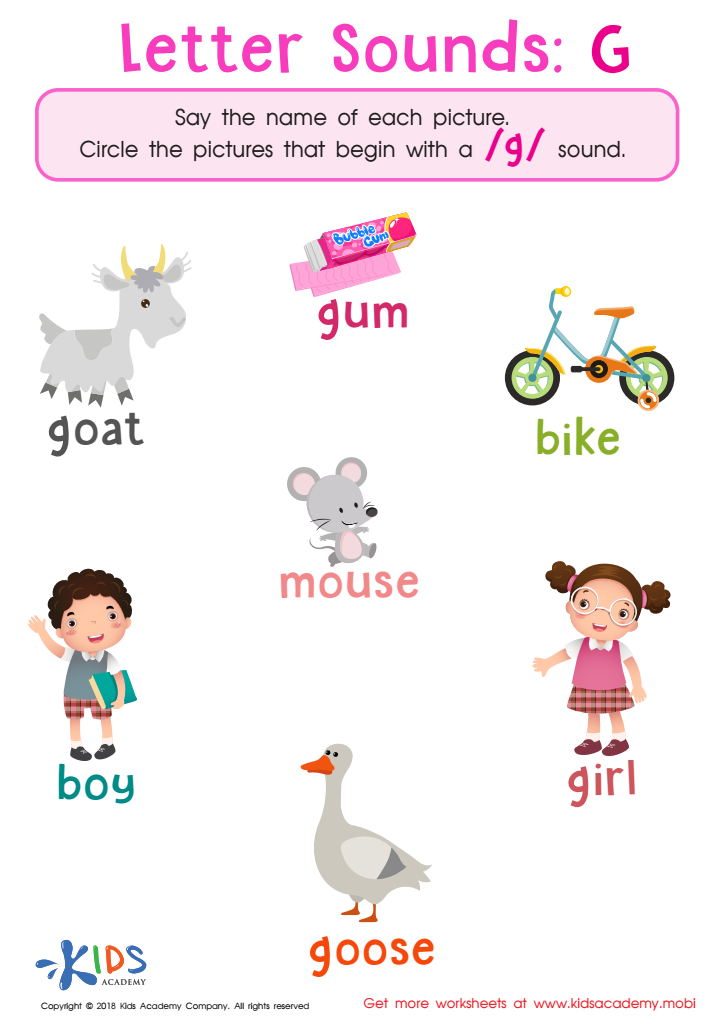
Letter G Sounds Worksheet
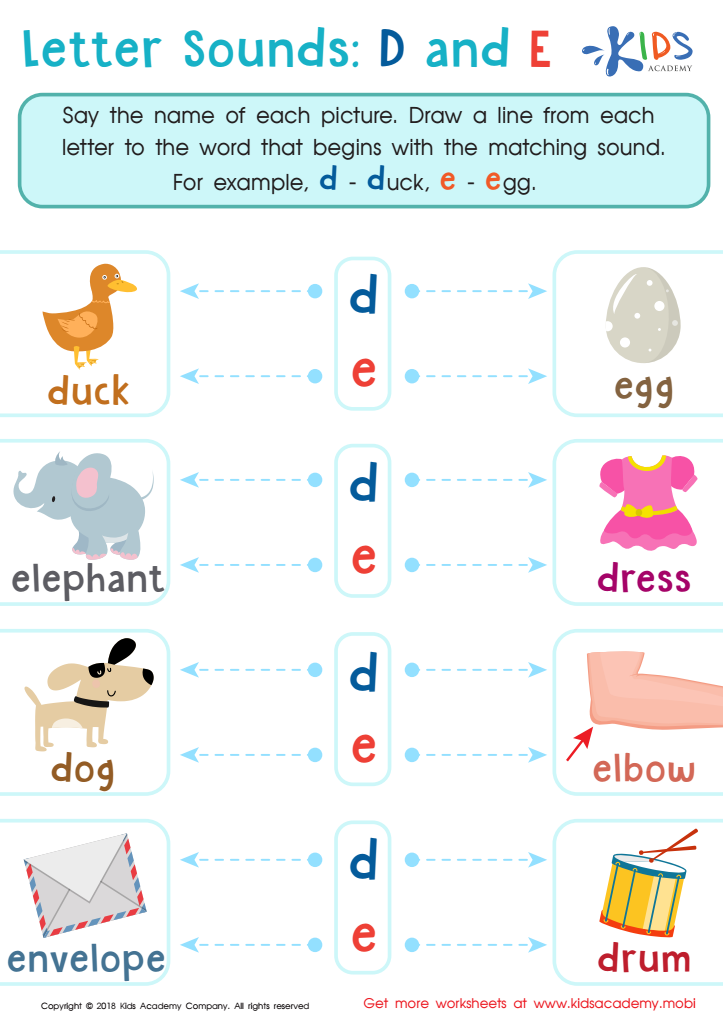
Letter D and E Sounds Worksheet







Sound Association Normal (SAN) is crucial for children aged 3-7 as it lays the foundation for literacy and effective communication skills. At this stage, children are developing phonemic awareness—the ability to identify, analyze, and manipulate sounds in language. A strong grasp of sound association benefits their reading and writing abilities, enabling them to break down words into their phonetic components.
Teachers and parents should adopt interactive and engaging techniques to promote SAN, such as rhyming games, songs, and storytelling. By fostering a positive relationship with sounds early on, children not only excel academically but also gain confidence in their ability to express themselves.
Moreover, understanding sound relationships enhances listening skills, which are essential for mathematics and problem-solving. As they learn to connect sounds to meaning, these foundational skills boost children’s overall cognitive development.
Failing to address SAN may hinder a child's progression in reading and writing, creating gaps that can affect their future learning. Ultimately, prioritizing sound association aids in establishing a solid groundwork for lifelong learning, making it essential for educators and caregivers to support and nurture these skills during this critical developmental phase.








