Understanding vowel sounds Normal Worksheets for Ages 3-7
4 filtered results
-
From - To
Explore our engaging "Understanding Vowel Sounds Normal Worksheets" for children aged 3-7! These carefully designed sheets help young learners recognize and differentiate vowel sounds, essential for developing reading and speaking skills. Featuring colorful illustrations and interactive activities, our worksheets make learning fun and effective. Your child will practice identifying vowels in various words, enhancing their phonemic awareness and boosting their confidence. Perfect for parents and educators alike, these resources align with early learning standards to ensure preschoolers and kindergarteners build a strong foundational literacy skill set. Dive into the world of vowels and watch your child thrive!
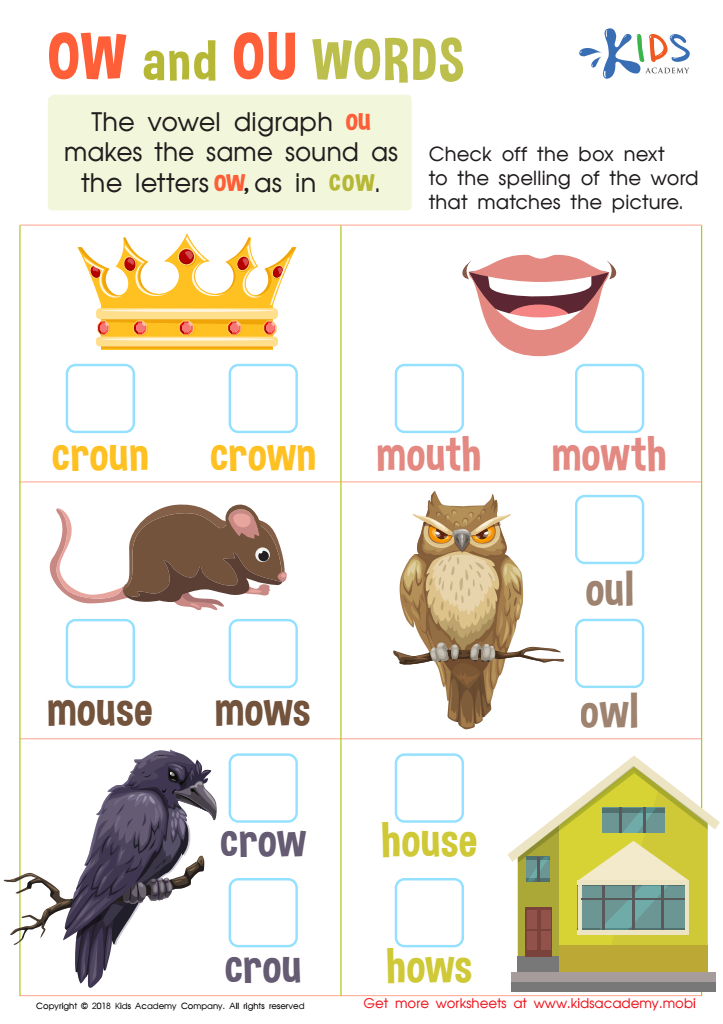
Reading: OW and OU Words Worksheet
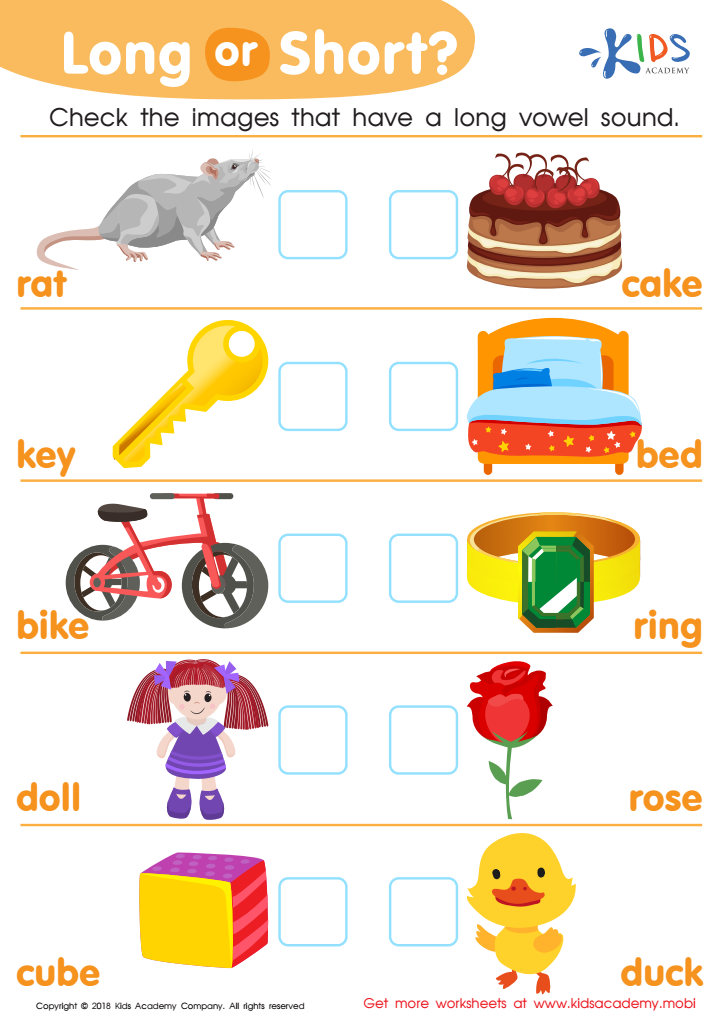
Long or Short Reading Worksheet
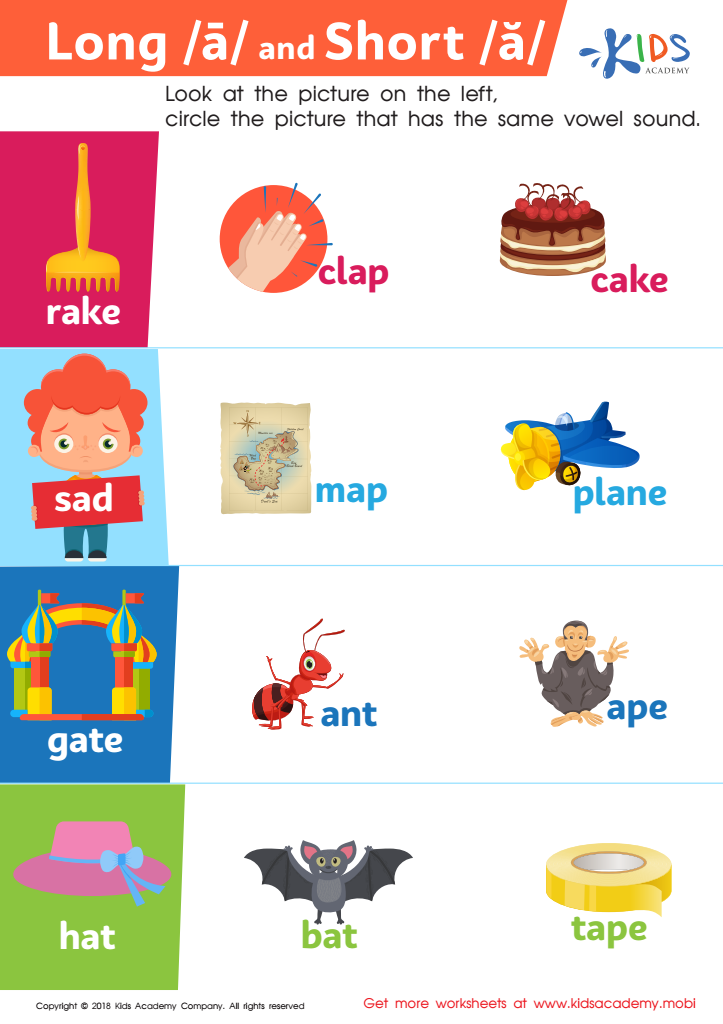
Reading: Long a and Short a Worksheet
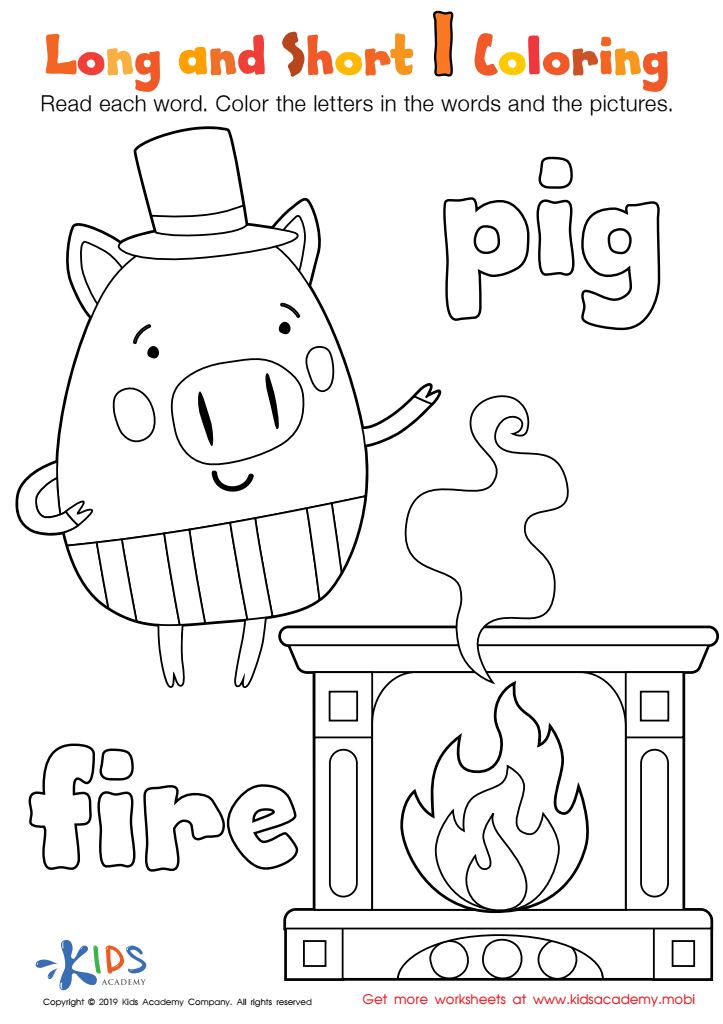
Long and Short I Worksheet
 Assign to My Students








Understanding vowel sounds is crucial for children aged 3-7 as it forms the foundation of their literacy development. During these early years, children are rapidly acquiring language skills, and recognizing and producing vowel sounds aids in their ability to read and spell words. Vowels play a key role in phonics, which is the relationship between sounds and their corresponding letters. By mastering vowel sounds, children learn how to decode words, enhancing their reading fluency and comprehension.
Moreover, strong comprehension of vowel sounds supports verbal communication skills. Children who understand vowel sounds can express themselves more clearly and enhance their vocabulary through effective speaking and listening activities. This not only boosts their confidence but also fosters social interaction with peers.
For parents and teachers, recognizing the importance of vowel sounds means they can better support children’s learning experiences. Incorporating fun and engaging activities that focus on vowel sounds, such as songs, games, and reading exercises, encourages skill development in a playful environment. Ultimately, early attention to vowel sounds lays the groundwork for lifelong literacy and academic success, making it an essential focus for cultivating a love of learning in young children.








