Addition Practice Normal Addition & Subtraction Worksheets for Ages 3-7 - Page 2
29 filtered results
-
From - To
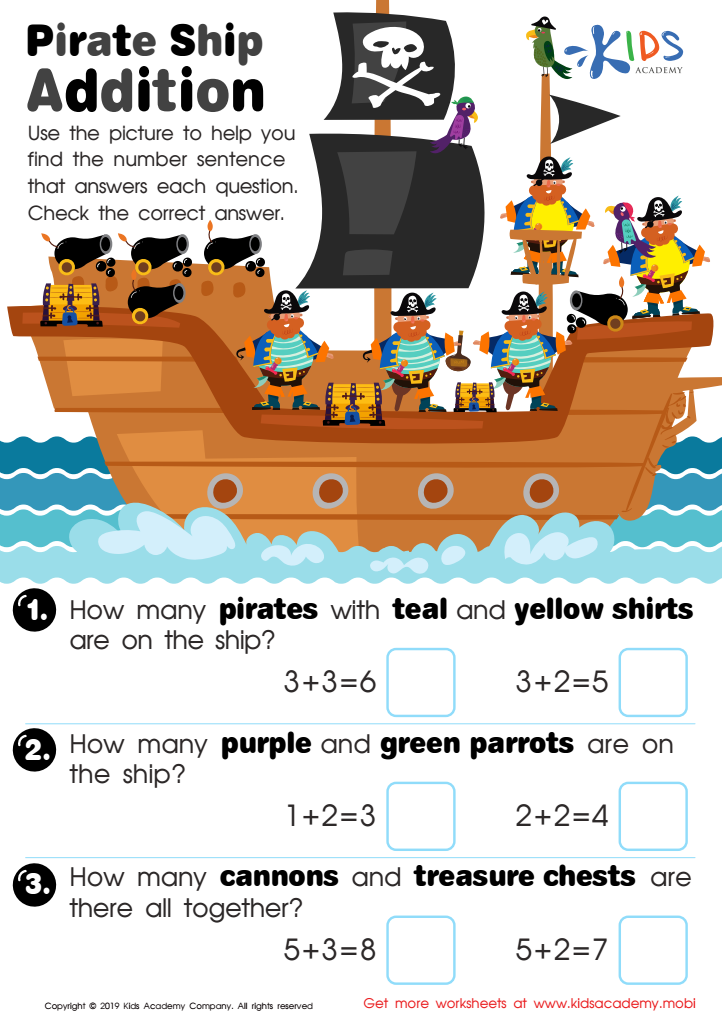
Pirate Ship Addition Worksheet
 Assign to My Students
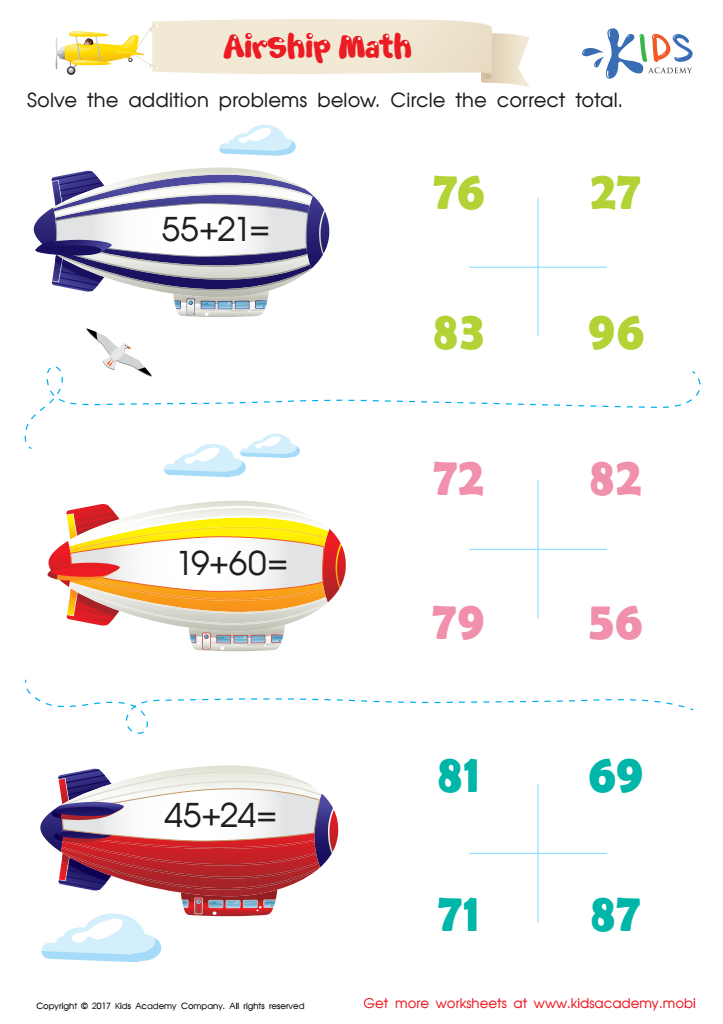
Airship Math Addition Printable
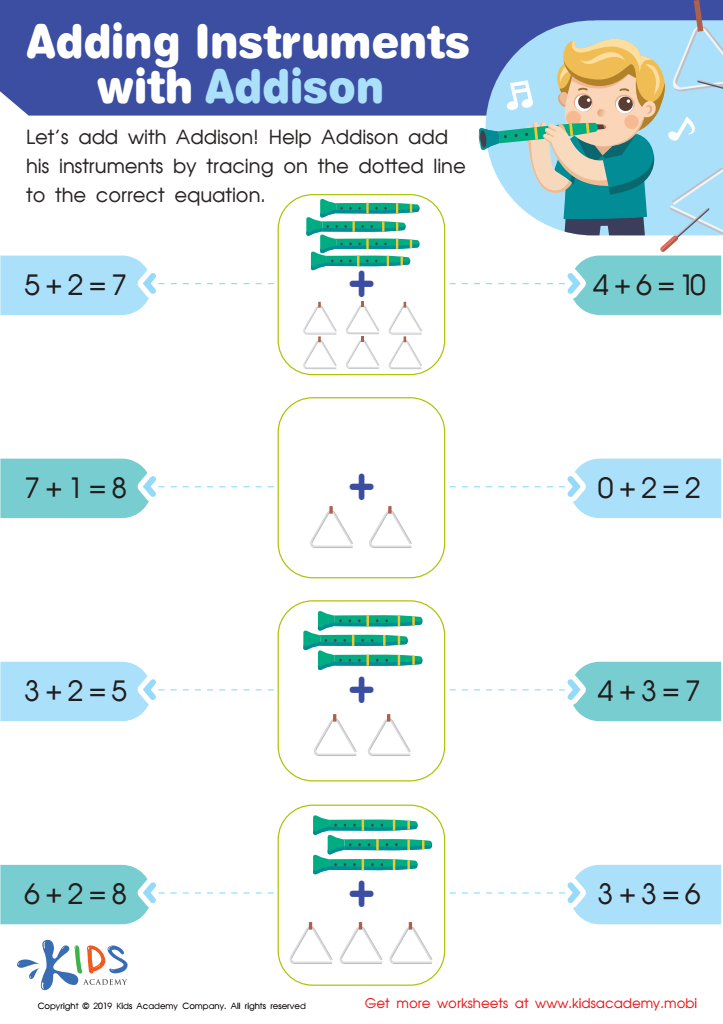
Adding Instruments with Addison Worksheet
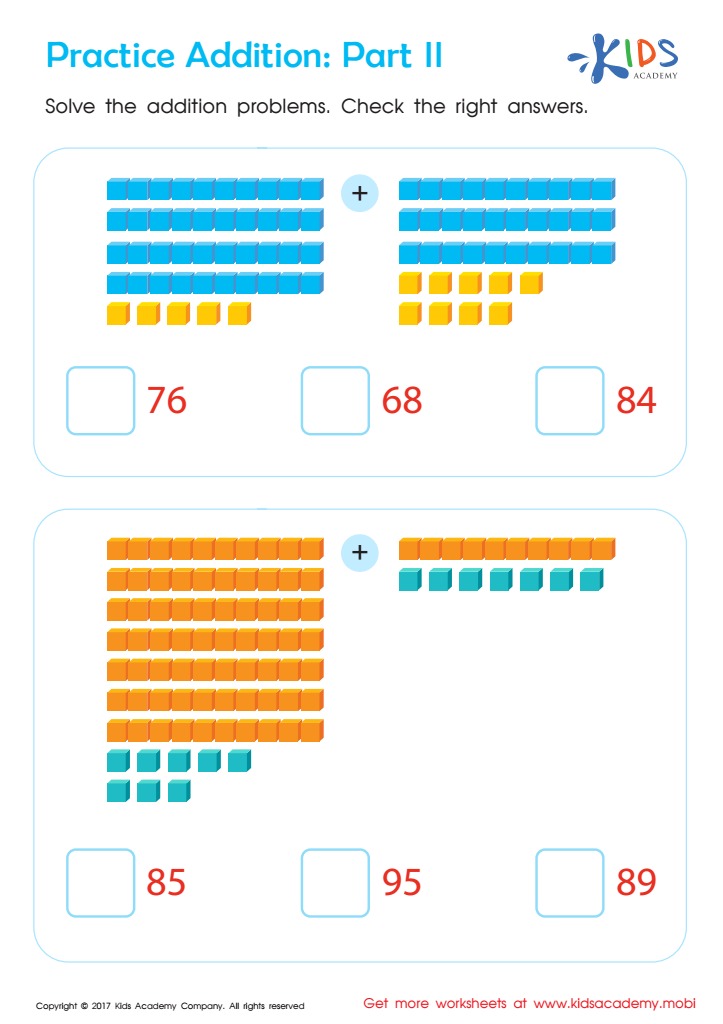
Practice Addition: Part 2 Worksheet
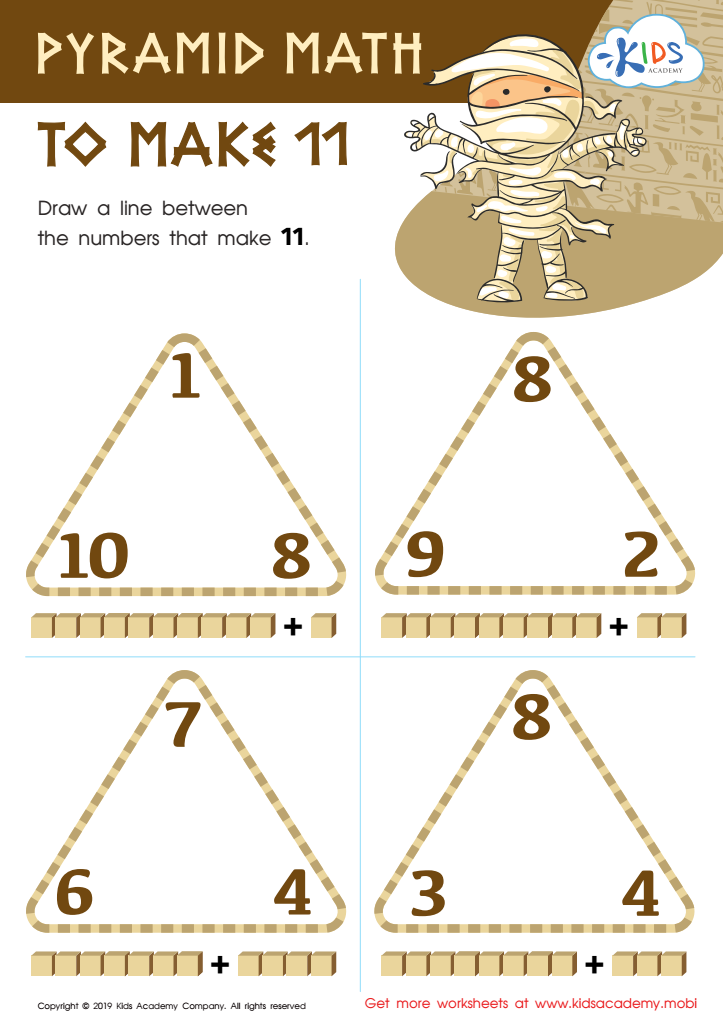
Pyramid Math to Make 11 Worksheet








Parents and teachers should prioritize addition and subtraction practice for children ages 3-7 because these foundational math skills set the stage for a child’s future academic success. At this age, children are not just learning numbers; they are developing critical thinking and problem-solving abilities. Mastering normal addition and subtraction fosters cognitive skills, enhances concentration, and boosts confidence in tackling more complex mathematical concepts later on.
Early math skills also promote children's understanding of the world around them, as math is consistently used in everyday scenarios—such as sharing snacks or counting toys. Engaging in addition and subtraction practice encourages a positive attitude toward math, ultimately helping to dispel anxieties often associated with this subject.
Furthermore, this stage of learning involves play-based practices which make math enjoyable. This interactive form of practice can include games, songs, or activities that integrate math concepts smoothly into the child’s daily life. By recognizing the importance of early mathematics, parents and teachers can work together to create a nurturing environment that values and encourages math fluency, setting children on a path to lifelong learning and academic resilience.








