Number comparison Normal Numbers Worksheets for Ages 3-7
5 filtered results
-
From - To
Discover the perfect tool to enhance your child’s number comparison skills with our engaging Normal Numbers Worksheets designed for ages 3-7. Our expertly crafted worksheets focus on comparing and understanding values, tailored to young learners' developmental stages. Kids will enjoy fun, interactive exercises that build a strong math foundation, featuring vibrant visuals and simple instructions. These worksheets help boost confidence, improve cognitive ability, and support early math learning effectively. Ideal for both classroom and at-home practice, they transform learning into an exciting adventure. Start today and watch your child thrive in mastering number comparison!
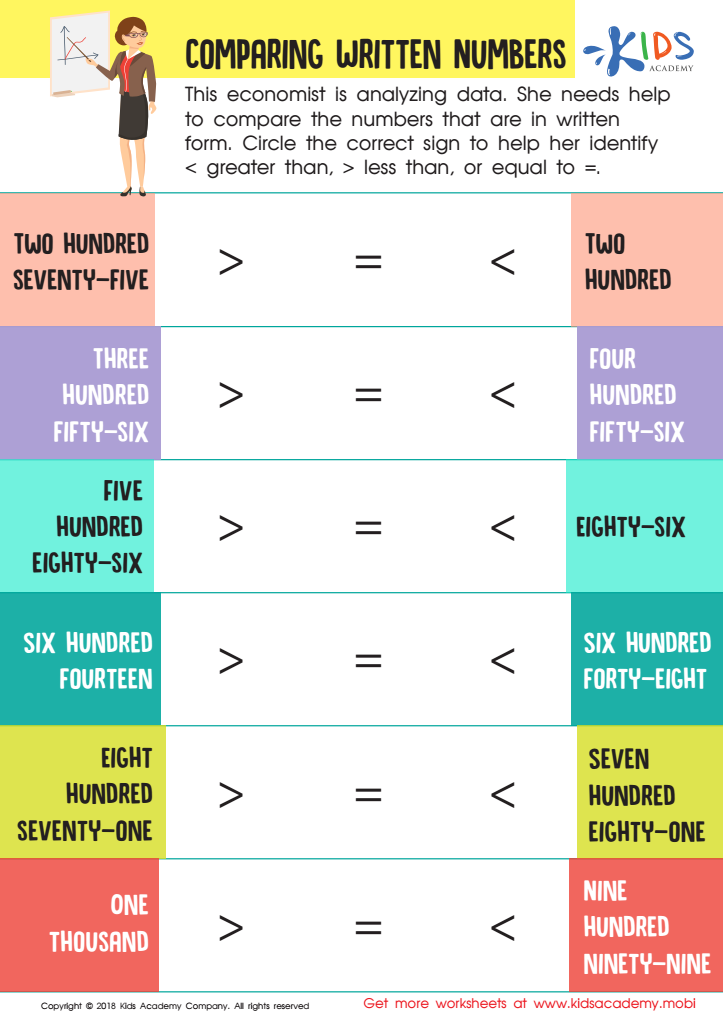
Comparing Written Numbers Worksheet
 Assign to My Students
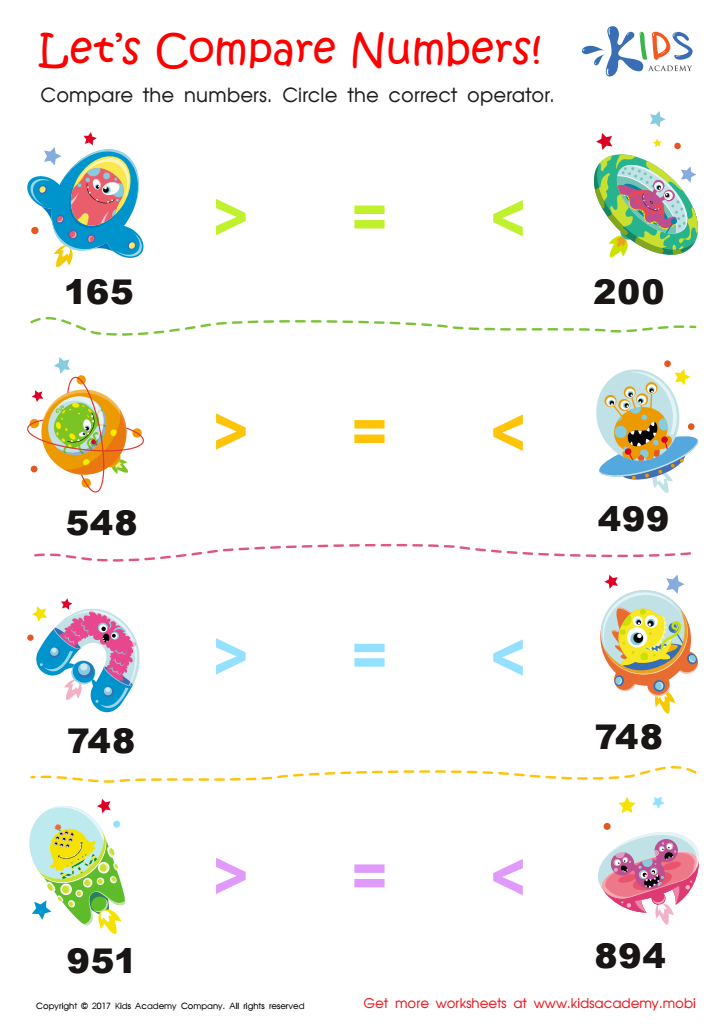
Comparing Numbers Worksheet for 2nd Grade
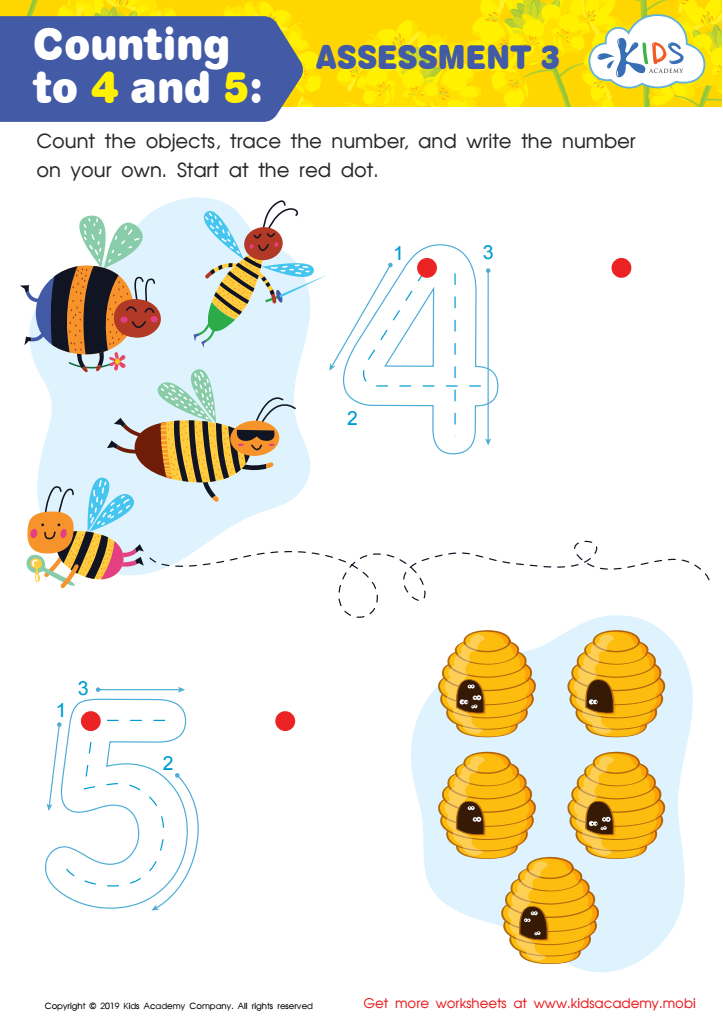
Counting to 4 and 5: Assessment 3 Worksheet
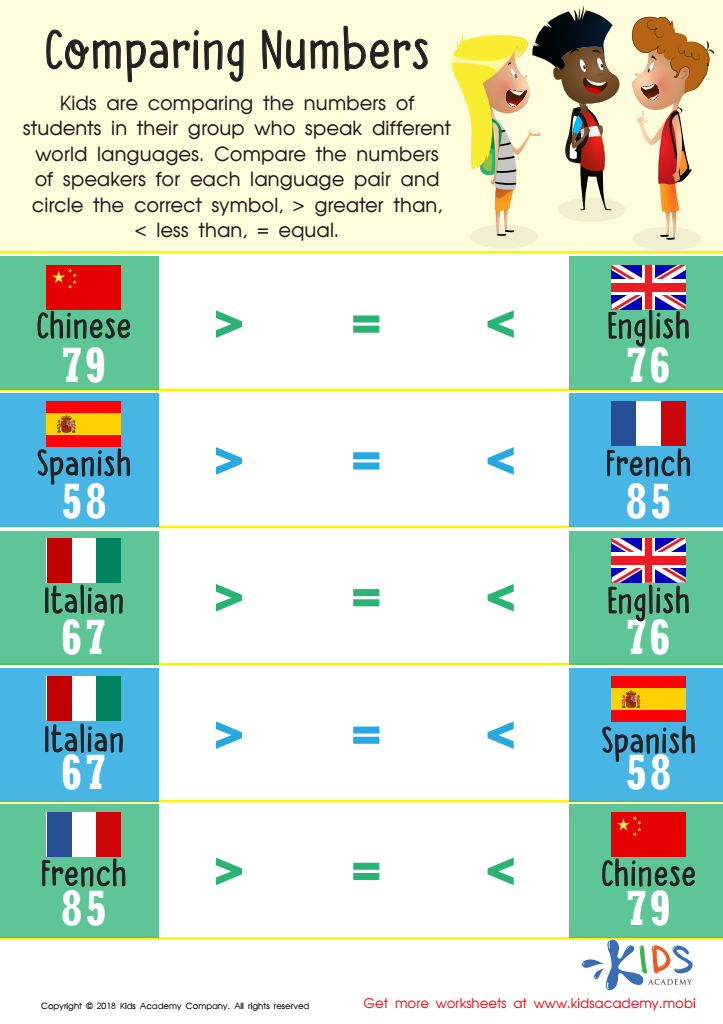
Comparing Numbers Worksheet for 1st Grade
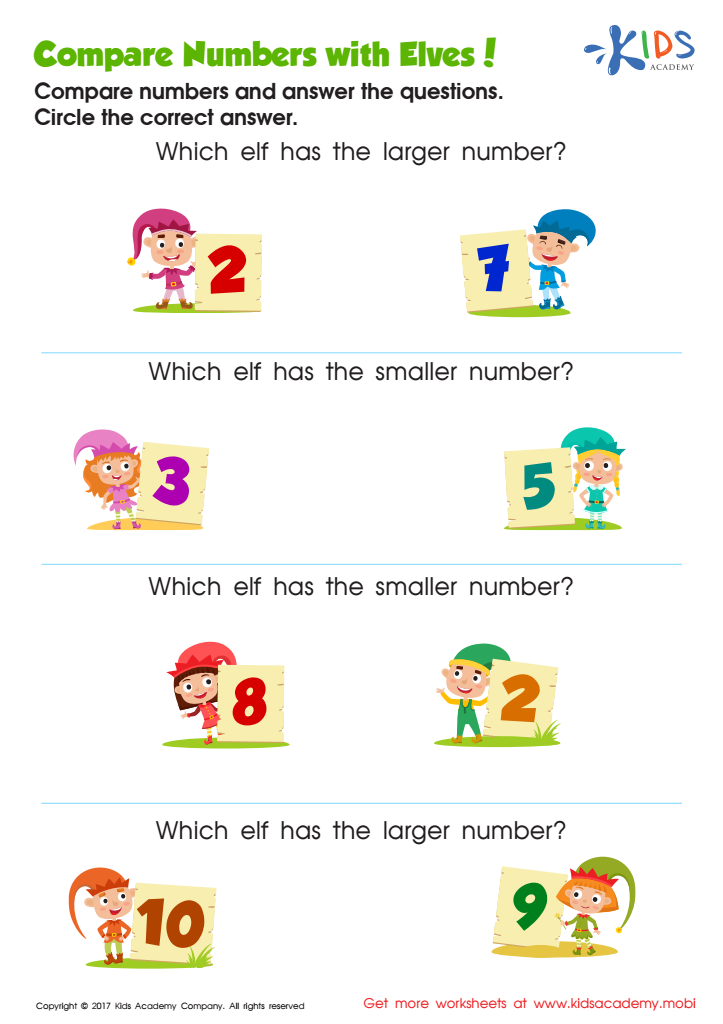
Comparing Numbers Worksheet for Kindergarten



.jpg)




Parents and teachers should care about number comparison for children ages 3-7 as it sets foundational math skills crucial for later learning. At this age, children's cognitive abilities are rapidly developing, and understanding how to compare numbers is a fundamental component of numeracy. Comparing numbers helps kids grasp the concepts of 'more than', 'less than', and 'equal to', which are essential for future arithmetic, including addition, subtraction, multiplication, and division.
Early exposure to number comparison boosts critical thinking and problem-solving skills. For instance, when children determine which of two numbers is bigger or smaller, they practice logical reasoning and decision-making. This can also aid in improving their observational skills and attention to detail.
Boosting confidence in comparing numbers equips children with the self-assurance to tackle more complex mathematical concepts as they progress in their education. Moreover, being proficient in number comparison contributes to everyday life skills, such as understanding quantities, making judgements about size and weight, and even financial literacy.
In summary, focusing on number comparison during the early years builds a robust mathematical foundation, fosters cognitive development, and enhances everyday reasoning skills, making it a critical area of focus for parents and teachers.