Logical Reasoning Normal Building Vocabulary Worksheets for Ages 3-7
4 filtered results
-
From - To
Unleash your child's potential with our engaging "Logical Reasoning Normal Building Vocabulary Worksheets" designed for ages 3-7! These thoughtfully crafted worksheets blend fun and education, stimulating young minds to enhance their vocabulary and logical reasoning skills. Through a variety of captivating exercises—such as matching pictures, identifying patterns, and completing sentences—children will expand their vocabulary while sharpening their critical thinking abilities. Perfectly suited for early learners, these printable worksheets provide a solid foundation in both language and logical skills, fostering a love for learning and setting the stage for future academic success. Boost your child's cognitive development with Kids Academy today!
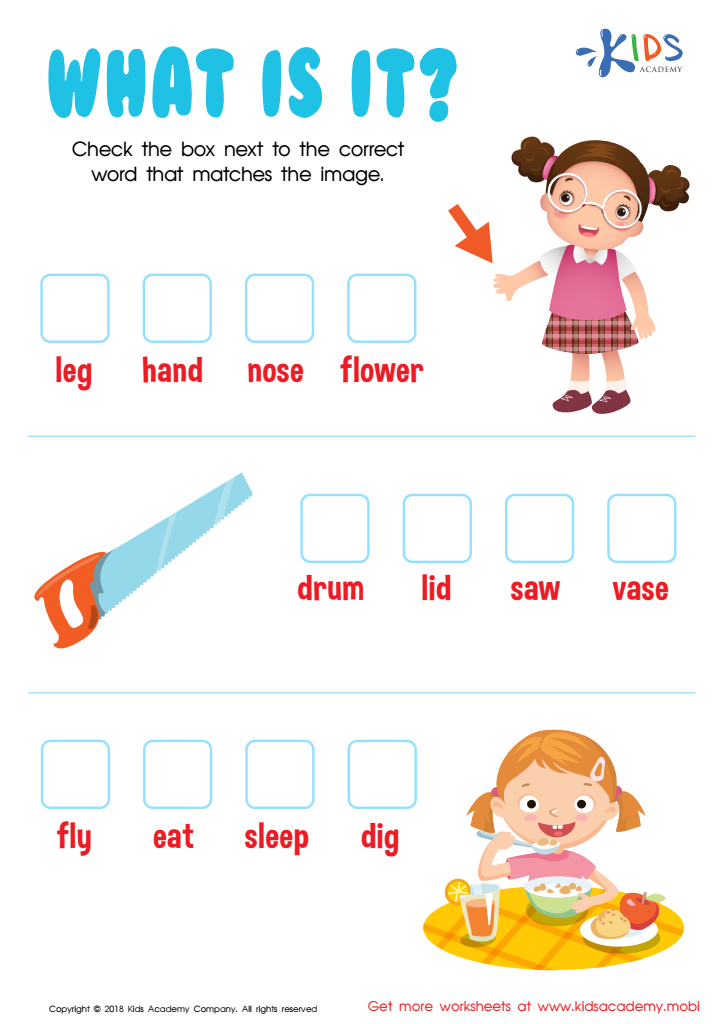
What Is It? Worksheet
 Assign to My Students











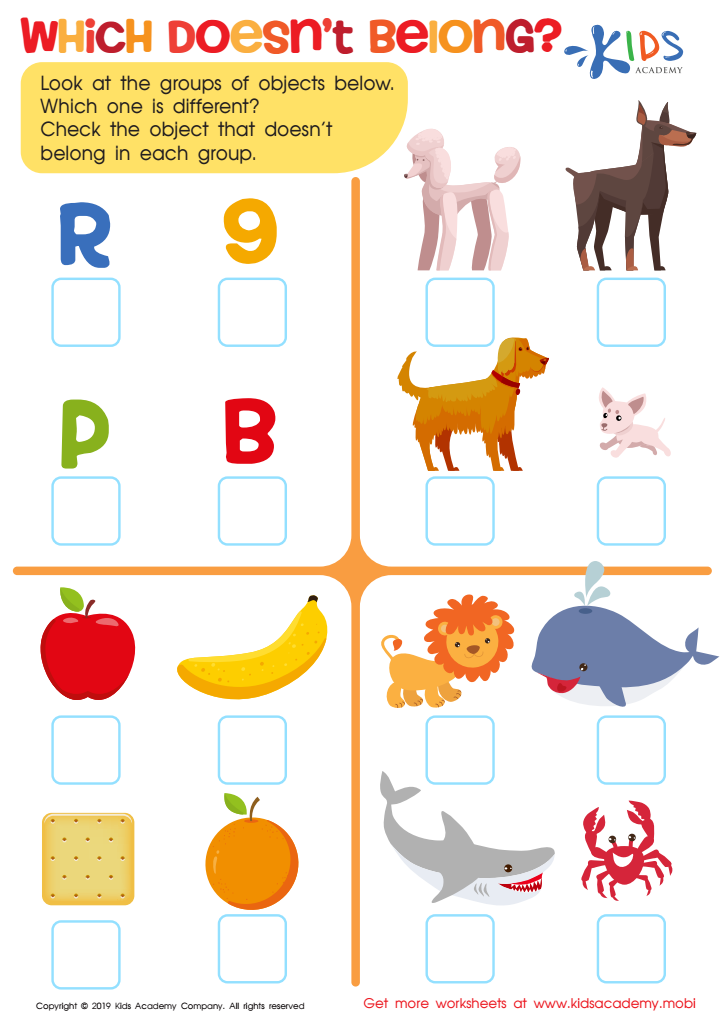
Which Doesn't Belong? Worksheet
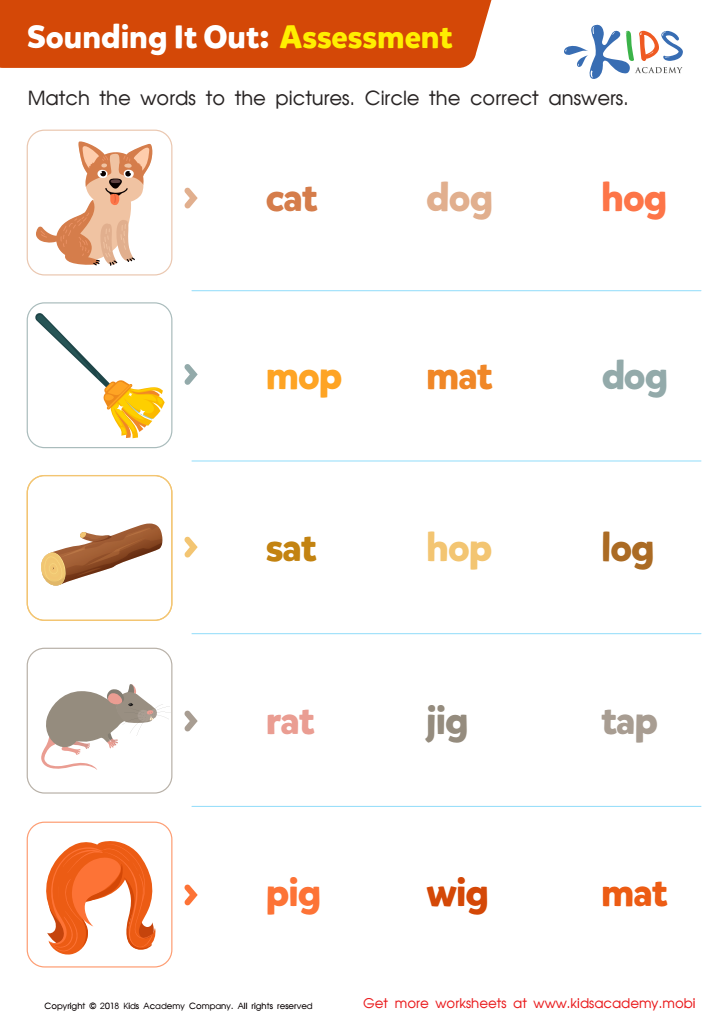
Sounding it Out: Assessment Worksheet
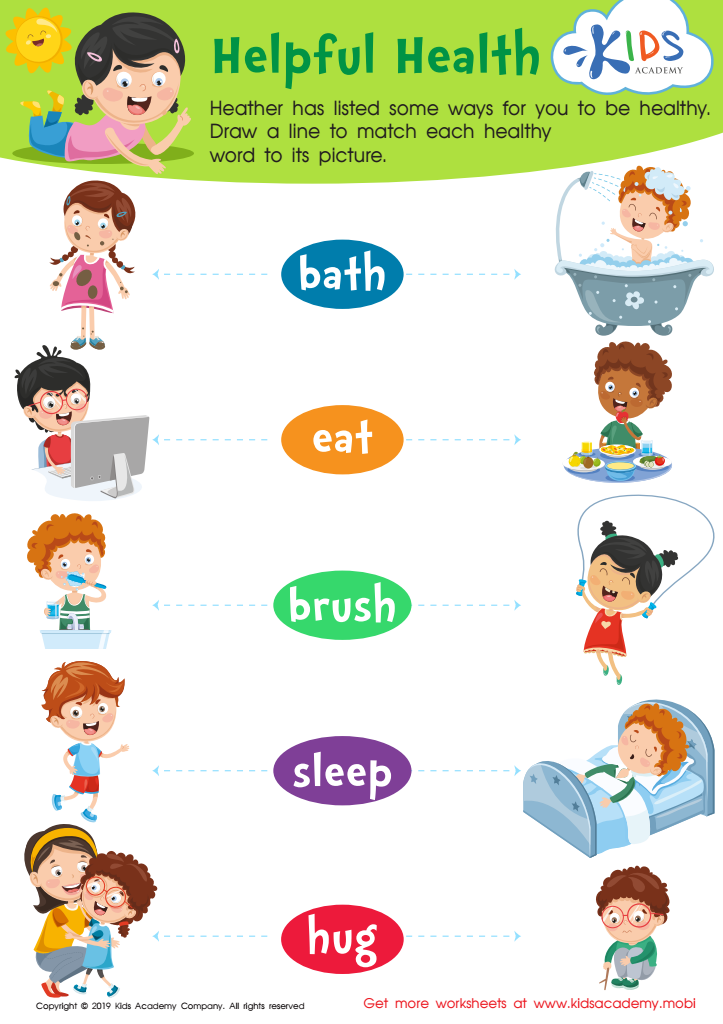
Helpful Health Worksheet



.jpg)




Parents and teachers should prioritize developing logical reasoning and building vocabulary in children ages 3-7 because these are foundational years for cognitive and linguistic growth. Logical reasoning helps children understand relationships, cause-and-effect, and problem-solving. When nurtured early, it sets the stage for critical thinking skills necessary for academic success and everyday life.
Meanwhile, a strong vocabulary is essential for effective communication, reading comprehension, and overall learning. As children learn new words, they acquire the tools to express their thoughts clearly and understand complex ideas. Vocabulary development at this age also correlates with later academic achievement; studies show that children with a rich vocabulary are better prepared for reading and writing tasks.
Moreover, combining logical reasoning with vocabulary building fosters holistic cognitive development. For instance, when children categorize objects or follow sequential instructions, they simultaneously expand their vocabulary and enhance logical thought processes. Activities like storytelling, puzzles, and interactive play also stimulate both areas, making learning engaging and effective.
In essence, focusing on these skills during early childhood provides a strong educational foundation, fostering abilities that will benefit children throughout their lives, both in school and beyond. Investing in these areas helps ensure that children develop into articulate, thoughtful, and capable individuals.








