
Animal identification Normal Reading Worksheets for Ages 3-7
3 filtered results
Difficulty Level
Grade
Age
-
From - To
Subject
Activity
Standards
Discover engaging Animal Identification Normal Reading Worksheets designed for children aged 3-7! Our interactive resources help young learners develop essential reading skills while exploring the fascinating world of animals. Each worksheet features colorful illustrations and simple texts, allowing children to identify various animals and enhance their vocabulary in a fun, educational way. These worksheets support early literacy development and spark curiosity about the animal kingdom. Perfect for at-home learning or classroom activities, our animal identification worksheets make learning enjoyable and accessible. Dive into our collection today and watch your child's reading confidence soar while they discover the wonders of the animal world!
Favorites
With answer key
Interactive
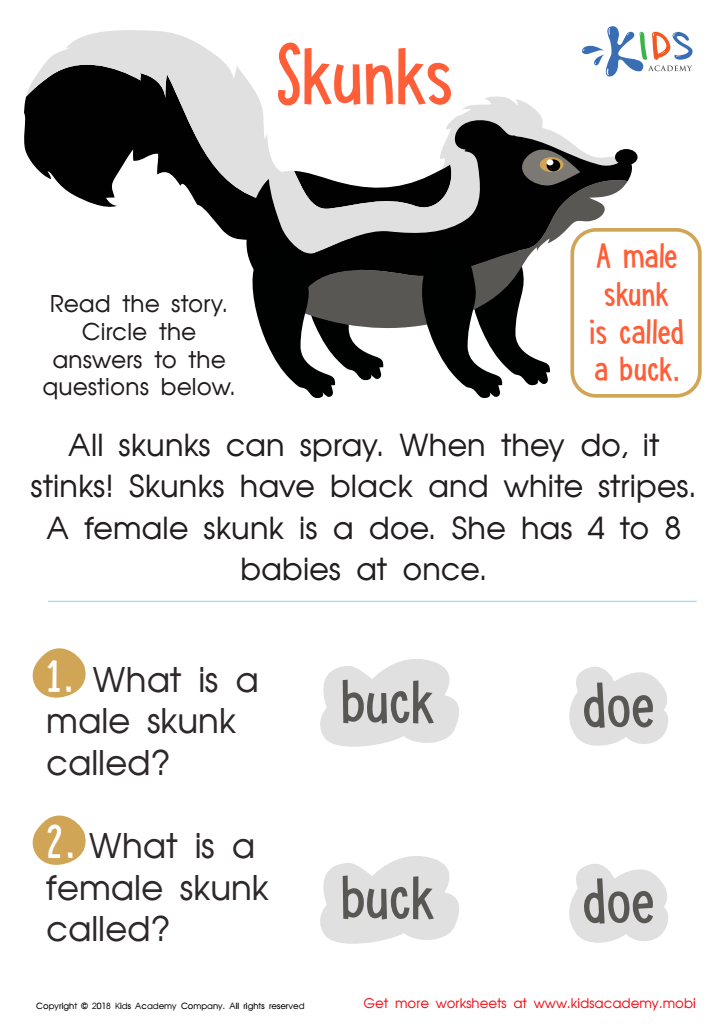
Skunks Worksheet
Kids can learn fascinating information about a beloved and smelly animal with this fun worksheet. They'll read articles, texts, and look at an accompanying picture while reading. Captions and sidebars can give extra details. Finally, answer the given questions by selecting the correct response. Reading is a fun and informative way to gain knowledge!
 Assign to My Students
Skunks Worksheet
Worksheet
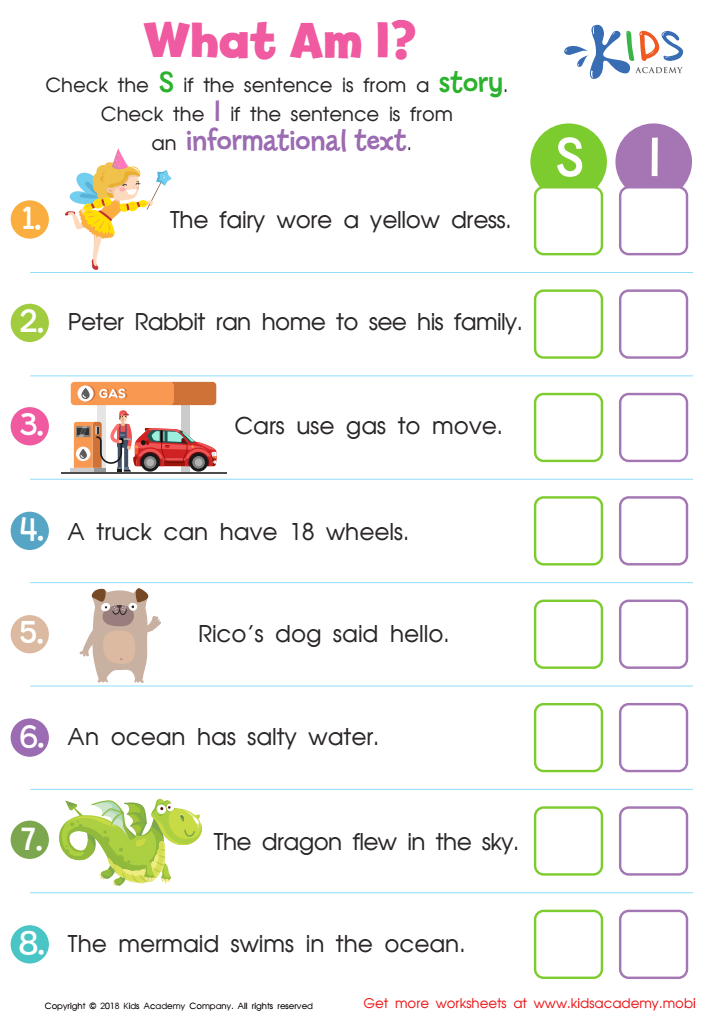
What Am I? Worksheet
This worksheet assesses students' ability to differentiate between stories and texts they read for facts. Students learn to distinguish between reading for pleasure and reading for information. It includes statements from both a story and an informational text, and students must decide what type of text it is.
What Am I? Worksheet
Worksheet
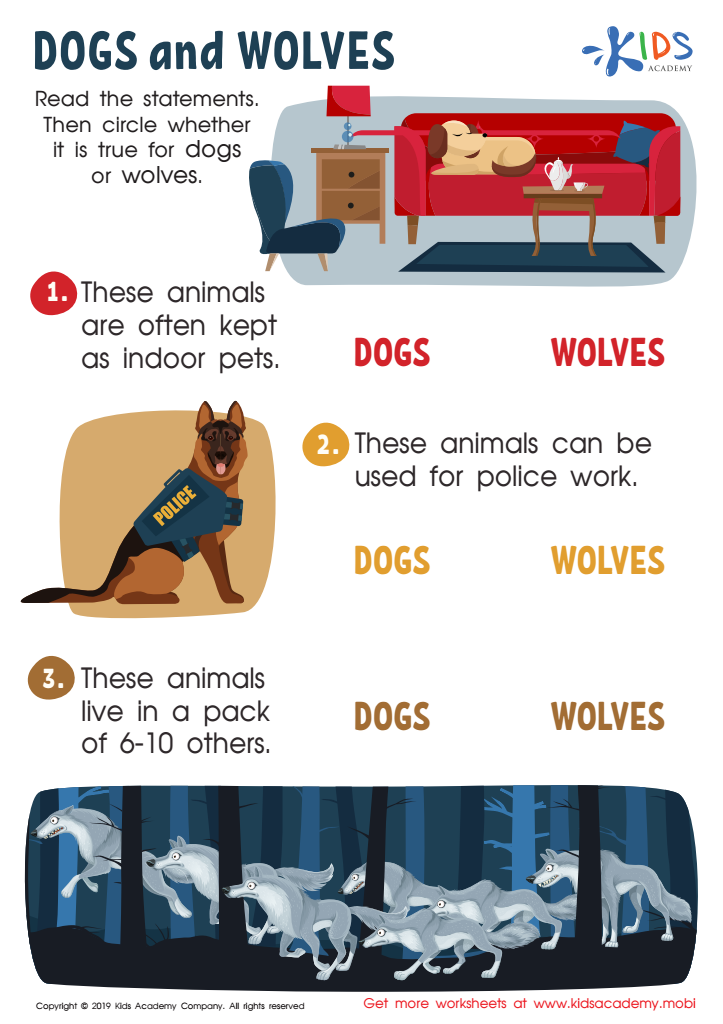
Dogs and Wolves Worksheet
Kids love dogs and wolves, so engaging them with text about them is key. This free, downloadable worksheet allows kids to read statements about dogs and wolves and use picture clues and prior knowledge to decide if the statements are true or false, strengthening their reading comprehension.
Dogs and Wolves Worksheet
Worksheet
Join Kids Academy for Free
Who is primarily going to use this learning content?



.jpg)




Animal identification is a critical aspect of early childhood education, particularly for children aged 3 to 7. This stage of development is when children are naturally curious and eager to learn about the world around them. Teaching them to identify animals enhances their understanding of nature and fosters a love for wildlife.
From a cognitive perspective, recognizing different animals helps develop critical thinking and observational skills. It encourages categorization—understanding similarities and differences between species—which is fundamental for learning in various subjects, such as science and geography. This foundational knowledge supports literacy skills as children build vocabulary through animal names and descriptions.
Socially and emotionally, learning about animals can cultivate empathy and responsibility. Children learn about various habitats, the importance of conservation, and the roles animals play in ecosystems. This awareness fosters a sense of connection to the environment.
For parents and teachers, incorporating animal identification into activities, such as reading stories, visiting zoos, or engaging in nature walks, promotes bonding and shared experiences. It's a joyful way to integrate learning with play. Ultimately, investing time in teaching kids about animals nurtures informed, compassionate individuals who appreciate biodiversity and are more likely to advocate for animal welfare as they grow.








