Language skills development Normal Reading Worksheets for Ages 3-7
3 filtered results
Difficulty Level
Grade
Age
-
From - To
Subject
Activity
Standards
Unlock your child's potential with our Language Skills Development Normal Reading Worksheets, specially designed for children ages 3-7. These engaging worksheets foster essential reading skills such as vocabulary enhancement, phonemic awareness, and comprehension abilities through fun and interactive exercises. Tailored for young learners, each worksheet is crafted to inspire a love for reading while promoting cognitive development through play-based learning. From matching words to pictures to simple sentences, our resources ensure a balanced and enjoyable educational experience. Equip your child with the reading foundation they need for academic success and lifelong learning with our carefully curated collection of worksheets!
Favorites
With answer key
Interactive
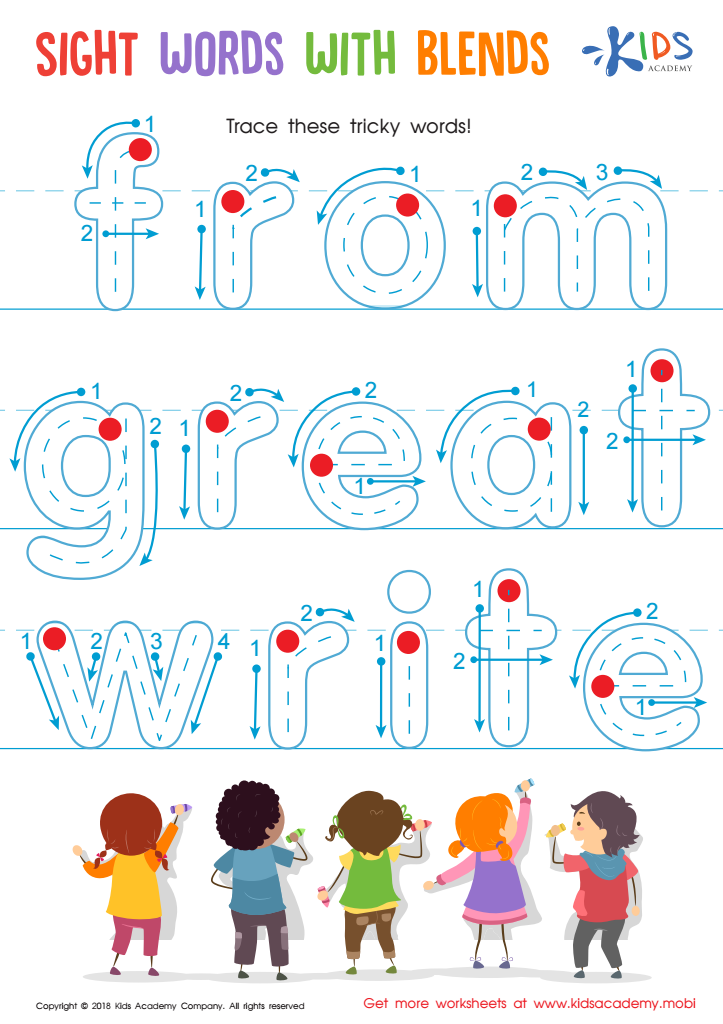
Sight Words with Blends Worksheet
This free PDF lets your children trace and write sight words with tricky blends. The guide numbers help them start from the top, building fine motor skills and enhancing sight word vocab. It's a great way to give your kids a solid foundation for reading!
 Assign to My Students
Sight Words with Blends Worksheet
Worksheet
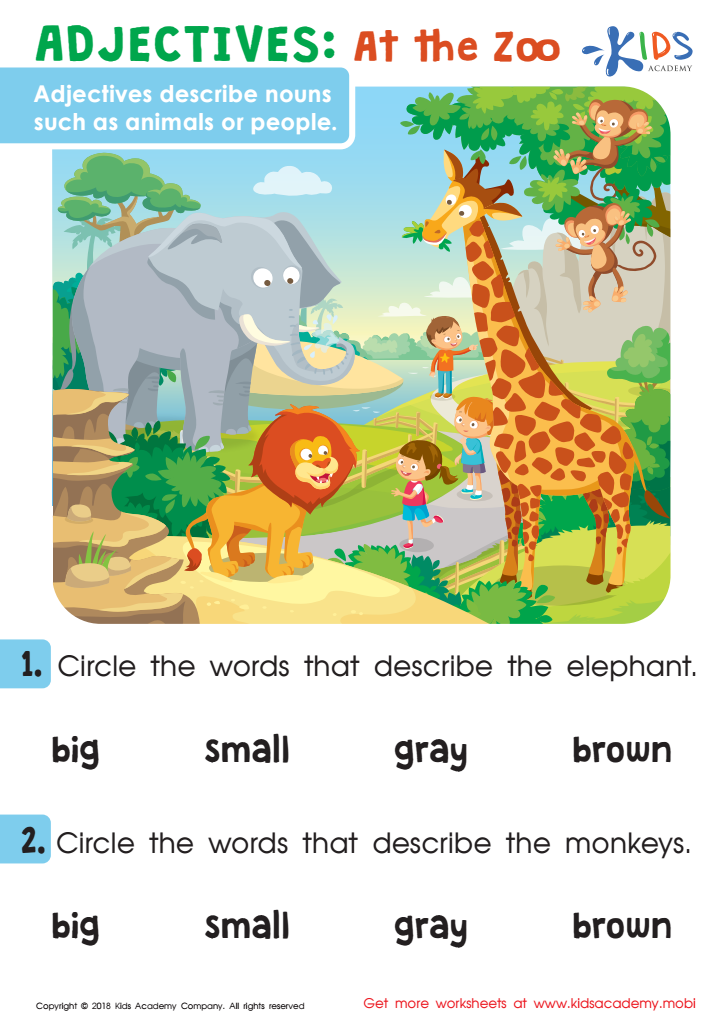
Adjectives: At The Zoo Worksheet
Take your kids to the zoo and ask them about their favorite activities and animals. This worksheet is a great way for kids to learn about adjectives. Explain that adjectives describe nouns like people or animals (e.g. big, tall, dark). Look at the printout with your kids and help them circle words that describe the animals in the picture.
Adjectives: At The Zoo Worksheet
Worksheet
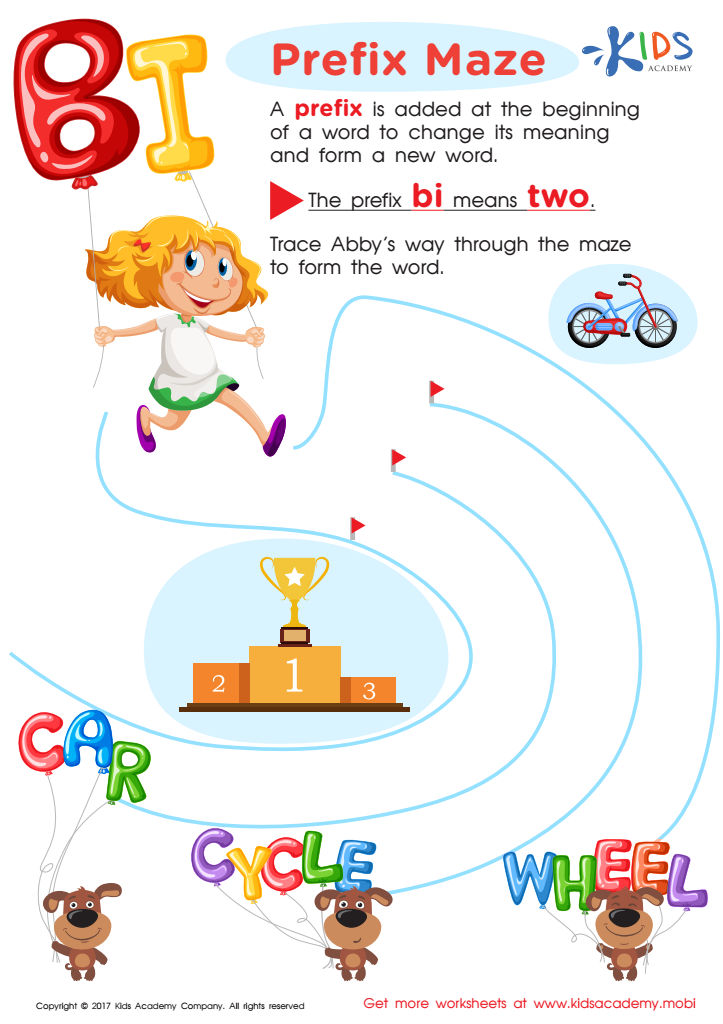
Prefix Bi Words Worksheet
Help "bi" find its root word in this fun and colorful prefix worksheet! Your child will learn how words are built while having a great time!
Prefix Bi Words Worksheet
Worksheet
Join Kids Academy for Free
Who is primarily going to use this learning content?



.jpg)




Developing language skills during the crucial ages of 3 to 7 is vital for a child's overall growth and future success. This is a period when children rapidly expand their vocabulary and improve their ability to communicate thoughts and emotions effectively. Early mastery of language lays the foundation for reading and writing, which are critical skills for academic achievement.
When parents and teachers invest time in nurturing language skills, they are fostering cognitive development, enhancing critical thinking abilities, and promoting social interactions. Children who possess strong language skills are better equipped to express their ideas, engage in discussions, and build relationships with peers and adults.
Moreover, children who struggle with language development may face reading difficulties later on, potentially leading to long-term educational challenges. Early intervention and support from parents and teachers can help mitigate these risks, ensuring children transition smoothly into formal education.
Through activities such as reading aloud, storytelling, and conversational engagement, adults can create a rich linguistically supportive environment that stimulates language development. This commitment to fostering language skills not only benefits individual children but also strengthens communities by contributing to a generation that is confident, articulate, and ready to tackle the complexities of the world.