Moral understanding Normal Reading Worksheets for Ages 3-7
4 filtered results
-
From - To
Introducing our "Moral Understanding Normal Reading Worksheets for Ages 3-7". Designed to blend early literacy skills with fundamental moral lessons, these worksheets help young learners grasp essential values such as kindness, honesty, and respect. Through engaging stories and relatable characters, kids are encouraged to think about their actions and the impact on others. Ideal for both classroom use and at-home learning, these worksheets provide a nurturing approach to education, fostering empathy and good character traits while bolstering reading abilities. Give your child the gift of moral wisdom alongside reading proficiency with our expertly crafted worksheets.
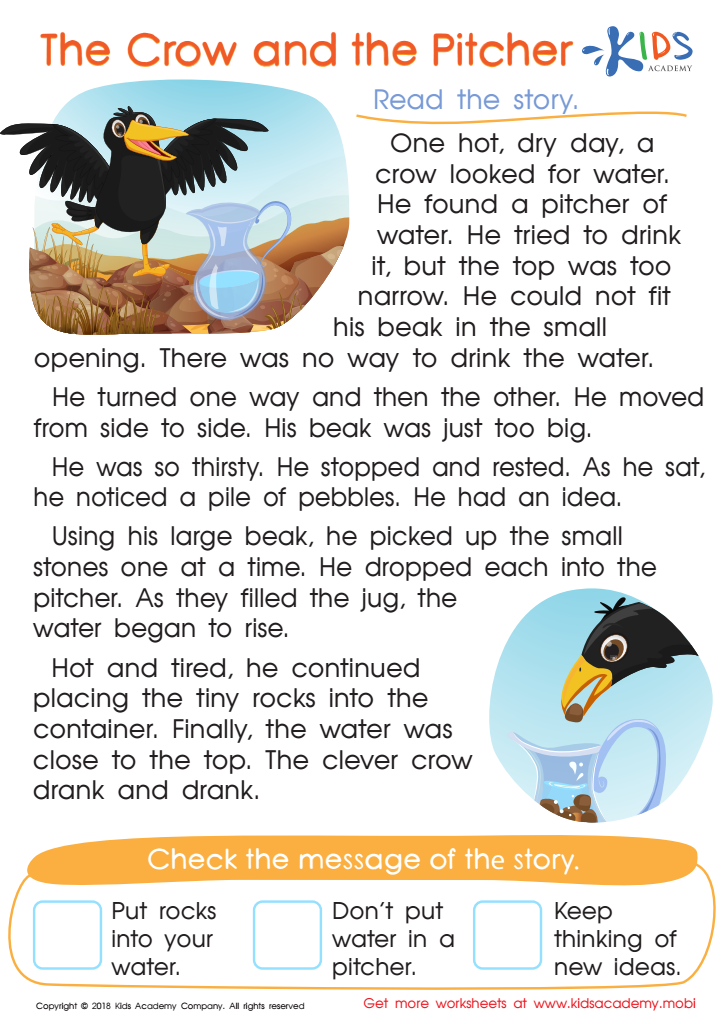
The Crow and the Pitcher Worksheet
 Assign to My Students
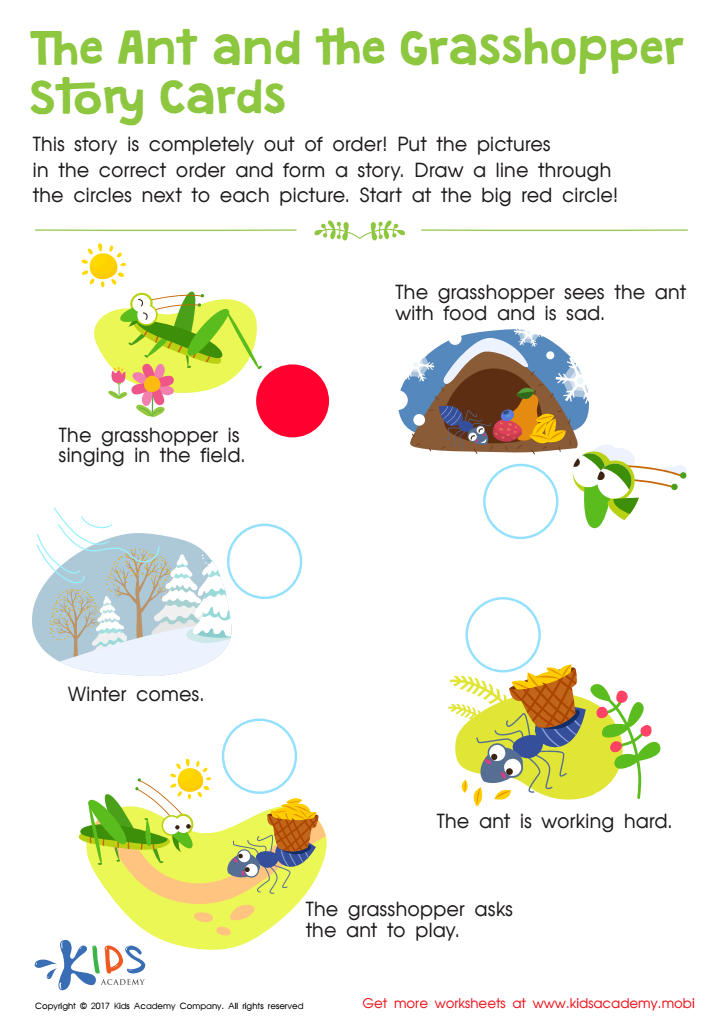
The Ant and The Grasshopper Worksheet
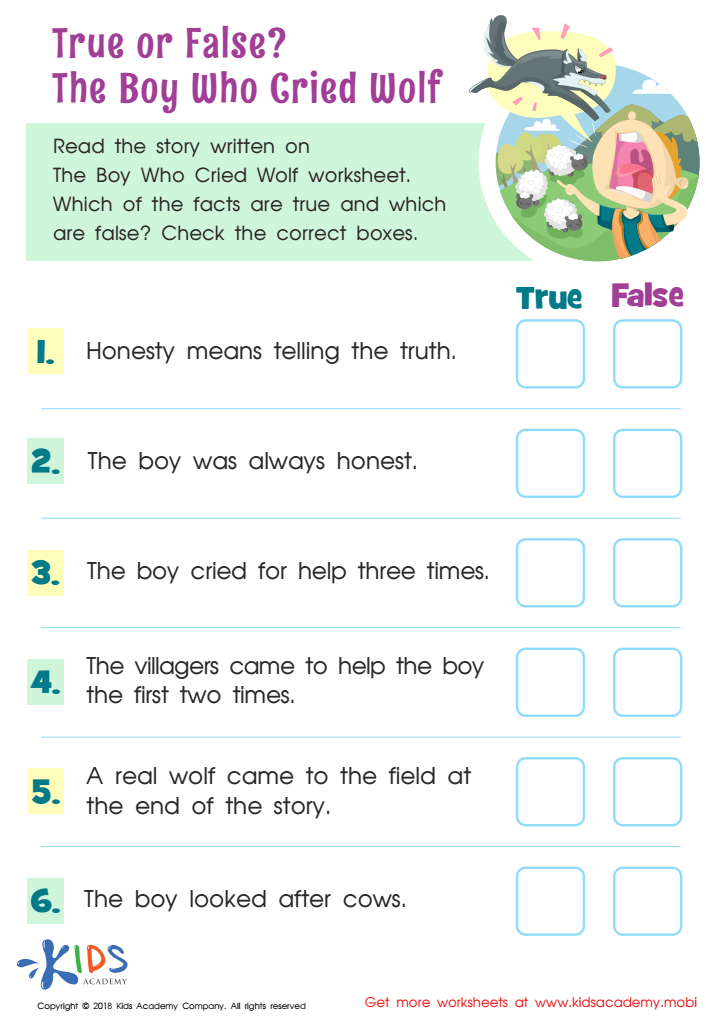
True or False? The Boy Who Cried Wolf Worksheet
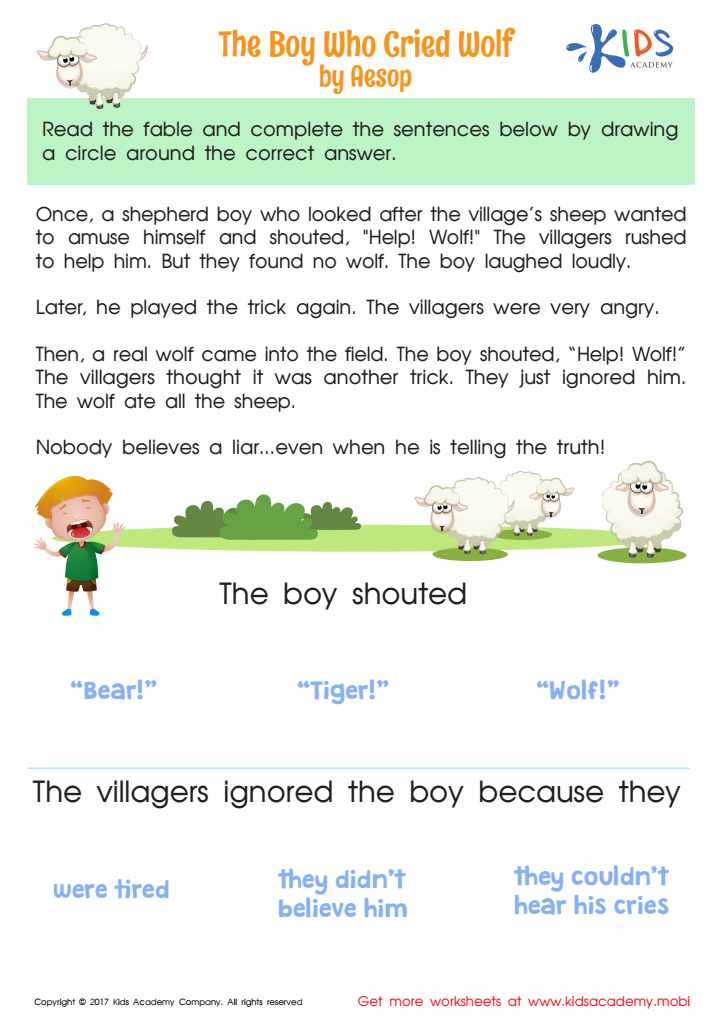
The Boy Who Cried Wolf Worksheet



.jpg)




Moral understanding and normal reading development are vital components in the early childhood education of children ages 3-7. For parents and teachers, prioritizing these areas holds significant long-term benefits. Moral understanding helps children distinguish between right and wrong, fostering empathy, respect, and kindness. At this formative stage, engaging children in discussions about values and demonstrating positive behaviors equips them with a moral framework that guides their actions and relationships. This foundation promotes a supportive and inclusive environment, enhancing children's emotional and social well-being.
Similarly, cultivating normal reading development is crucial. Reading proficiency is not only fundamental for academic success but also for personal growth. Early literacy skills, developed through regular reading, phonemic awareness, and language-rich interactions, boost cognitive abilities, vocabulary, and comprehension. Children who are well-versed in reading from an early age demonstrate improved concentration and imagination, making them more adept learners.
When moral development is interwoven with reading activities, children encounter diverse narratives and perspectives, nurturing their ethical thinking further. Stories often present moral dilemmas and lessons, providing a context for children to learn empathy and consider different viewpoints. Therefore, parents and teachers should emphasize these areas to empower children with the critical tools needed for a balanced, thoughtful, and successful future.








