Vocabulary Enrichment Normal Reading Worksheets for Ages 3-7
3 filtered results
-
From - To
Enhance your child's language development with our Vocabulary Enrichment Reading Worksheets, designed for ages 3-7. These beautifully illustrated, engaging worksheets focus on expanding young learners' vocabulary in a fun and interactive way. Each activity promotes reading comprehension and word recognition skills, tailored to suit the learning pace of early readers. Our worksheets incorporate various themes and reading levels to keep children motivated and excited about learning. Boost your child's confidence in communication, critical thinking, and reading fluency with our expertly crafted educational resources. Visit our page to explore the full range and start enriching your child's vocabulary today.
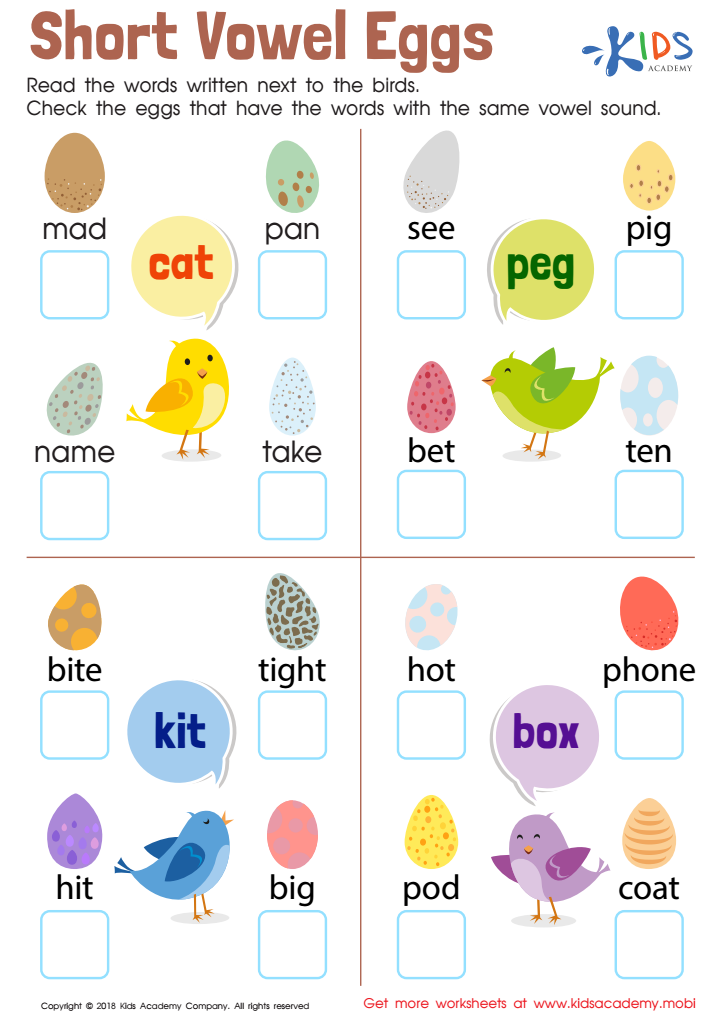
Short Vowel Eggs Worksheet
 Assign to My Students
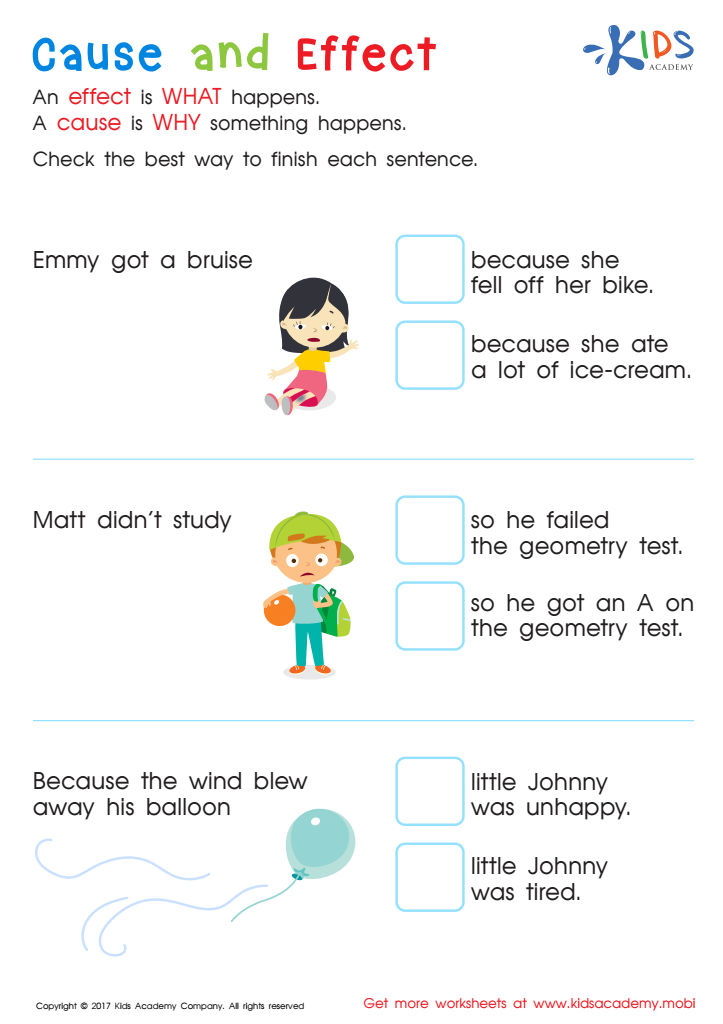
Cause and Effect Worksheet
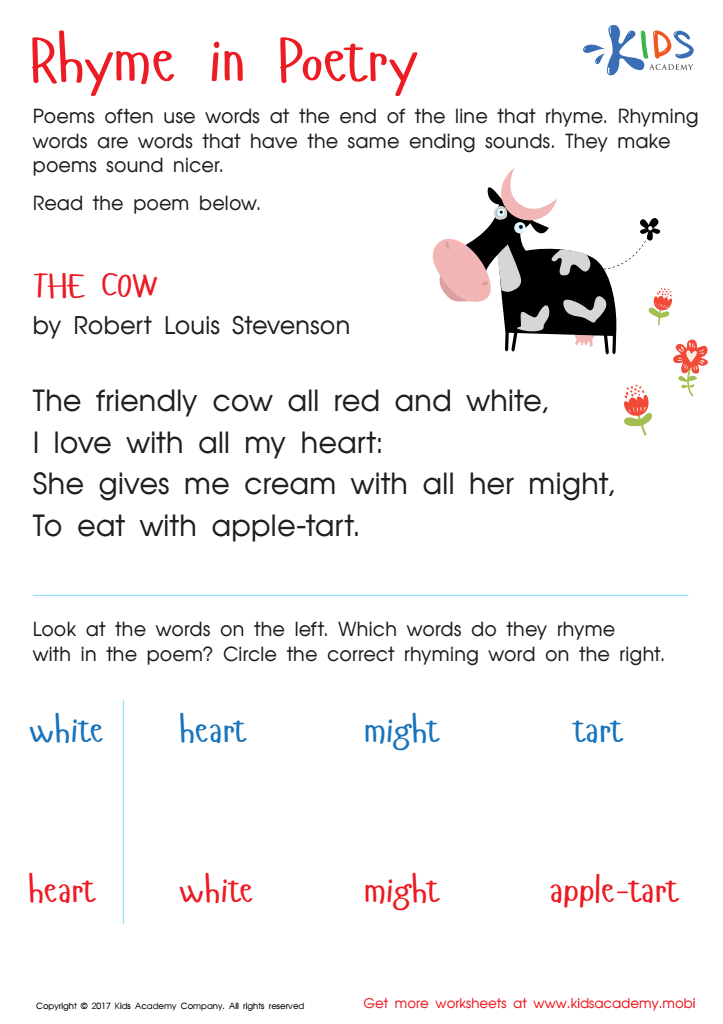
Rhyme In Poetry Worksheet








Vocabulary enrichment is vital for children aged 3-7, as these formative years lay the groundwork for their future academic success and overall cognitive development. During this critical period, children are particularly receptive to learning new words, and a rich vocabulary can significantly boost their ability to comprehend and produce language. This foundation is not only crucial for reading proficiency but also for effective communication skills.
When parents and teachers focus on vocabulary enrichment, they enable children to understand diverse stories, follow instructions, and express their thoughts and emotions more clearly. Improved vocabulary in early years correlates with better performance in multiple subjects, fostering a positive attitude toward learning and school in general.
Moreover, rich vocabulary helps children think more critically and creatively. They become more adept at making connections between concepts, which is essential for problem-solving and analytical thinking. Using varied language experiences like reading books, engaging in conversations, and exploring new environments cultivates a love for words and promotes inquisitiveness and curiosity.
In short, vocabulary enrichment for young children extends beyond language skills; it is instrumental in their social, emotional, and intellectual growth. Parents and teachers investing in this area give children tools for lifelong learning and success.








