Word identification Normal Reading Worksheets for Ages 3-7
3 filtered results
-
From - To
Enhance your child's reading skills with our engaging Word Identification Normal Reading Worksheets designed specifically for ages 3-7! Tailored for early learners, these worksheets help young children recognize and identify words through fun activities and visuals. They promote vocabulary development, critical thinking, and early literacy skills. Ideal for both classroom and home use, our worksheets provide a supportive and interactive environment for kids to practice word identification. Explore our colorful and imaginative worksheets that make learning enjoyable while encouraging a lifelong love for reading. Start your child’s reading journey today with our expertly designed resources that cater to their developmental needs!
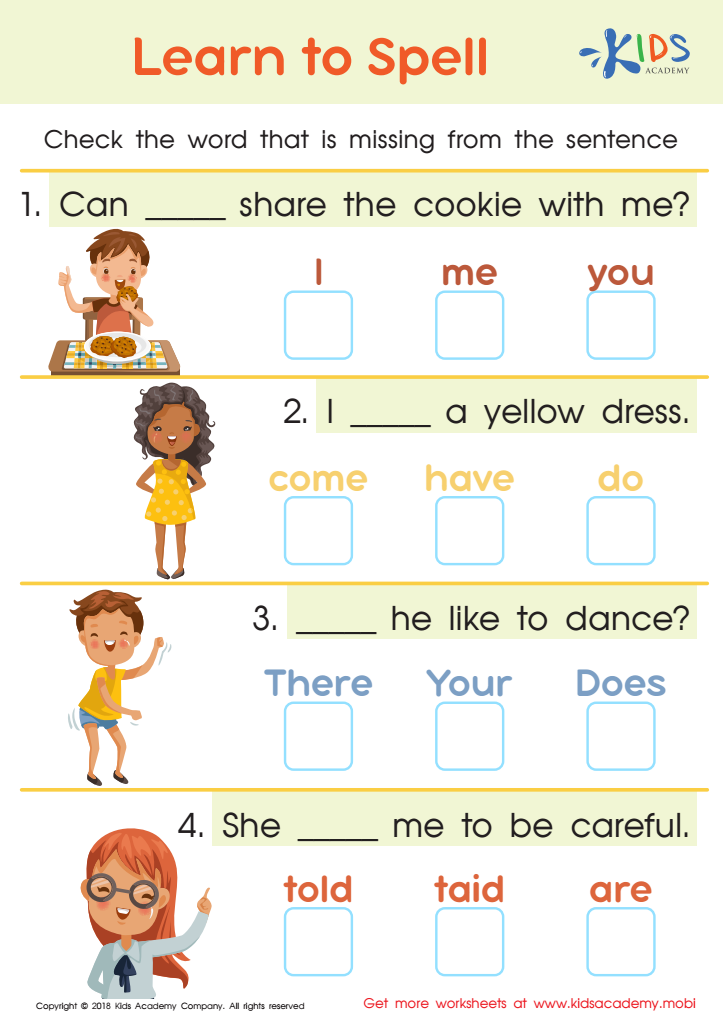
Learn to Spell Worksheet
 Assign to My Students
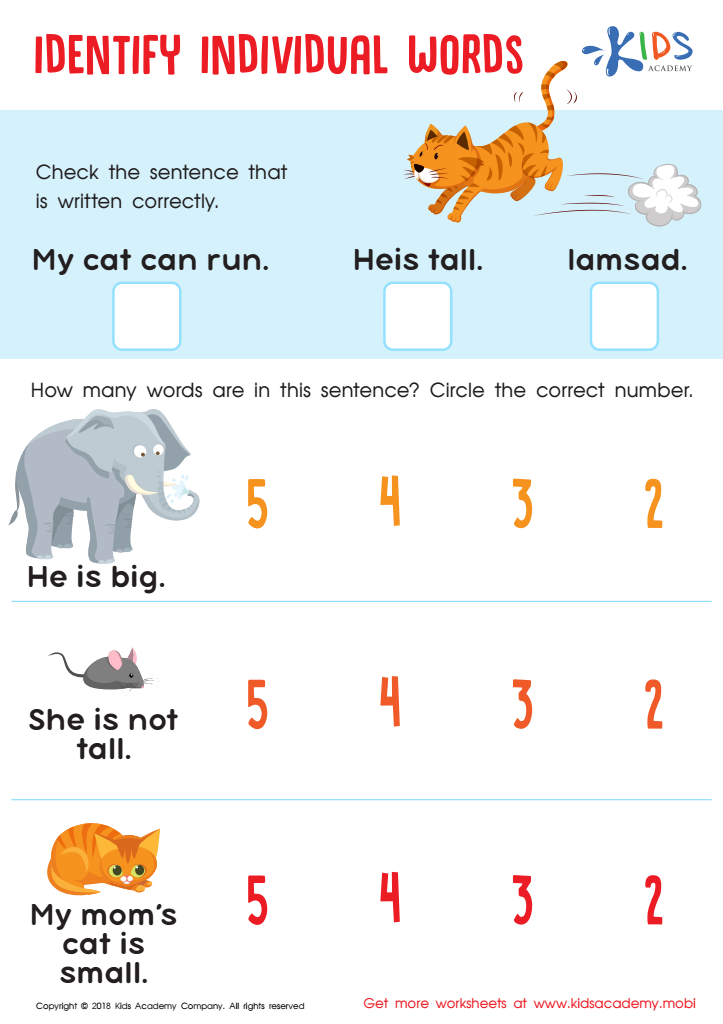
Identify Individual Words Worksheet
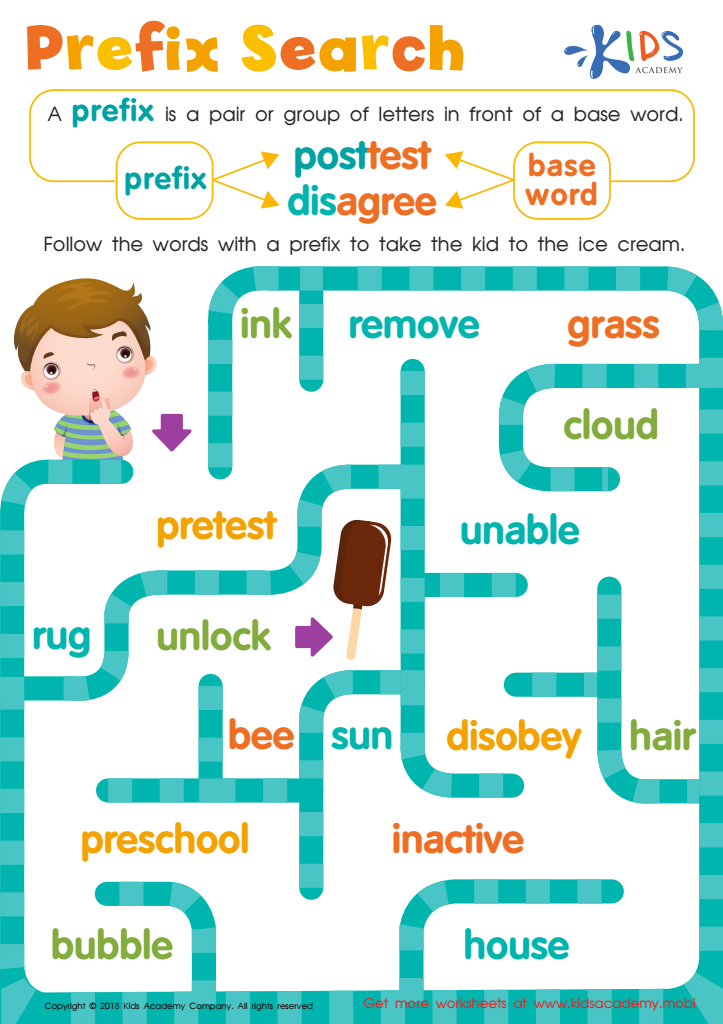
Reading: Prefix Search Worksheet





.jpg)
Word identification is a crucial skill for children aged 3-7, as it lays the foundation for successful reading and literacy development. During these formative years, children are beginning to establish their vocabulary, phonemic awareness, and comprehension skills. Effective word identification helps them decode text, making reading a more engaging and less frustrating experience. When parents and teachers emphasize word identification, they empower children to recognize and understand common words, which aids in building confidence and fluency.
Additionally, strong word identification skills correlate with better overall academic achievement and long-term success in school. When children can quickly and accurately identify words, they can focus more on understanding the material rather than struggling to decode it. This enhances their love for reading and opens doors for learning in all subjects.
Moreover, by supporting word identification, parents and teachers are actively contributing to a child's social-emotional development. Children experience a sense of accomplishment and pride as they become more proficient readers, which enhances their motivation to engage with books and story-telling. In summary, fostering word identification skills in early learners promotes a positive cycle of literacy development, academic success, and emotional wellbeing. Therefore, it is essential for parents and teachers to prioritize and support these skills in young children.








