Analytical skills Normal Reading Comprehension Worksheets for Ages 3-7
5 filtered results
-
From - To
Enhance your child's analytical skills with our engaging reading comprehension worksheets designed for ages 3-7. These carefully crafted resources focus on developing critical thinking abilities while promoting understanding of texts suitable for young learners. Each worksheet encourages children to analyze stories, make connections, and answer questions that foster comprehension. By integrating fun and interactive activities, kids will enjoy exploring narratives while honing their analytical capabilities. Ideal for home or classroom use, our worksheets provide a solid foundation for lifelong learning. Equip your child with the tools to think deeply and communicate effectively through these engaging reading exercises!
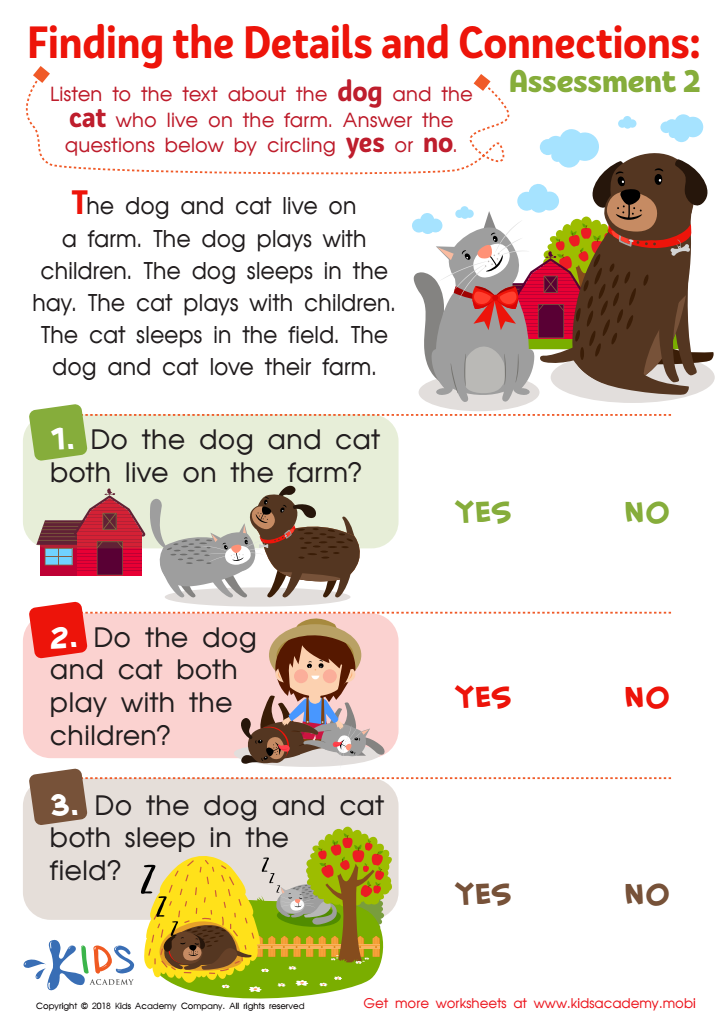
Finding the Details and Connections: Assessment 2 Worksheet
 Assign to My Students
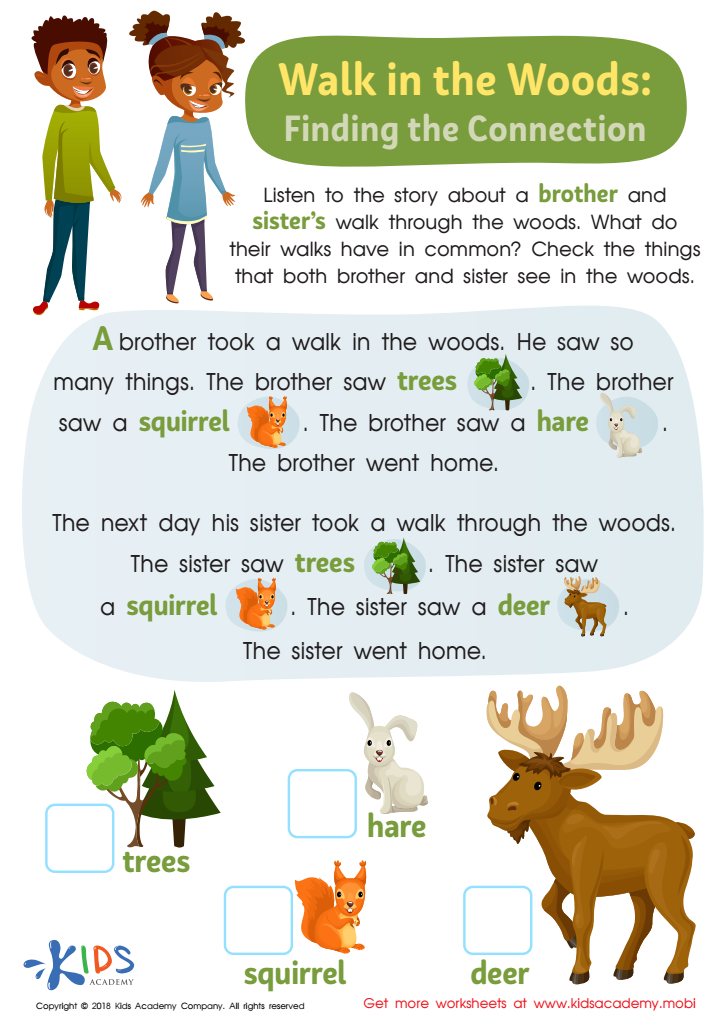
Walk In the Woods: Finding Connections Worksheet
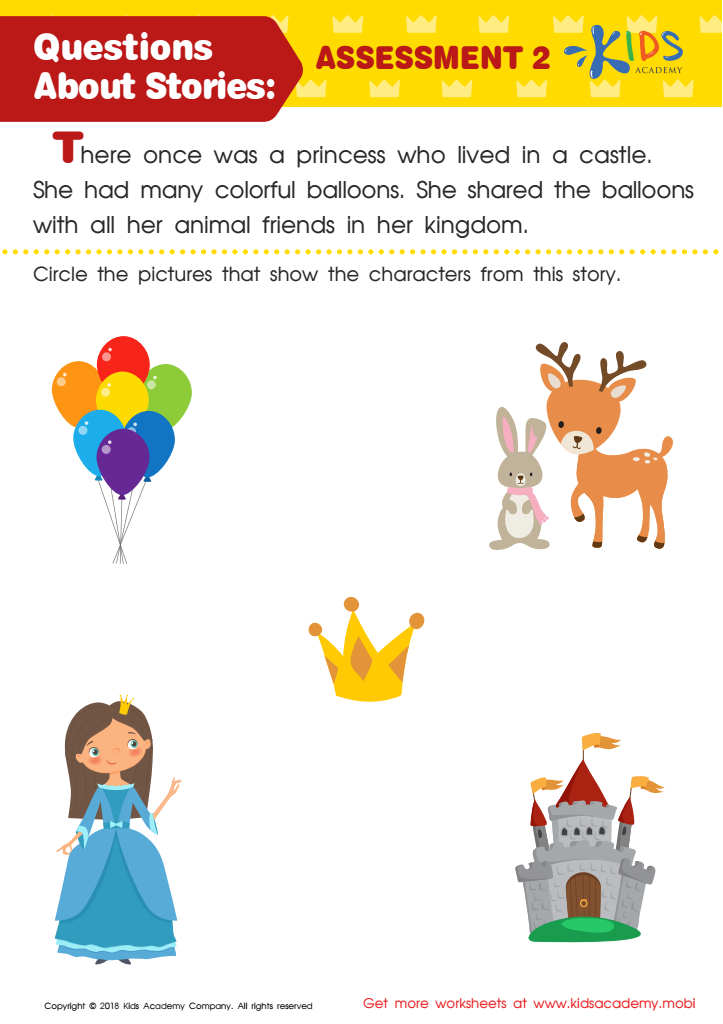
Questions About Stories: Assessment 2 Worksheet
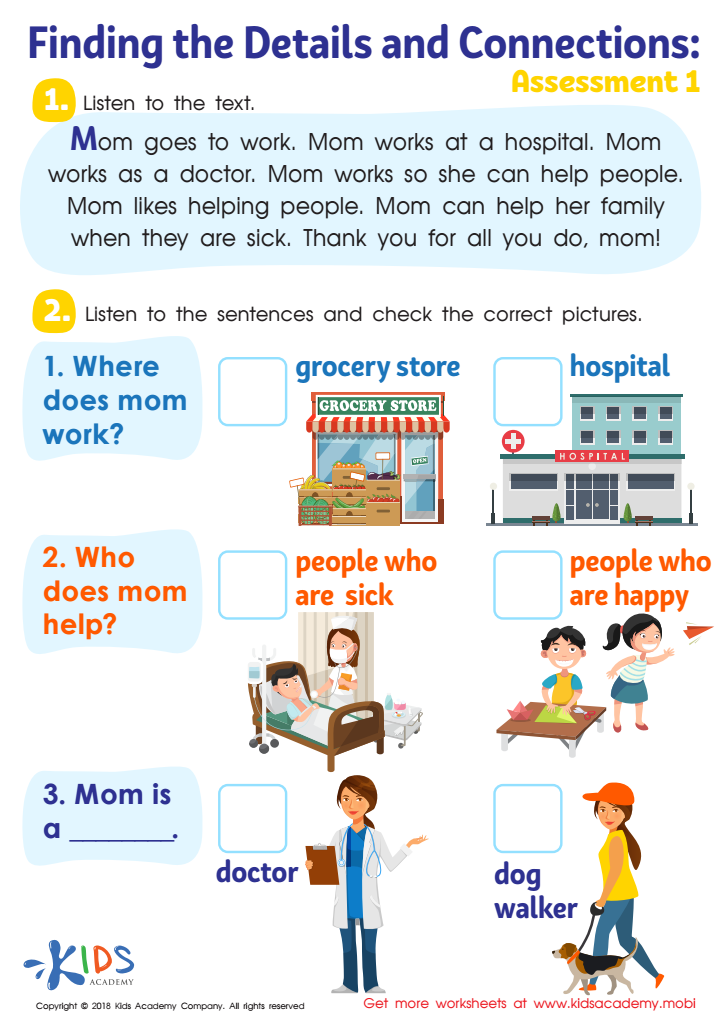
Finding the Details and Connections: Assessment 1 Worksheet
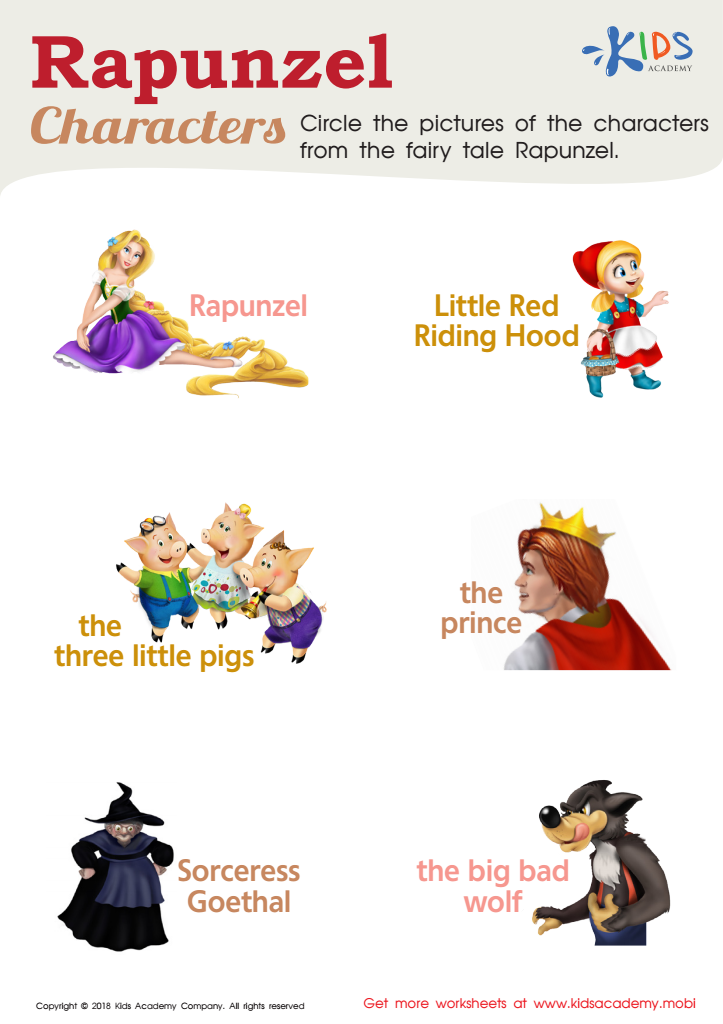
Rapunzel Characters Worksheet








Parents and teachers should prioritize analytical skills and normal reading comprehension for children ages 3-7 because these foundational abilities significantly influence future academic success and lifelong learning. During these formative years, children are naturally curious, and fostering their analytical skills helps them develop critical thinking capabilities. Engaging in activities that promote these skills encourages children to ask questions, make connections, and solve problems—essential components of effective learning.
Reading comprehension is equally vital. At this age, children are learning to decode text and understand its meaning. Strong reading comprehension allows them to grasp stories, follow instructions, and absorb knowledge across subjects. Skills in both analytical thinking and reading comprehension also support social development, enabling children to navigate conversations, comprehend others' perspectives, and effectively express themselves.
Moreover, fostering these skills can provide children with greater confidence. As they become adept readers and critical thinkers, they form a positive association with learning. This lays the groundwork for a lifelong love of reading and inquiry. In an increasingly complex world, developing these skills early not only enriches children's academic journeys but enhances their ability to understand and engage with their environment effectively. Parents and teachers play a crucial role in nurturing these essential skills.








