Moral understanding Normal Reading Comprehension Worksheets for Ages 3-7
4 filtered results
-
From - To
Explore our collection of Moral Understanding Normal Reading Comprehension Worksheets designed specifically for children aged 3 to 7. These engaging worksheets help young learners develop critical life skills by incorporating stories that emphasize important moral lessons. Each activity encourages children to think about right and wrong, empathy, and kindness, fostering a deeper understanding of moral values through reading. With a variety of age-appropriate texts, questions, and interactive elements, your child will enhance their reading comprehension while cultivating a strong sense of ethics. Perfect for classrooms or home learning, these worksheets make learning about morals fun and accessible!
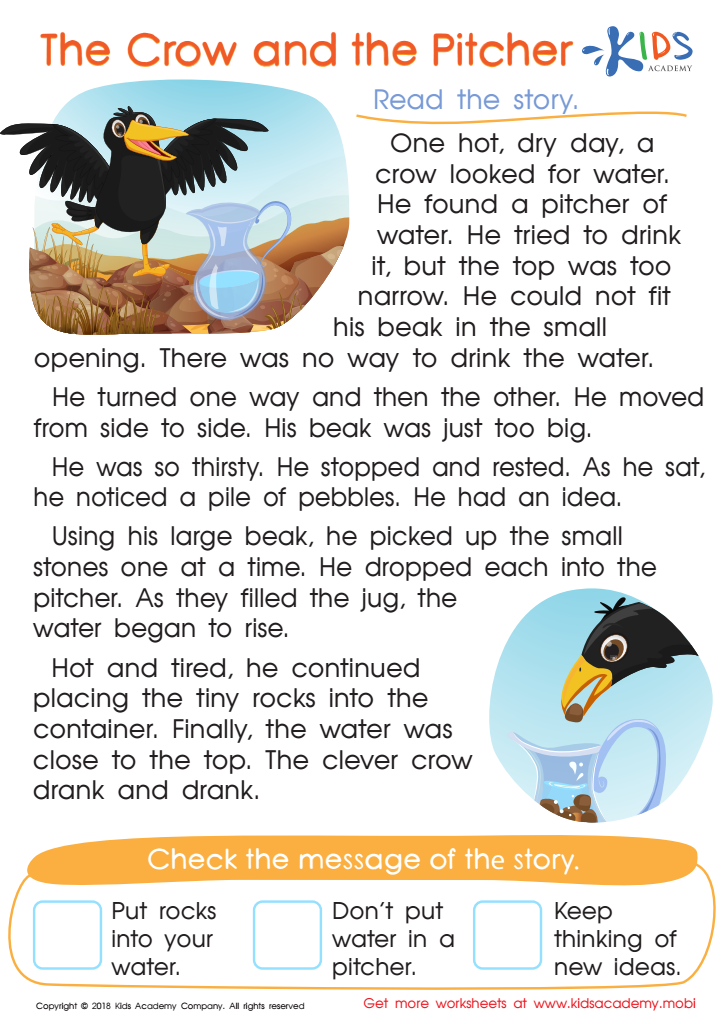
The Crow and the Pitcher Worksheet
 Assign to My Students
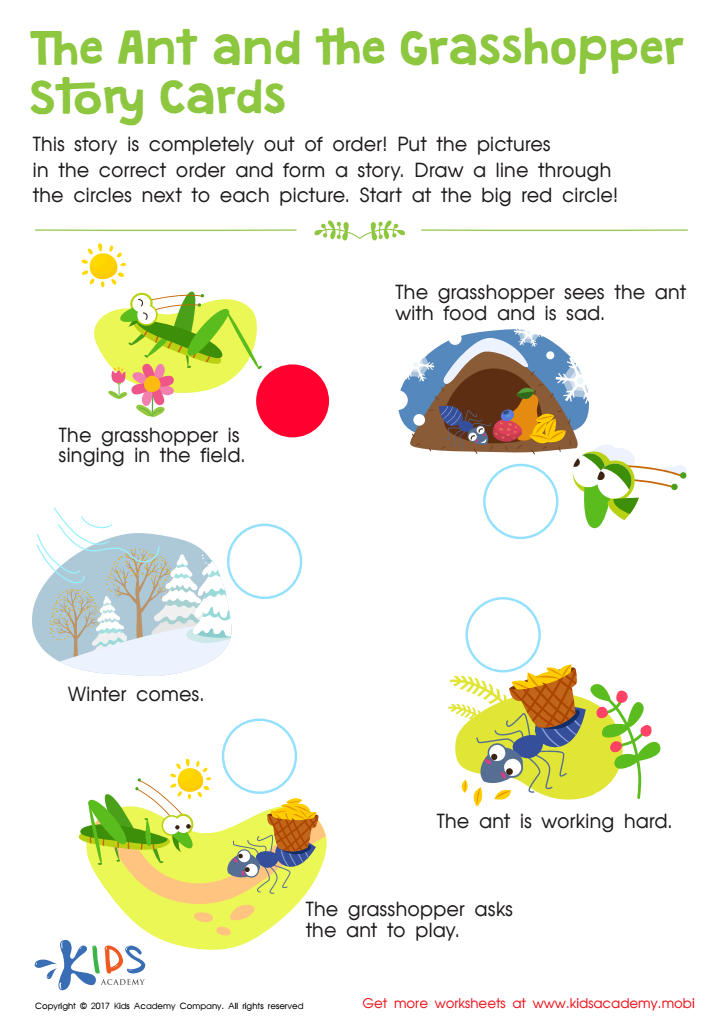
The Ant and The Grasshopper Worksheet
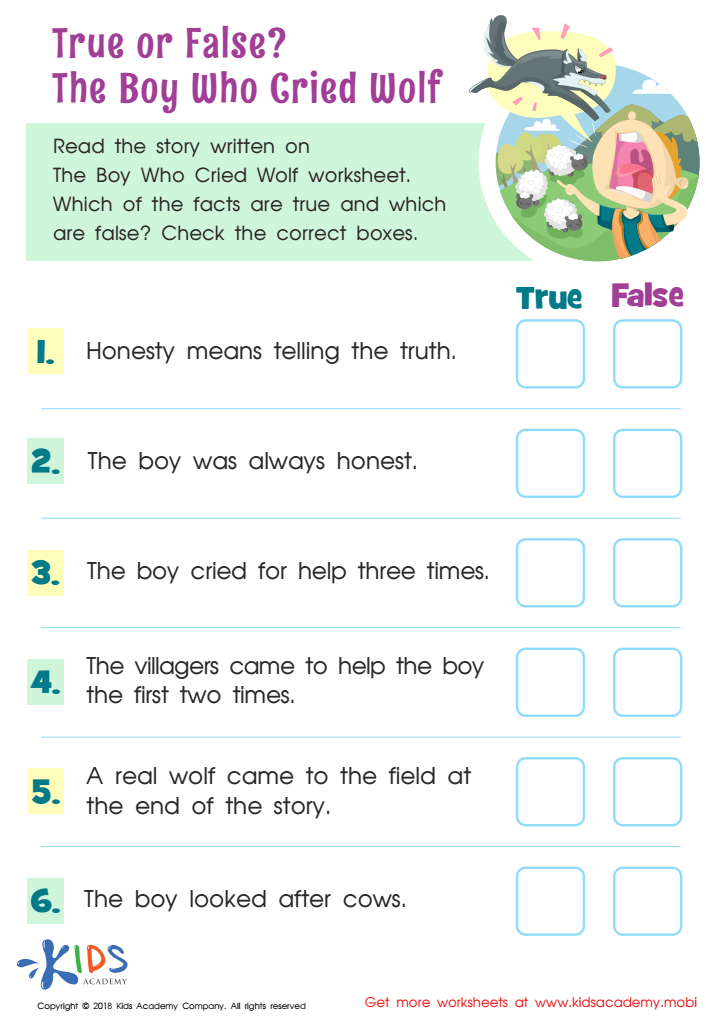
True or False? The Boy Who Cried Wolf Worksheet
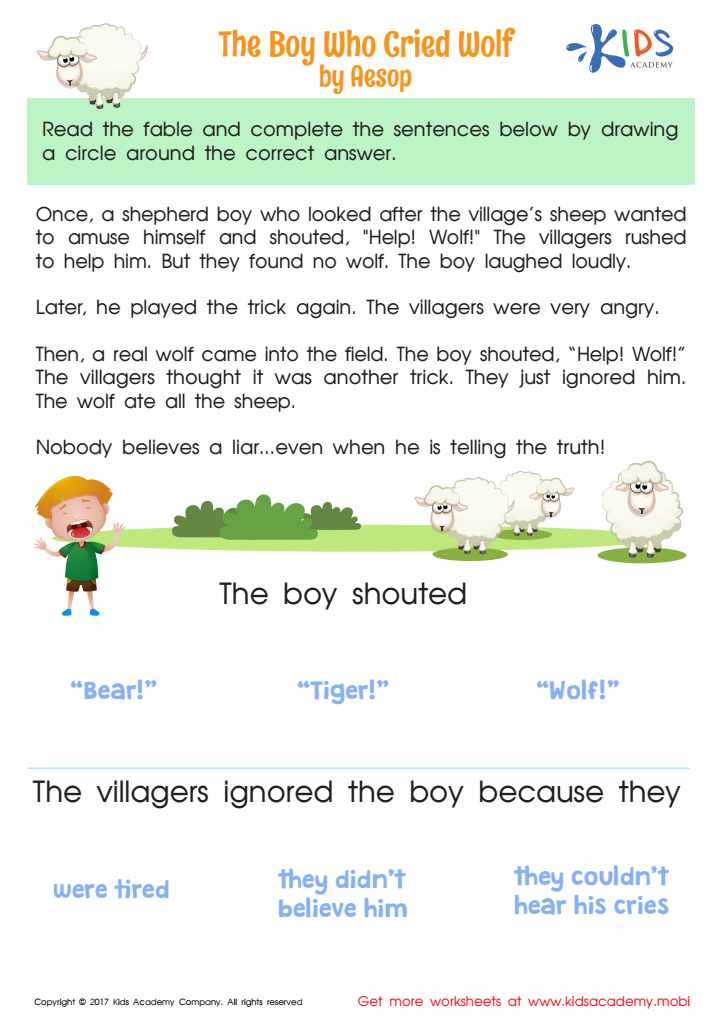
The Boy Who Cried Wolf Worksheet




.jpg)


Moral understanding and reading comprehension are essential components of early childhood development, influencing a child's social skills, empathy, and academic success. Firstly, moral understanding helps young children differentiate between right and wrong, fostering their ability to respond compassionately to social situations. As they engage with stories, children encounter various characters, conflicts, and resolutions, which facilitates discussions about morals and ethics. This storytelling process cultivates critical thinking and helps them apply these important lessons in real life.
Secondly, reading comprehension at this age is crucial as it lays the foundation for literacy skills. When children comprehend what they read, they are more likely to develop a love for reading and learning. Increased comprehension in stories also supports better vocabulary acquisition, writing skills, and a deeper understanding of diverse perspectives.
For parents and teachers, focusing on these areas helps create a supportive and enriching learning environment. By nurturing both moral understanding and reading skills, adults can guide children in becoming empathetic individuals and confident learners, ultimately preparing them for future interactions and academic challenges. In short, instilling moral understanding alongside reading comprehension enhances the child's overall development and positively impacts their journey toward becoming mindful, informed citizens.








