Story comprehension Normal Reading Comprehension Worksheets for Ages 3-7
5 filtered results
-
From - To
Enhance your child's reading skills with our Story Comprehension Normal Reading Comprehension Worksheets for Ages 3-7. These engaging worksheets focus on essential aspects of understanding stories, such as identifying main ideas, recalling details, and recognizing narratives. Designed for young learners, the worksheets provide fun activities that boost comprehension through entertaining stories and simple questions. Each worksheet is tailored to strengthen your child's ability to grasp and retain the content, laying a solid foundation for future reading success. Perfect for at-home practice or classroom use, these resources ensure a comprehensive and enjoyable learning experience for early readers.
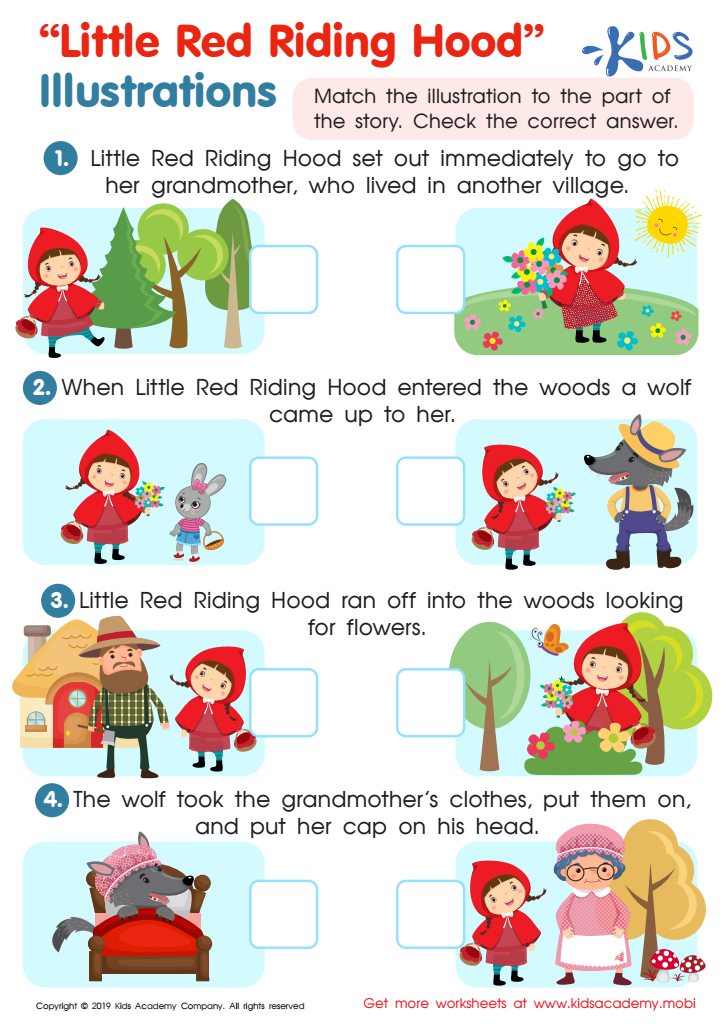
Little Red Riding Hood: Illustrations Worksheet
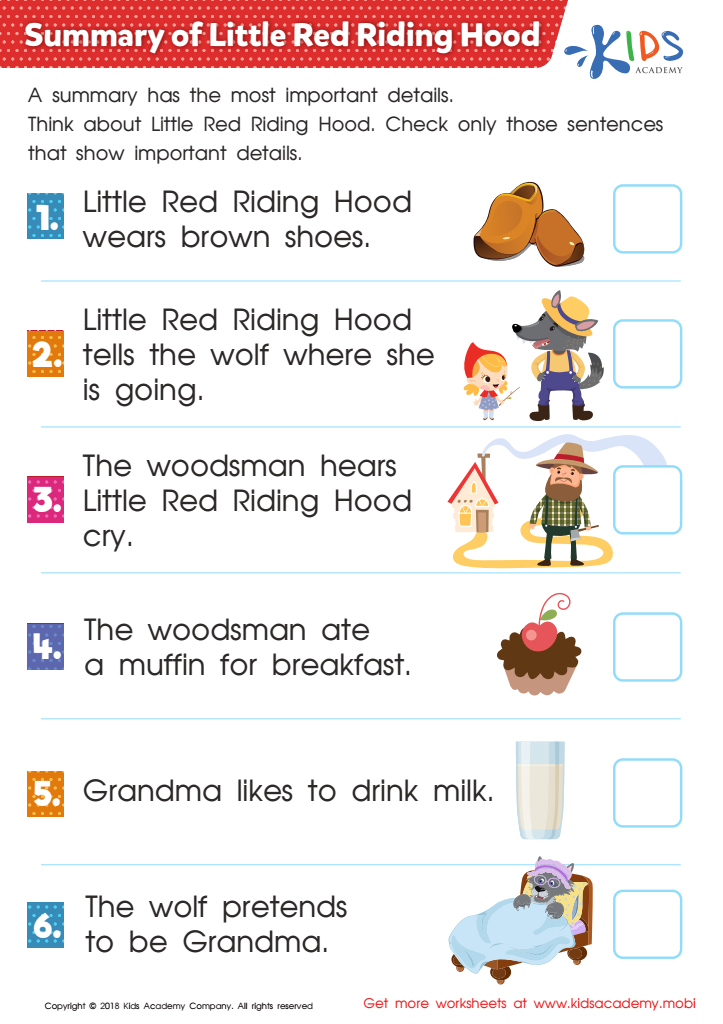
Summary of Little Red Riding Hood Worksheet
Red Riding Hood Coloring Page
 Assign to My Students
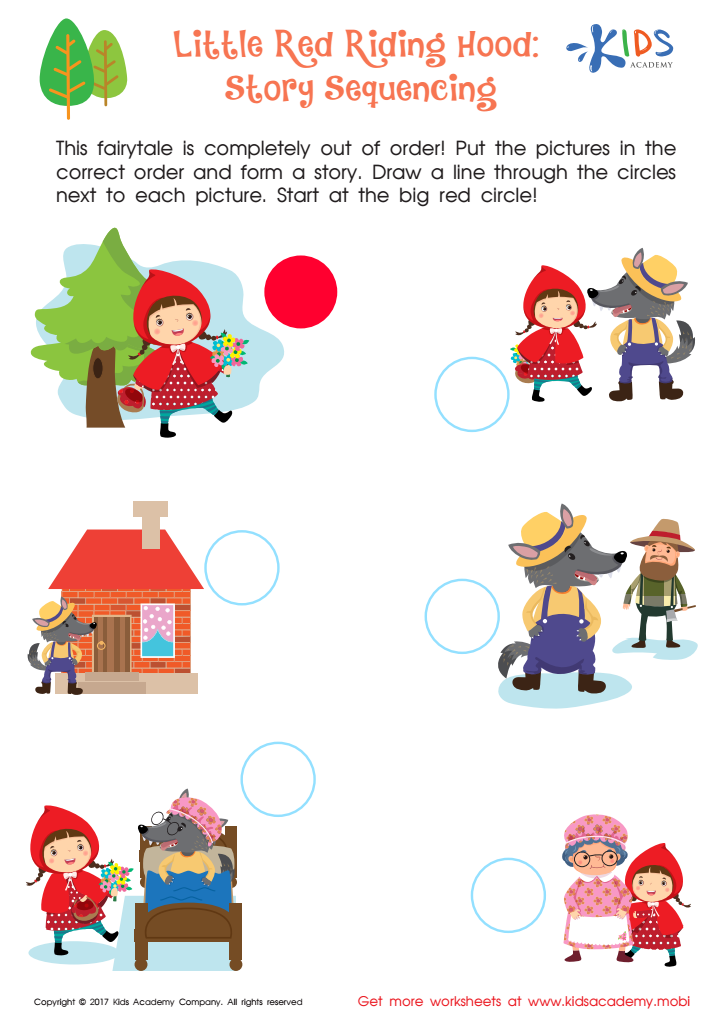
Story Sequencing Printable
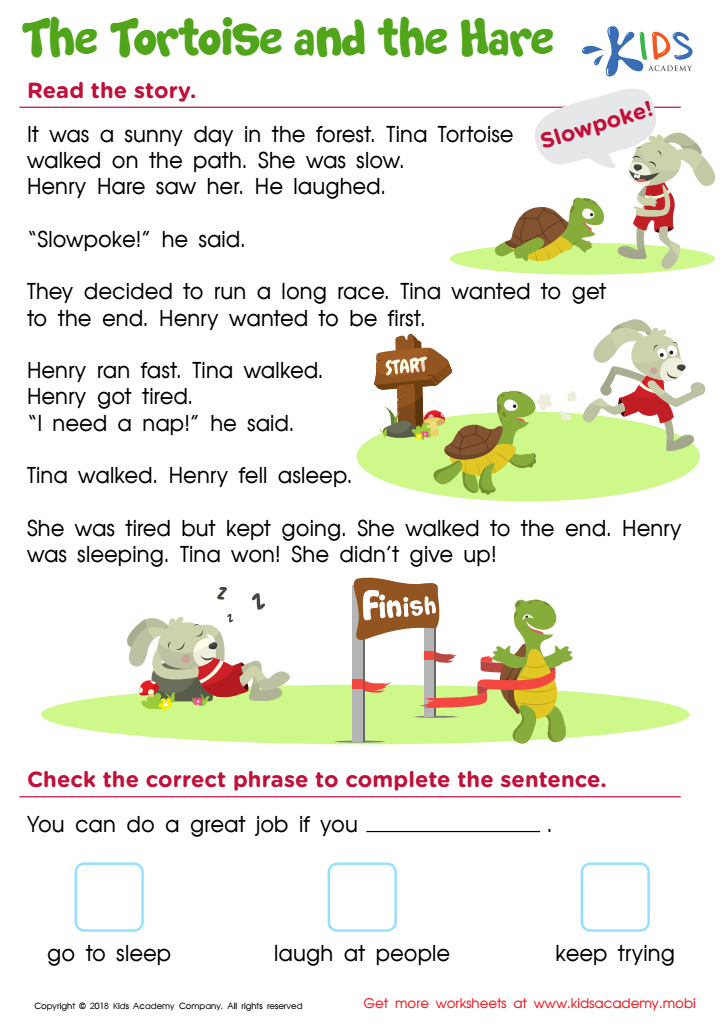
The Tortoise and the Hare Worksheet


.jpg)




Story comprehension is a vital cornerstone in the early educational development of children aged 3-7, shaping their cognitive, social, and language skills. At this formative stage, the ability to understand stories goes beyond merely recalling events; it's about grasping sequences, identifying cause and effect, and recognizing emotions and motivations of characters. These skills lay the groundwork for more complex reading comprehension as children grow.
Parents and teachers should prioritize story comprehension because it enhances language development. Engaging with stories introduces children to new vocabulary, sentence structures, and diverse ways of expressing thoughts. Additionally, this practice nurtures listening skills and auditory memory, essential components of effective communication.
Moreover, comprehending stories fosters critical thinking. Children learn to anticipate endings, make predictions, and ask insightful questions, enhancing their reasoning abilities. Socially, stories often contain moral lessons and conflicts that help children understand empathy, cooperation, and problem-solving.
When parents and teachers join forces to emphasize story comprehension, they create a supportive learning environment that promotes a lifelong love of reading. The skills acquired through understanding stories support academic success and personal growth, making it a crucial aspect of early childhood education.








