Logical Reasoning Normal Reading Fiction Worksheets for Ages 3-7
3 filtered results
-
From - To
Discover our engaging "Logical Reasoning Normal Reading Fiction Worksheets" designed for children aged 3-7! These worksheets combine delightful storytelling with essential reasoning skills, fostering critical thinking in young learners. Each activity encourages kids to analyze characters, make predictions, and draw conclusions based on captivating narratives. Ideal for home or classroom use, our printable worksheets support early literacy while promoting cognitive abilities. Nurture your child's love of reading and enhance their logical reasoning skills with fun, age-appropriate challenges that spark imagination and inquiry. Explore our collection and watch your child thrive as they embark on this interactive literary adventure!
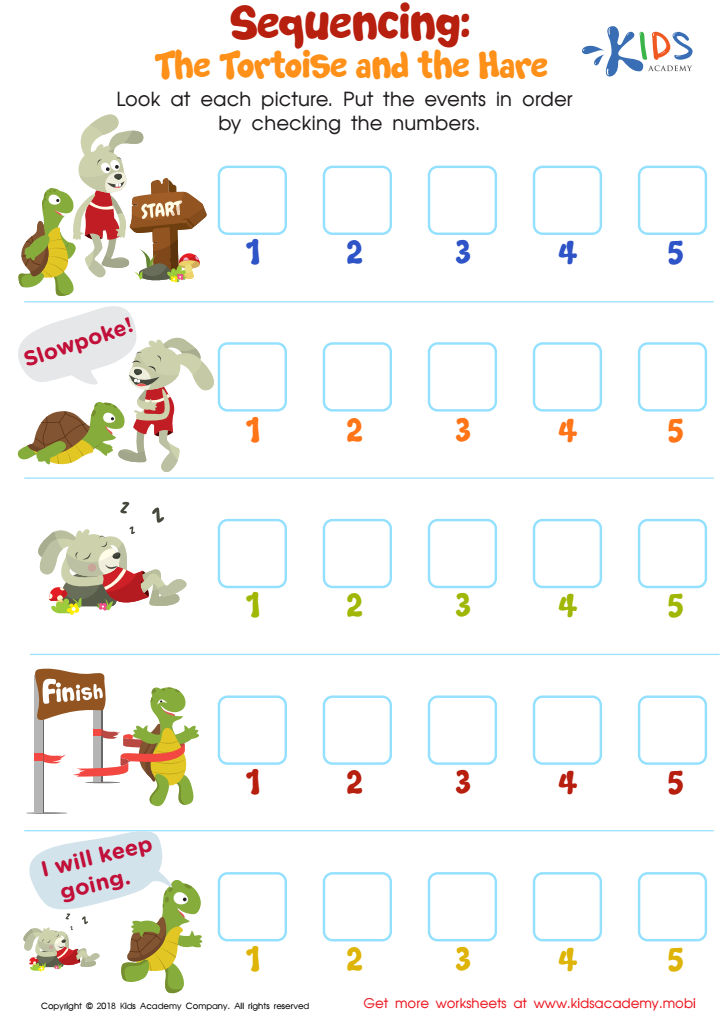
Sequencing: The Tortoise and the Hare Worksheet
 Assign to My Students
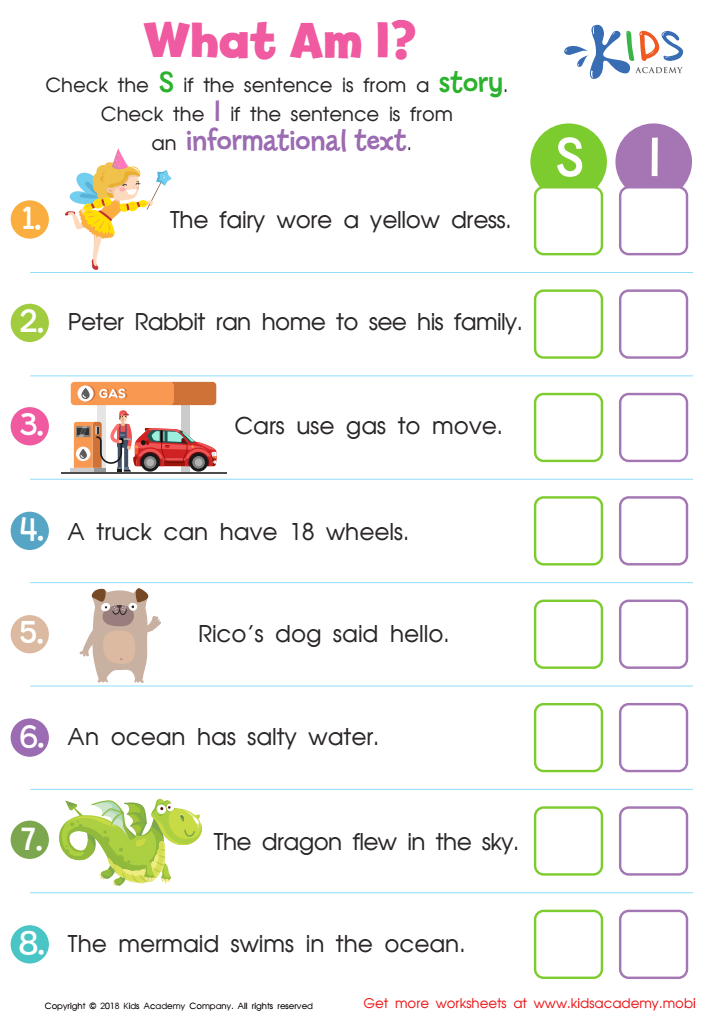
What Am I? Worksheet
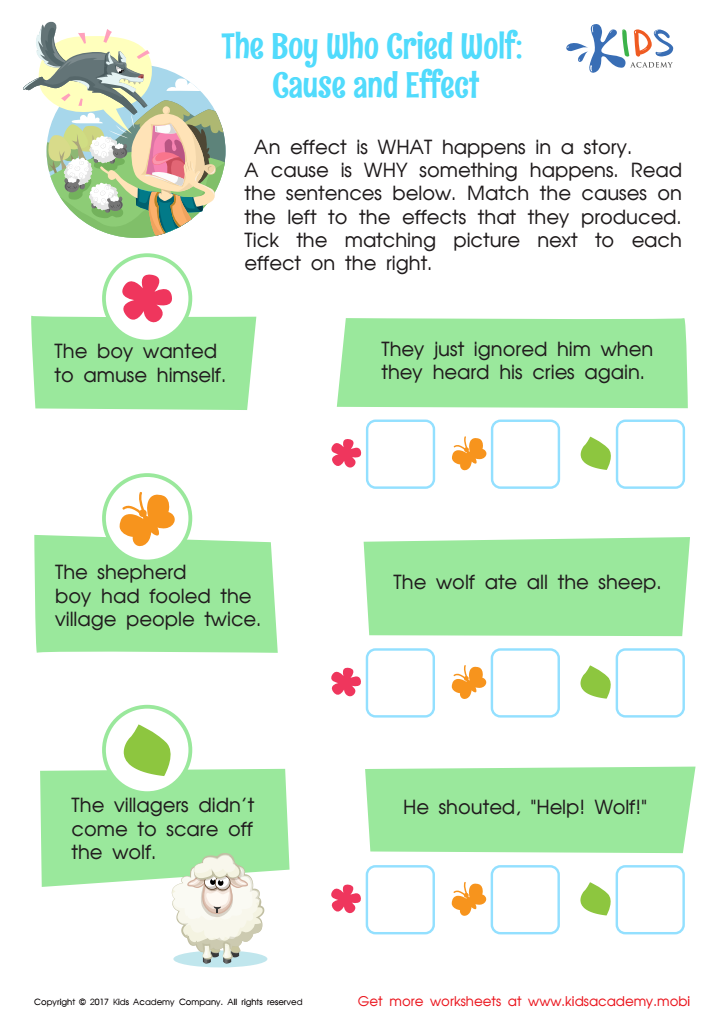
The Boy Who Cried Wolf: Cause and Effect Worksheet




.jpg)


Logical reasoning is a critical skill for children aged 3-7, as it lays the foundation for effective problem-solving and decision-making throughout their lives. Parents and teachers should prioritize exposure to logical reasoning in literature for several reasons. First, stories that incorporate logical reasoning challenges encourage children to think critically about situations, analyze outcomes, and develop conclusions based on evidence. This nurtures their cognitive abilities and fosters a mindset that is curious and inquisitive.
Moreover, fiction for young readers often illustrates moral dilemmas and social scenarios, which require logical reasoning to understand relationships and consequences. Engaging with such narratives helps children navigate their own social interactions by considering multiple perspectives and potential outcomes.
Additionally, early exposure to logical reasoning through stories builds essential literacy skills, such as comprehension and sequencing, as children learn to follow plots, identify conflict and resolution, and anticipate future events based on past behavior.
Ultimately, fostering logical reasoning through age-appropriate fiction not only supports academic achievement but also prepares children for the complexities of life beyond the classroom. This combined development of critical thinking and social-emotional skills is vital in cultivating well-rounded, thoughtful individuals.







