Moral understanding Normal Reading Fiction Worksheets for Ages 3-7
4 filtered results
-
From - To
Unlock the power of moral understanding in young readers with our engaging Normal Reading Fiction Worksheets for ages 3-7! These carefully designed worksheets encourage children to explore important life lessons and values through age-appropriate stories. As children read, they will discover themes such as honesty, kindness, and friendship, helping them comprehend moral dilemmas in relatable contexts. Our resources are perfect for homeschooling or classroom activities, fostering critical thinking and empathy while enhancing literacy skills. Download these creative, interactive worksheets now and guide your little ones on a journey of ethical discovery through the joy of reading!
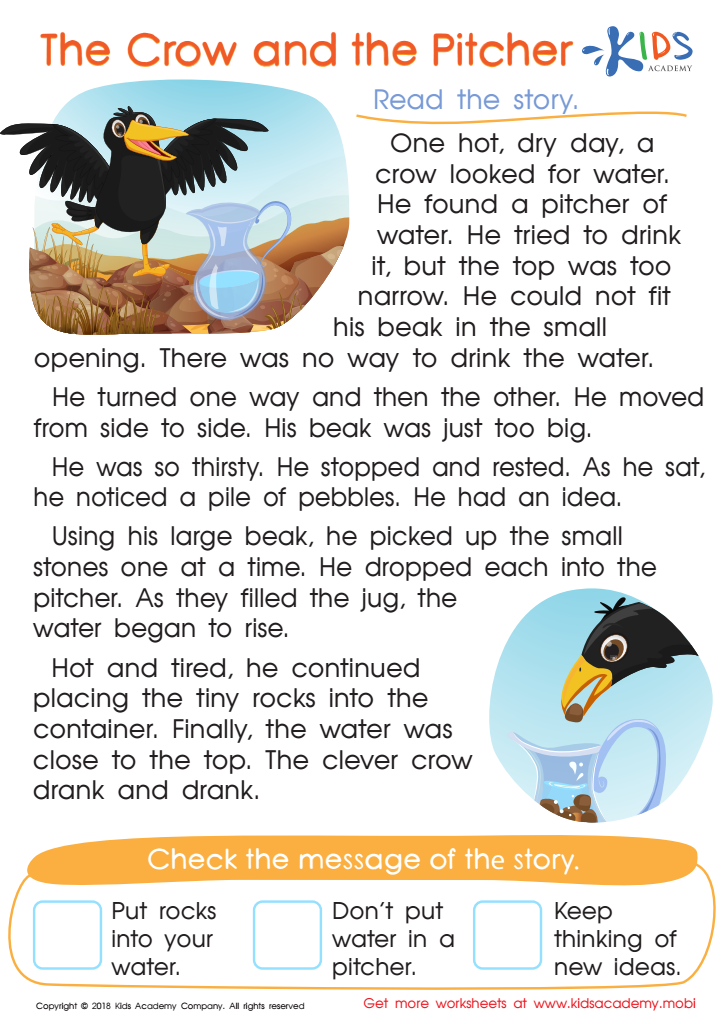
The Crow and the Pitcher Worksheet
 Assign to My Students
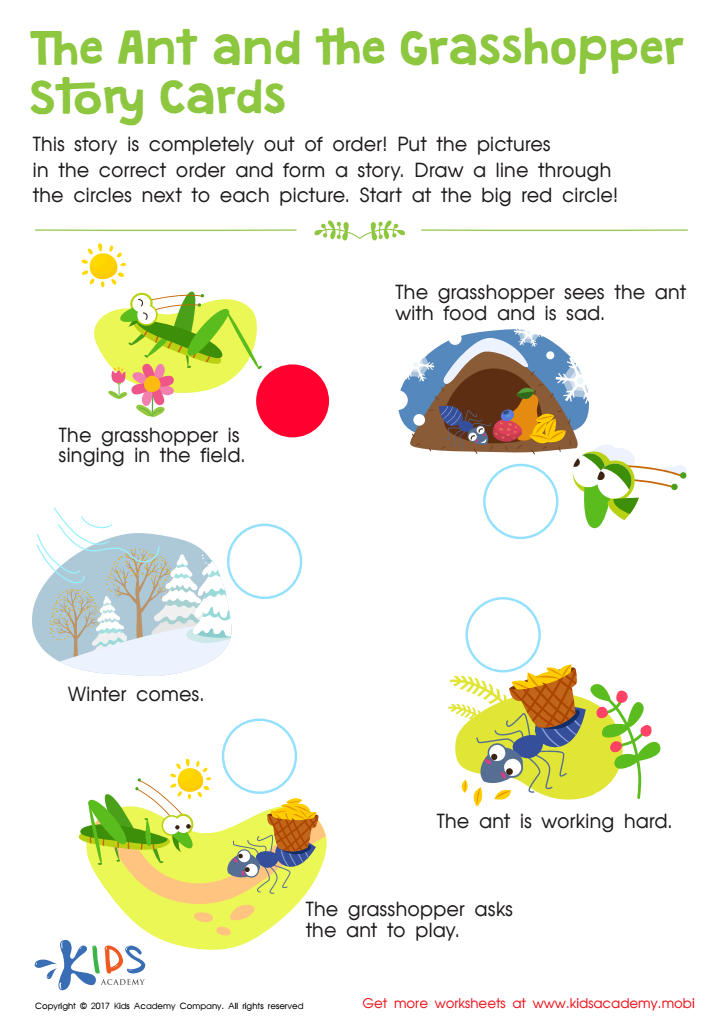
The Ant and The Grasshopper Worksheet
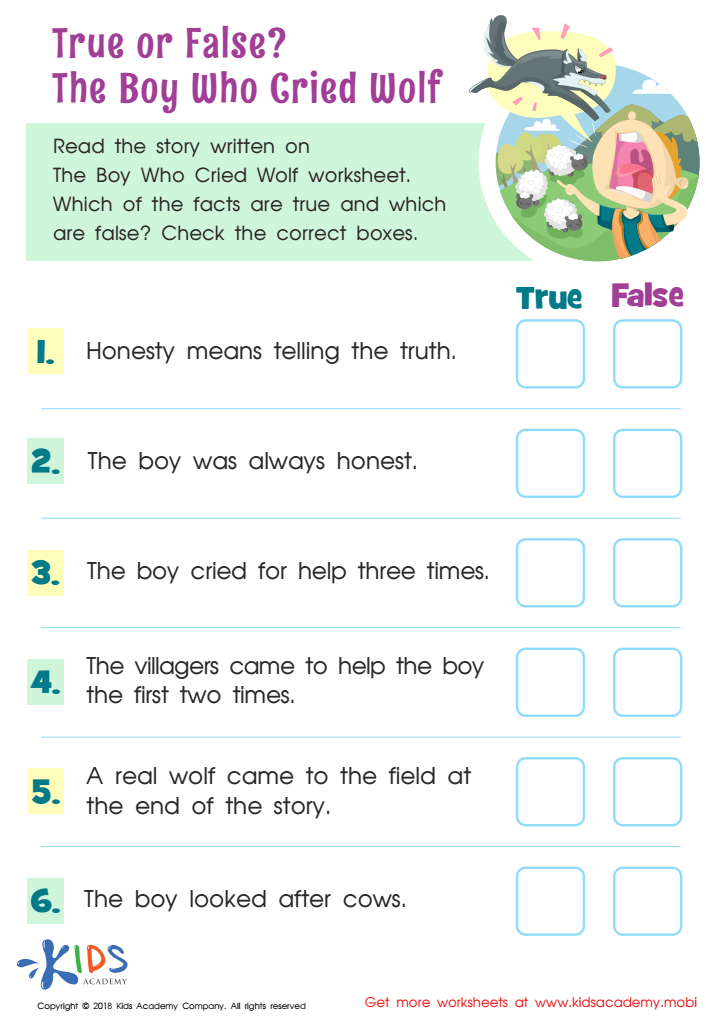
True or False? The Boy Who Cried Wolf Worksheet
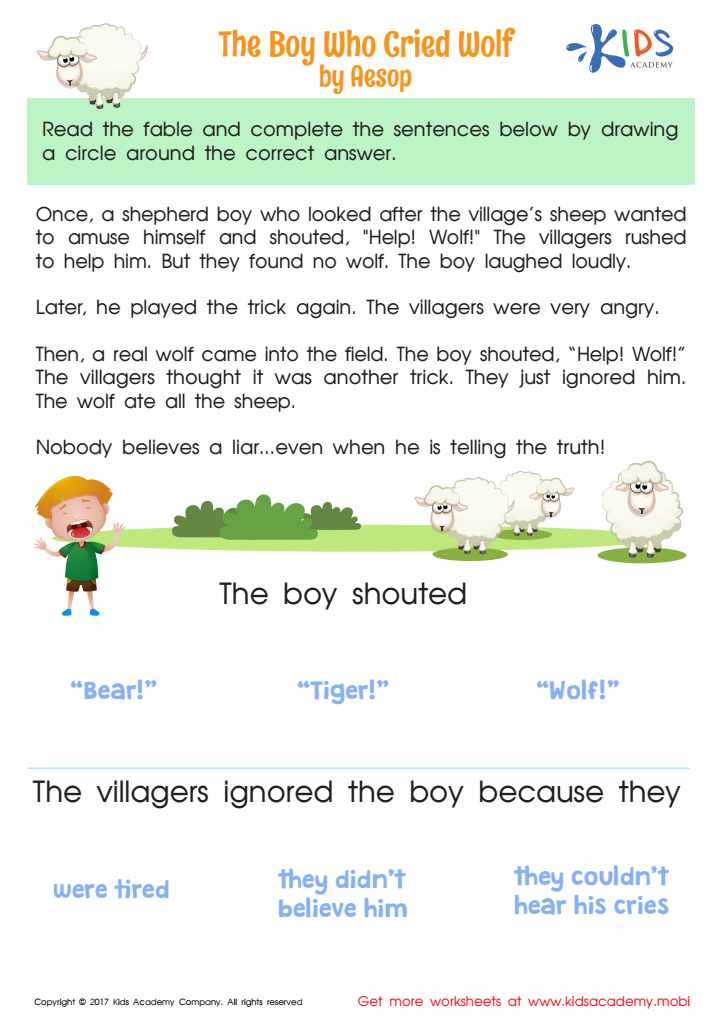
The Boy Who Cried Wolf Worksheet






.jpg)

Parents and teachers should prioritize moral understanding in normal reading fiction for ages 3-7 because children's literature plays a crucial role in shaping their values and social skills. At this early developmental stage, children are highly impressionable and learn to differentiate between right and wrong, empathy, and respect for others through relatable stories and characters.
Engaging with fiction allows young readers to see diverse perspectives, helping them understand different emotions and moral dilemmas. These narratives provide opportunities for guided discussions, enabling adults to reinforce lessons about kindness, sharing, honesty, and responsibility. This process aids in cultivating emotional intelligence, fostering connections to peers, and teaching conflict resolution skills.
Moreover, books can serve as mirrors and windows for children—mirroring their experiences and also showing them lives unlike their own, which broadens their worldviews. Specifically choosing stories that highlight positive moral choices equips children with frameworks for ethical decision-making as they grow. Thus, fostering moral understanding through fiction creates a foundation for responsible, compassionate citizens, making it an essential consideration for both parents and educators in children's formative years.







