Story analysis Normal Reading Fiction Worksheets for Ages 3-7
3 filtered results
-
From - To
Unlock the magic of storytelling with our "Story Analysis Normal Reading Fiction Worksheets for Ages 3-7." Specially crafted for early learners, these worksheets help children develop crucial reading comprehension and analytical skills. Each engaging exercise challenges young minds to identify key story elements like characters, settings, and plot. With vibrant illustrations and simple, age-appropriate questions, children build a solid foundation in literacy while enjoying their favorite tales. Perfect for parents and educators, our expertly designed worksheets make learning fun and effective. Discover a world of reading adventure and help your child thrive with our comprehensive story analysis tools.
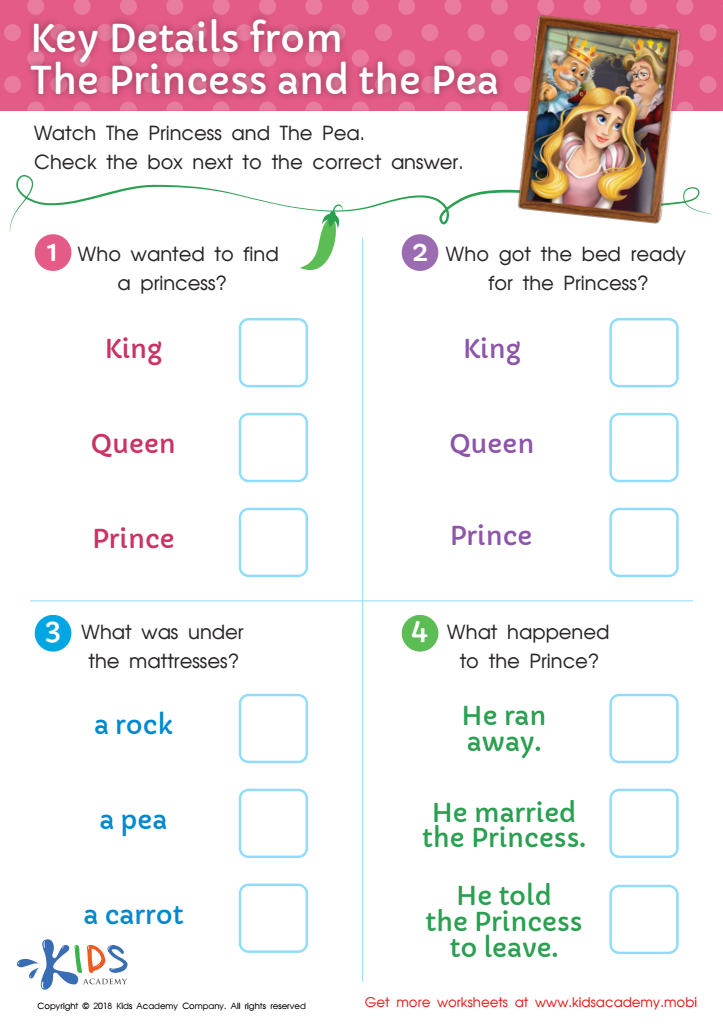
Key Details from the Princess and the Pea Worksheet
 Assign to My Students
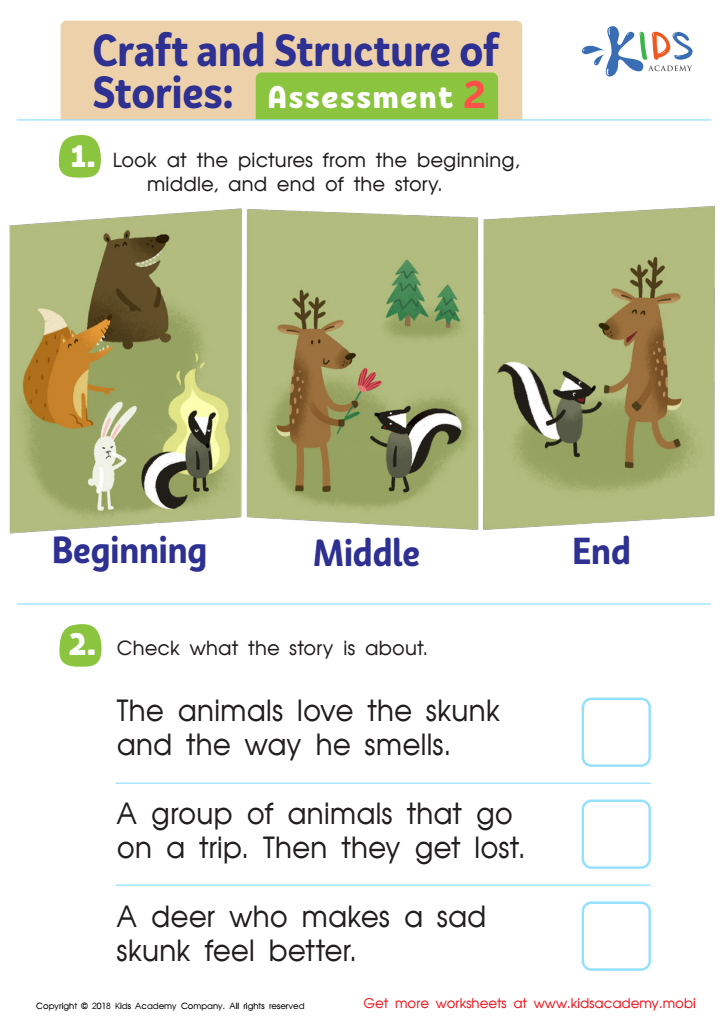
Craft and Structure of Stories: Assessment 2 Worksheet
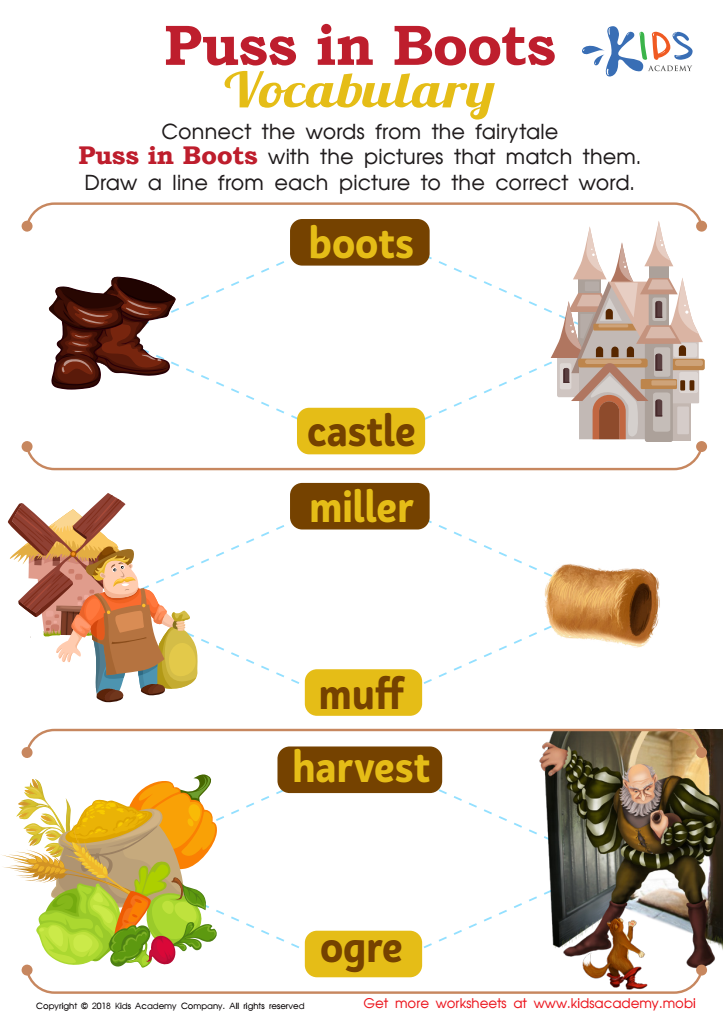
Puss in Boots Vocabulary Worksheet








Story analysis and normal reading fiction are critical for young children (ages 3-7) as they foster cognitive, emotional, and language development. For parents and teachers, these activities hold significant value in early childhood education.
First, engaging children with fiction enhances their imagination and creativity. Stories encourage children to visualize scenarios, characters, and settings, helping to build rich, imaginative landscapes in their minds. These imaginative skills are essential for problem-solving and creative thinking.
Second, analyzing narratives helps children understand story structure, including beginnings, middles, ends, and character development. This knowledge is fundamental in developing narrative comprehension and literacy skills. It also broadens their understanding of sequences and causality in real-world events.
Furthermore, stories introduce children to a variety of emotions and moral lessons. Through characters' experiences, children learn about empathy, compassion, and different perspectives, which are key components of emotional and social development.
Reading fiction also significantly augments vocabulary and language skills. Children encounter new words in context, which aids in natural language acquisition and strengthens their communication abilities.
Ultimately, investing in story analysis and reading fiction enriches the child's educational foundation, fostering a lifelong love for reading and learning. For parents and teachers, it translates to nurturing well-rounded, curious, and empathetic individuals.







