Animal knowledge Normal Reading Non-Fiction Worksheets for Ages 3-7
3 filtered results
-
From - To
Explore the wonders of the animal kingdom with our engaging "Animal Knowledge Normal Reading Non-Fiction Worksheets" designed for children ages 3-7. These worksheets provide young learners with fascinating facts about animals, promoting curiosity and enhancing reading skills. Each activity encourages critical thinking and comprehension as children learn about various species, their habitats, and behaviors through simple, age-appropriate texts. Our resources support early literacy development while captivating young minds with the beauty of nature. Perfect for classroom use or home learning, these worksheets make gaining animal knowledge fun and interactive. Unlock the world of animals with our thoughtfully crafted materials today!
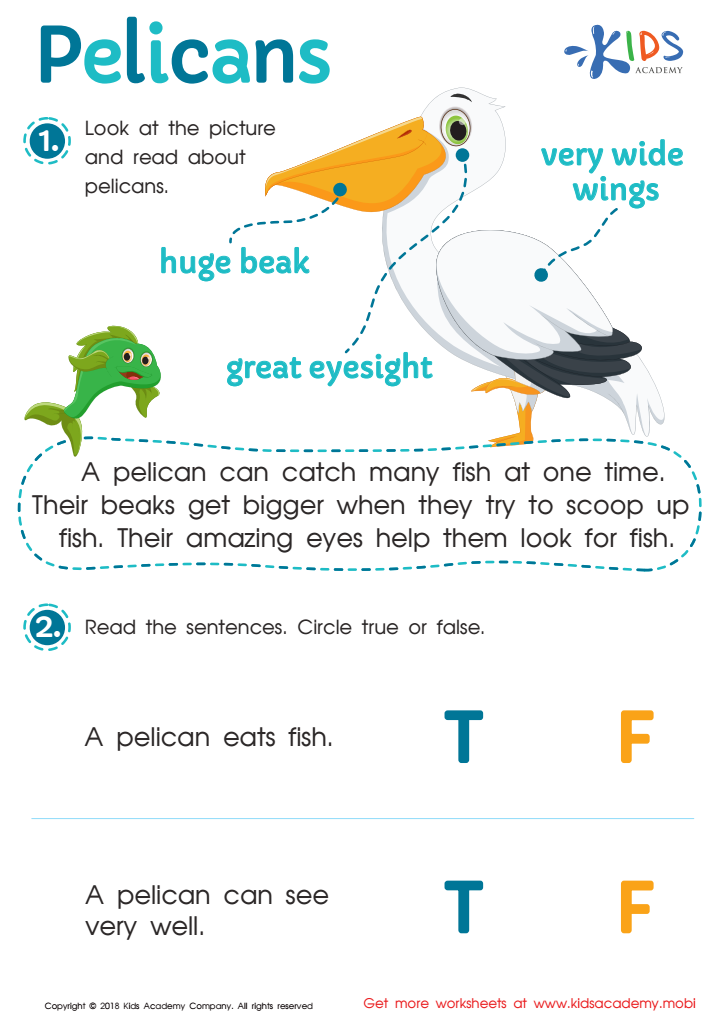
Pelicans Worksheet
 Assign to My Students
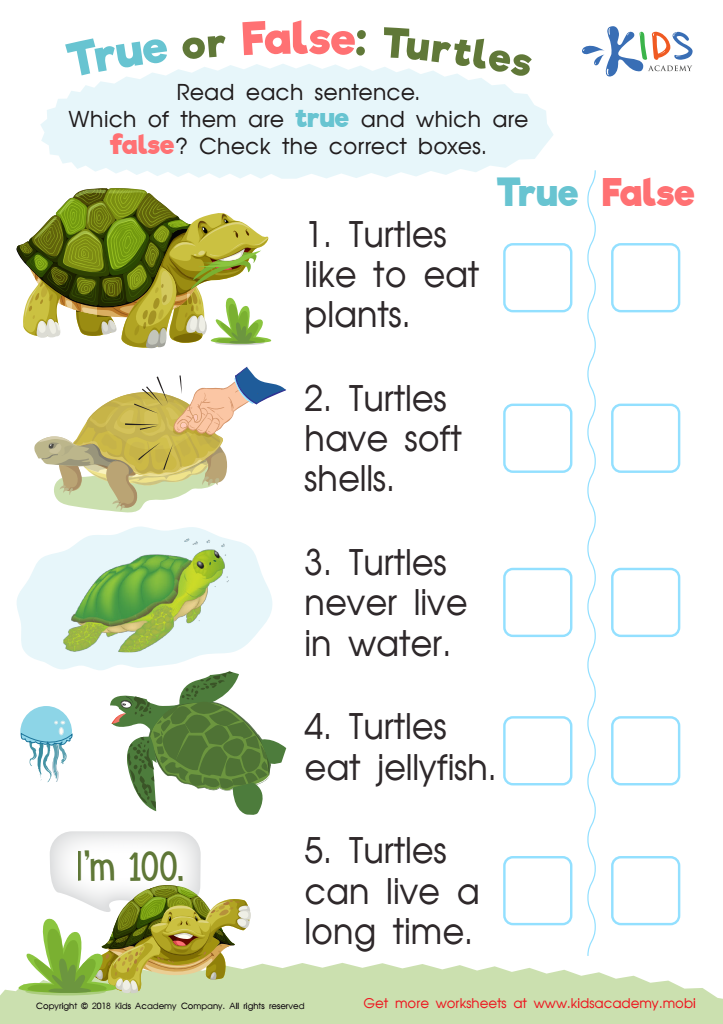
True or False: Turtles Worksheet
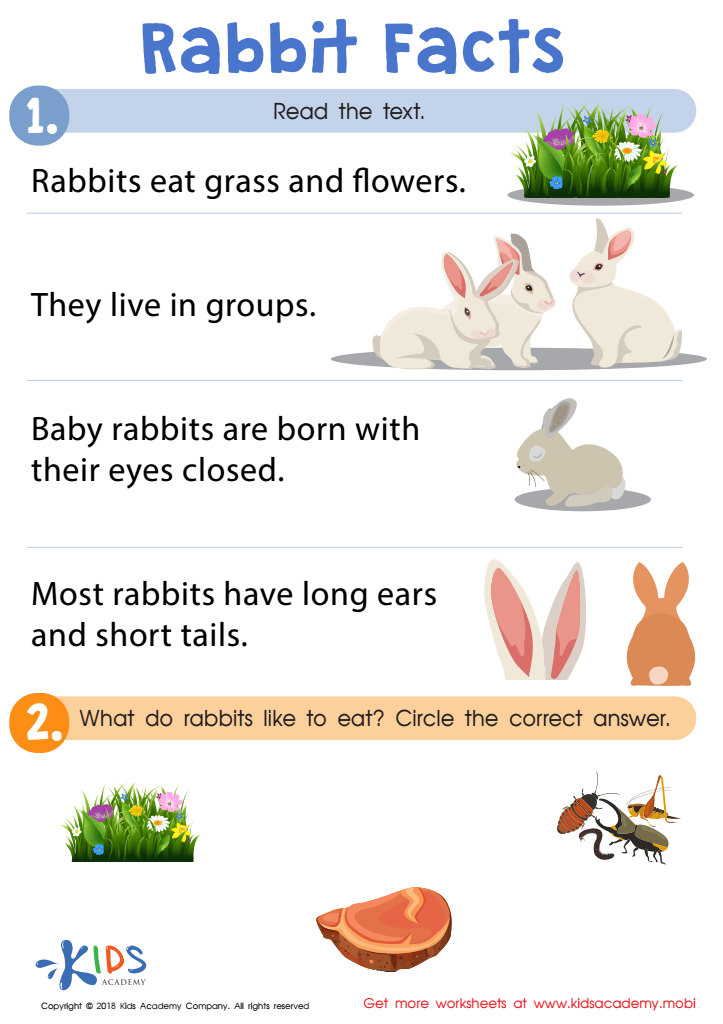
Rabbit Facts Worksheet








Parents and teachers should prioritize animal knowledge non-fiction reading materials for young children aged 3-7 because these resources play a crucial role in early learning and development. Firstly, young children are inherently curious about the world around them, and animals captivate their interest. Engaging with animal stories not only fuels their curiosity but also fosters a love for reading, which is foundational for literacy skills.
Moreover, animal knowledge encourages cognitive development as it introduces children to a range of concepts, such as habitats, behaviors, and ecosystems, laying the groundwork for scientific understanding. It helps enhance vocabulary as children learn new words related to animals and their environments.
Additionally, these readings promote empathy and emotional intelligence. Understanding animal behavior and their lives helps children develop compassion towards living beings and nurtures a sense of responsibility toward the natural world.
Furthermore, animal-themed stories often highlight themes such as friendship, teamwork, and resilience, providing moral lessons that can shape character development. In essence, by supporting access to quality animal knowledge non-fiction, parents and teachers empower young learners with valuable insights, social-emotional growth, and a positive attitude towards exploration and learning.