Reading comprehension Normal Reading Non-Fiction Worksheets for Ages 3-7 - Page 2
25 filtered results
-
From - To
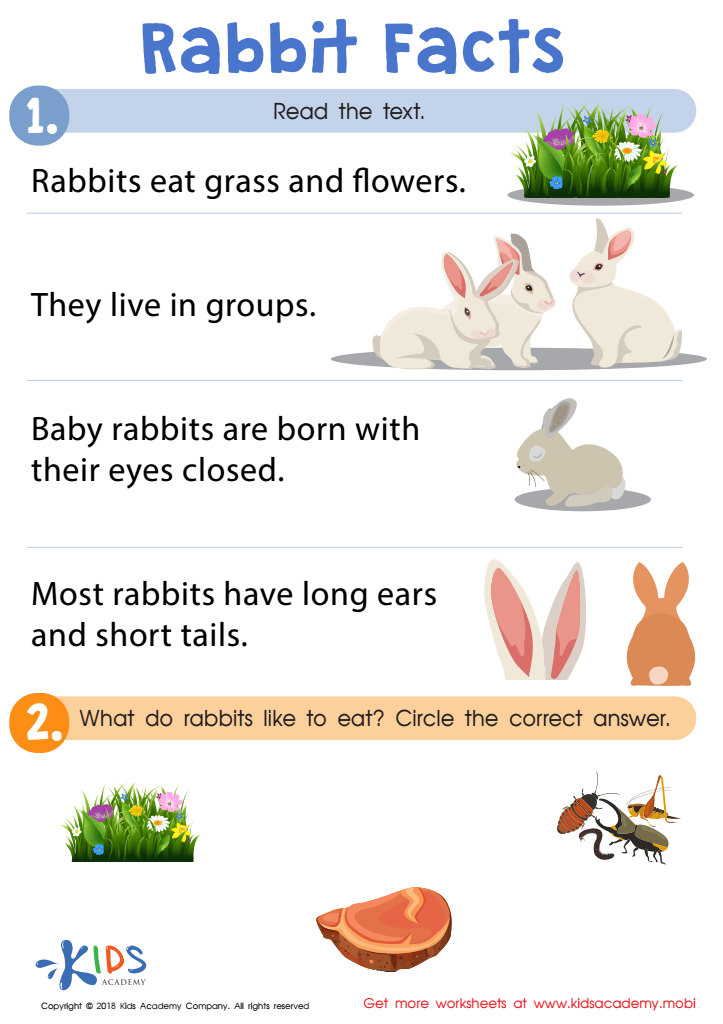
Rabbit Facts Worksheet
 Assign to My Students







Reading comprehension, particularly in non-fiction, is crucial for children aged 3-7 as it lays the foundation for lifelong learning. This age is a formative period when children begin to make sense of the world around them, and non-fiction texts provide factual information about various subjects, such as animals, weather, and cultures. Engaging with non-fiction enhances children's understanding of real-world concepts, encouraging curiosity and critical thinking.
Parents and teachers should care about this aspect of literacy because comprehension skills acquired early on translate into academic success across all subjects. As children learn to extract information, identify main ideas, and make connections between texts and their own experiences, they develop analytical skills that benefit them in school and beyond. Moreover, reading together creates bonding opportunities, enriching relationships while fostering a love for reading.
Furthermore, exposure to a variety of themes and vocabulary found in non-fiction can enhance language development and encourage discussions that deepen understanding. In our increasingly information-driven society, teaching young children how to evaluate facts and distinguish between reliable and unreliable information is essential. Supporting early reading comprehension in non-fiction empowers children to become informed, inquisitive, and engaged learners throughout their lives.