Rhyming skills development Normal Rhyming Words Worksheets for Ages 3-7
3 filtered results
-
From - To
Develop your child's rhyming skills with our engaging "Rhyming Skills Development Normal Rhyming Words Worksheets for Ages 3-7". Tailored for little learners, these worksheets make phonemic awareness fun and accessible. Children practice identifying and matching rhyming words through colorful illustrations and easy-to-follow activities. This foundational skill helps improve reading readiness, vocabulary, and listening skills. Perfect for preschool to first grade, our worksheets foster a love for reading while building essential literacy competence. Add these invaluable resources to your child's learning toolkit and watch their confidence, creativity, and linguistic abilities blossom. Start rhyming and let the learning adventure begin!
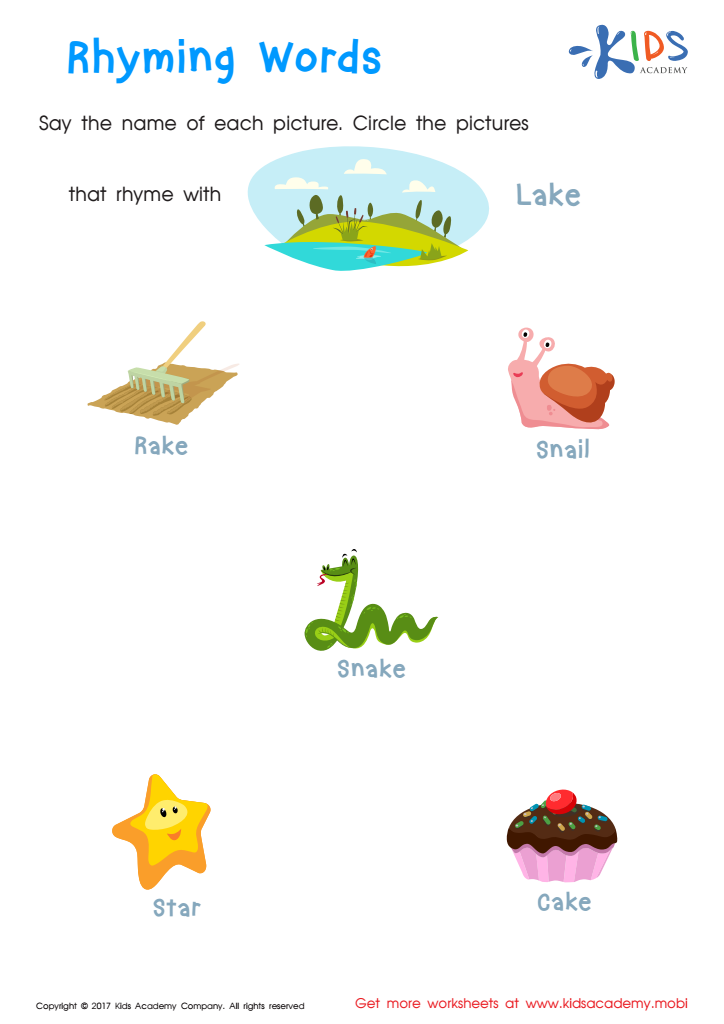
Rhyming Words Rhyming Worksheet
 Assign to My Students
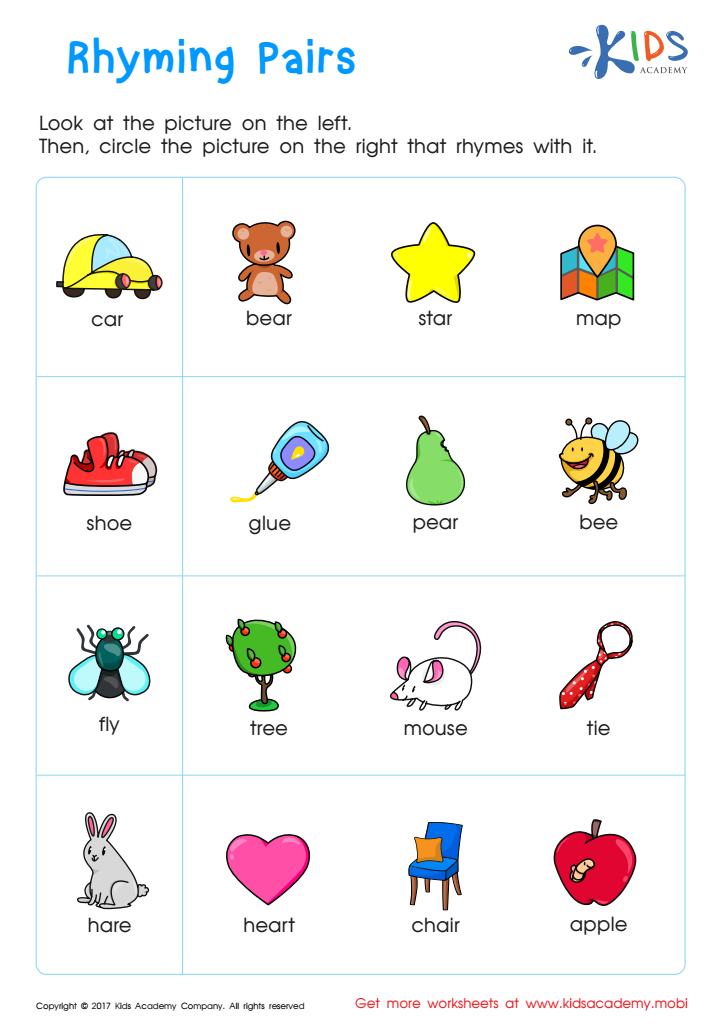
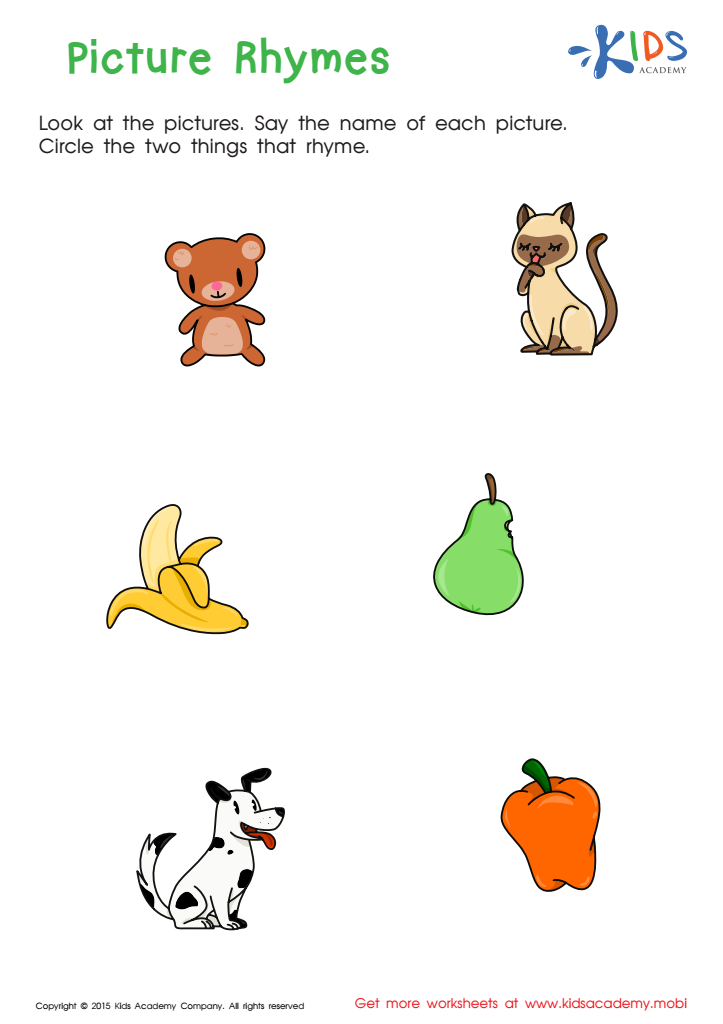
First Words: Picture Rhymes Worksheet







.jpg)
Developing rhyming skills during early childhood is a fundamental aspect of language and literacy development. For ages 3-7, exposure to rhymes fosters several cognitive and linguistic benefits that parents and teachers should prioritize.
Firstly, rhyming enhances phonological awareness, which is the ability to recognize and manipulate sounds in words. This skill is foundational for learning to read and spell. When children identify rhymes, they are also learning to discern differences and similarities between word sounds, an essential pre-reading skill.
Secondly, rhyming improves memory and recall. Rhymes and songs provide repetitive patterns that help young children remember new words and concepts more easily. This repetition also makes learning more engaging and enjoyable.
Thirdly, rhyming expands vocabulary and linguistic creativity. Through rhyme, children are introduced to a broader range of words and can experiment with and creatively use language. This linguistic exploration can lead to better expressive language skills.
Lastly, rhymes are often used in group activities, promoting social interaction and cooperative learning. When children share rhymes and songs, they practice listening skills, take turns, and develop a sense of rhythm and timing together.
Overall, fostering rhyming skills in early childhood enriches cognitive development, paves the way for literacy, and enhances social and emotional growth, making it an invaluable part of early childhood education.








