Basic astronomy knowledge Normal Science Worksheets for Ages 3-7
3 filtered results
-
From - To
Introduce young minds to the wonders of the universe with our Basic Astronomy Knowledge Normal Science Worksheets designed for ages 3-7. These engaging worksheets make learning about space fun and accessible, covering topics like planets, stars, and the moon. Through age-appropriate activities, children will develop foundational astronomy skills, fostering curiosity and a love for science. Perfect for parents and educators, our worksheets are crafted to enhance early learning experiences, support curriculum goals, and inspire young astronauts. Explore the cosmos from your classroom or home and ignite the spark of discovery in your little star-gazers!
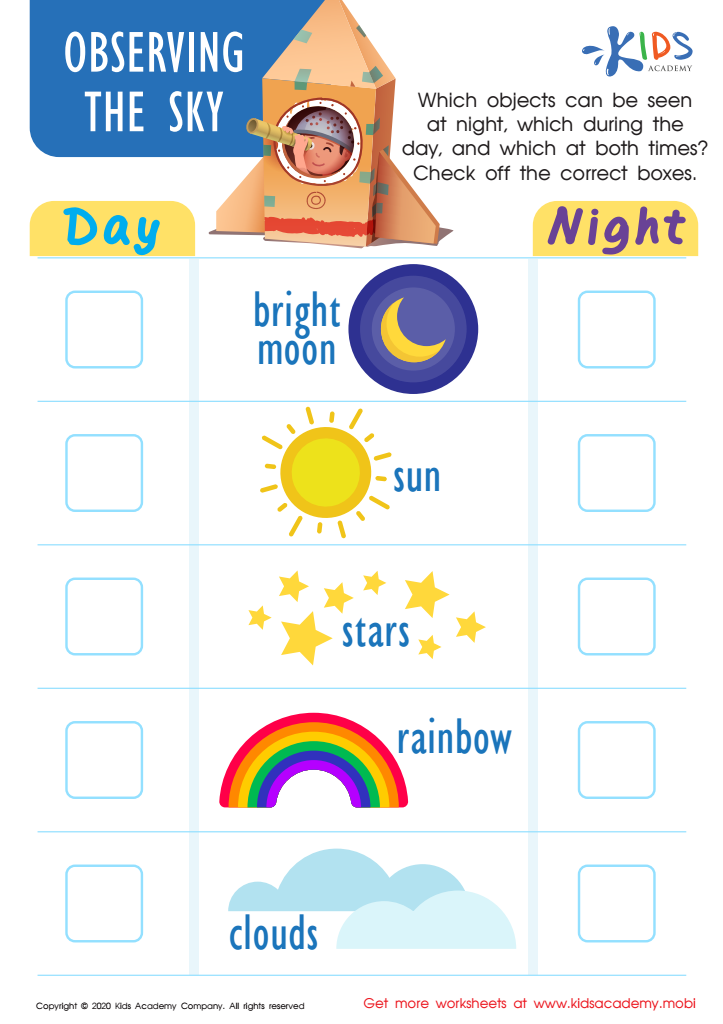
Observing the Sky Worksheet
 Assign to My Students
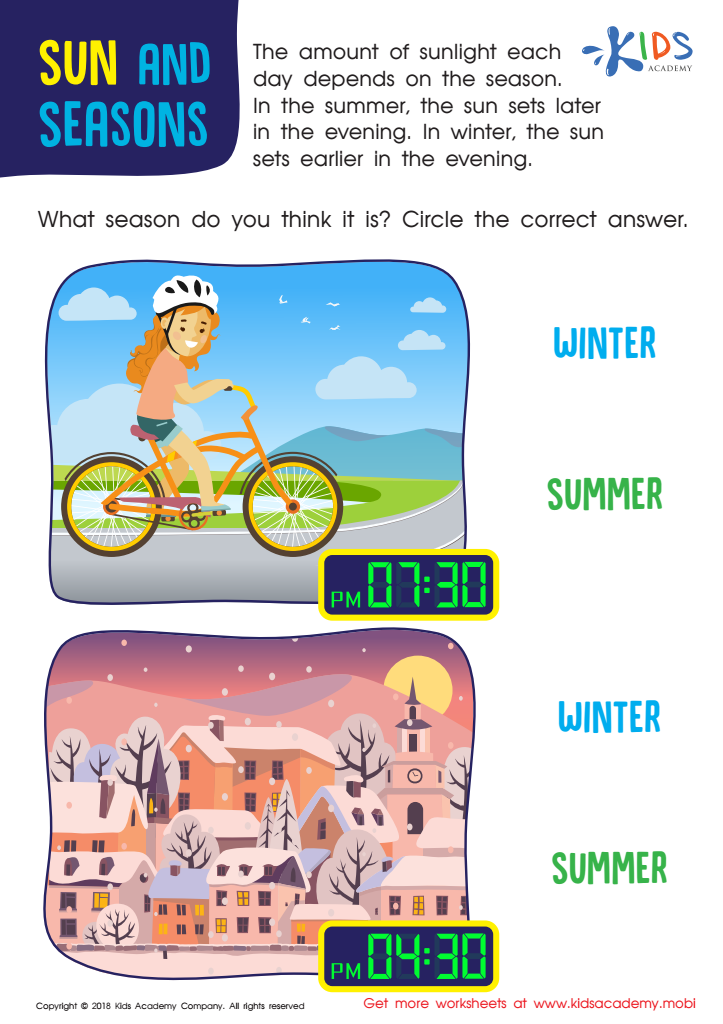
Sun and Seasons Worksheet
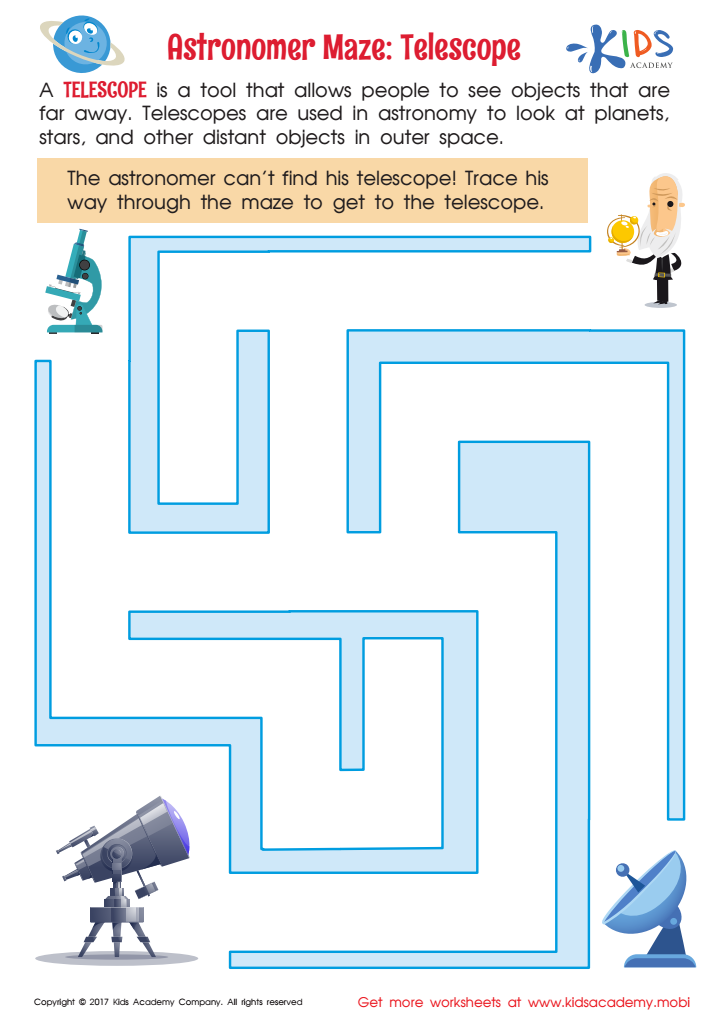
Astronomer Maze: Telescope Worksheet








Parents and teachers should care about introducing basic astronomy knowledge to children aged 3-7 because it plays a crucial role in their cognitive and intellectual development. At this tender age, children are naturally curious and eager to explore the world around them. Understanding basic concepts such as the day-night cycle, phases of the moon, and the position of the stars can foster an early interest in science and the natural world.
Basic astronomy lessons can stimulate a child's imagination and curiosity. For example, teaching youngsters about the planets in our solar system can turn into a fascinating journey that cultivates a sense of wonder about the universe. These early educational experiences can be the building blocks for more complex scientific understanding in later years.
Moreover, learning about astronomy helps develop critical thinking and reasoning skills. Observing the sky, asking questions, and understanding patterns encourage problem-solving and logical thinking, essential skills for all areas of study.
On a broader scale, fostering a love for astronomy and science encourages environmental awareness and a sense of global citizenship. Understanding our place in the universe can teach children to appreciate and care for our planet.
By instilling a love for learning and an inquisitive mindset at an early age, parents and teachers lay the foundation for lifelong learning and curiosity.







