Enhancing observation skills Normal Science Worksheets for Ages 3-7
7 filtered results
-
From - To
Enhance your child's observational skills with our engaging Normal Science Worksheets, designed specifically for ages 3-7. These interactive resources encourage young learners to explore their surroundings, sharpen their focus, and develop critical thinking skills. Each worksheet features vibrant illustrations and age-appropriate activities that promote curiosity about nature and science. Kids will enjoy identifying details, making comparisons, and illustrating their findings, all while having fun! These worksheets are perfect for home learning or in the classroom, helping early learners build a solid foundation in observational skills essential for their academic journey. Discover the joy of learning through exploration today!
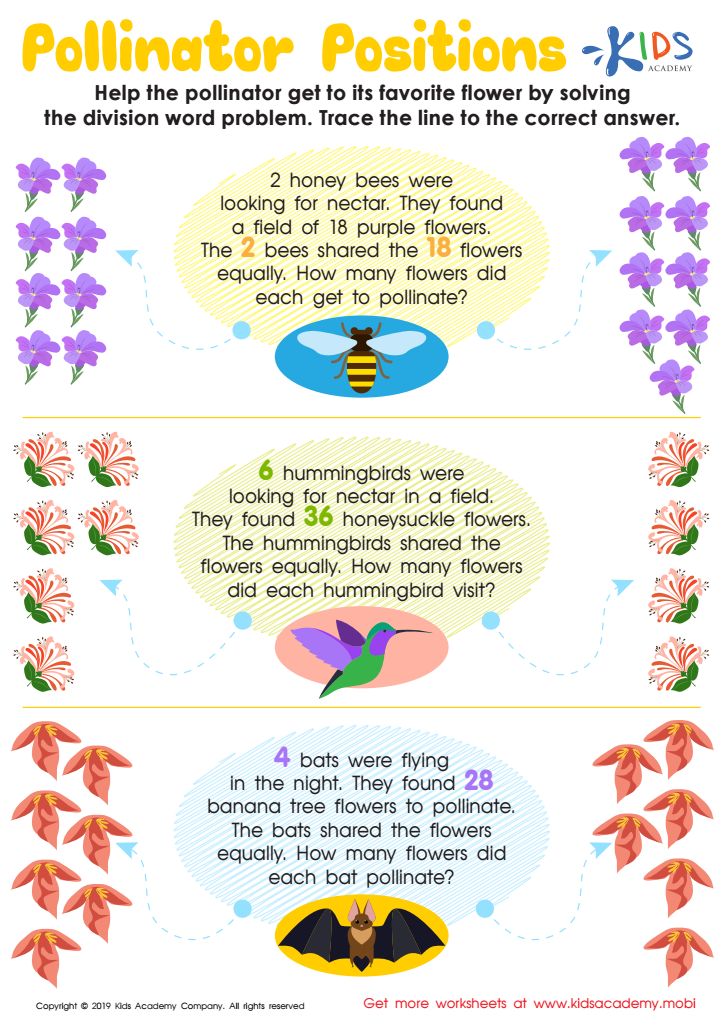
Pollinator Positions Worksheet
 Assign to My Students
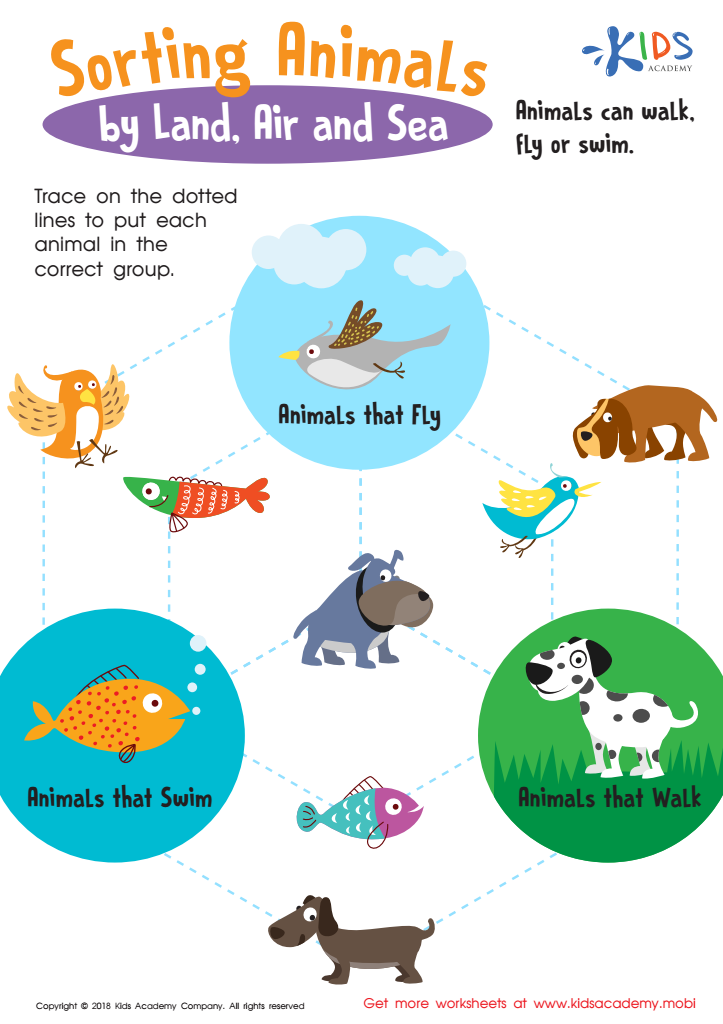
Sorting Animals by Land, Air and Sea Worksheet
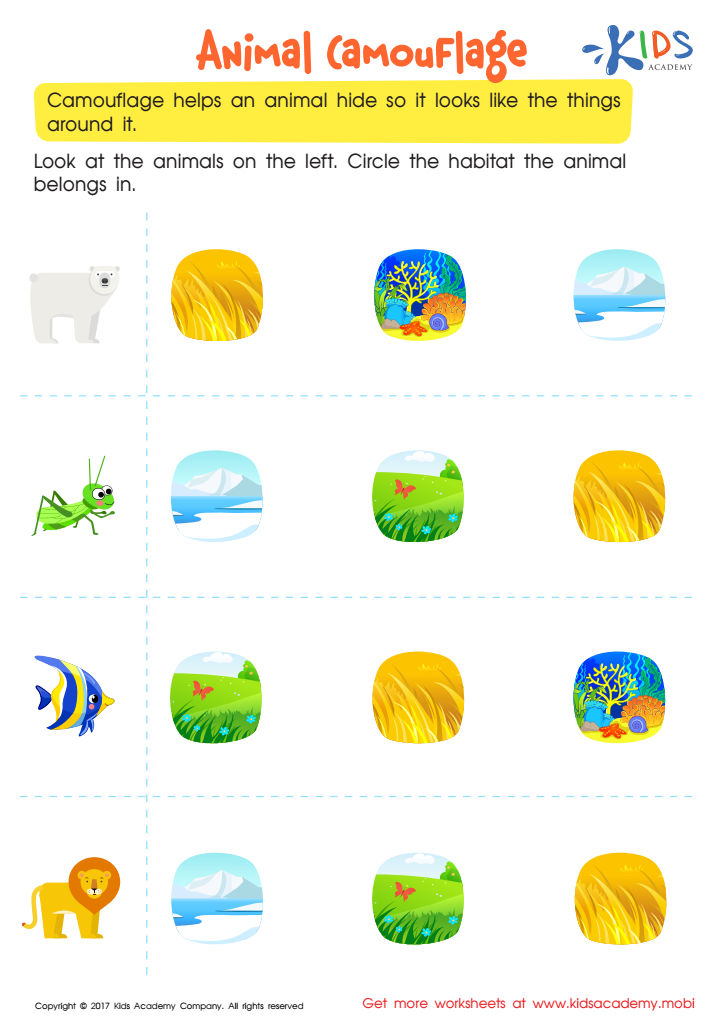
Animal Camouflage Worksheet
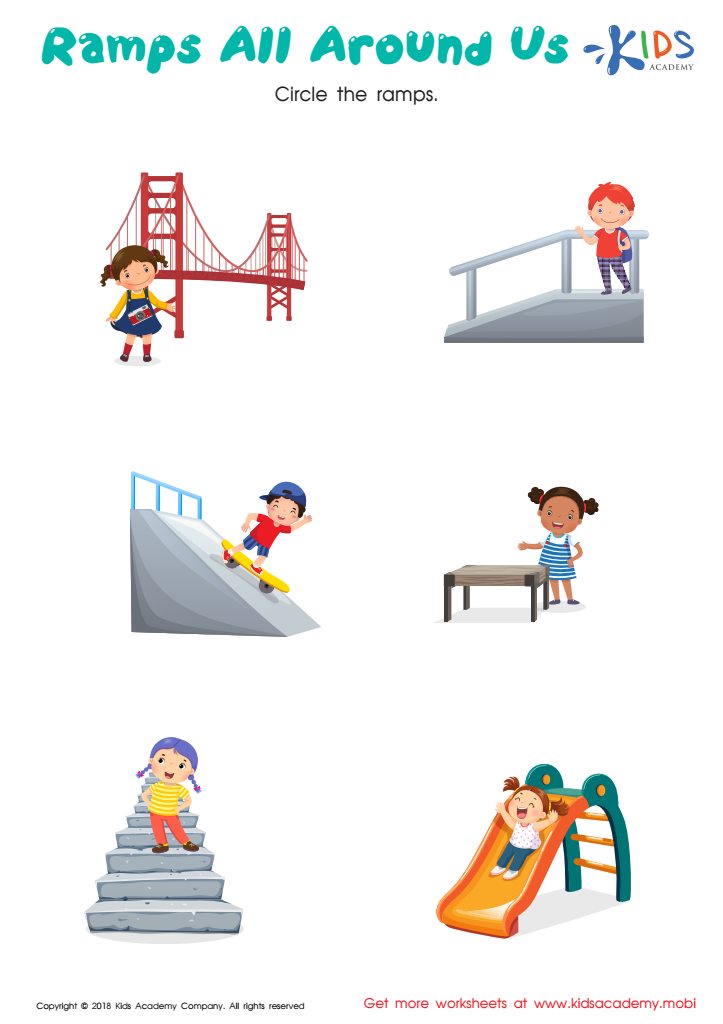
Ramps All Around us Worksheet
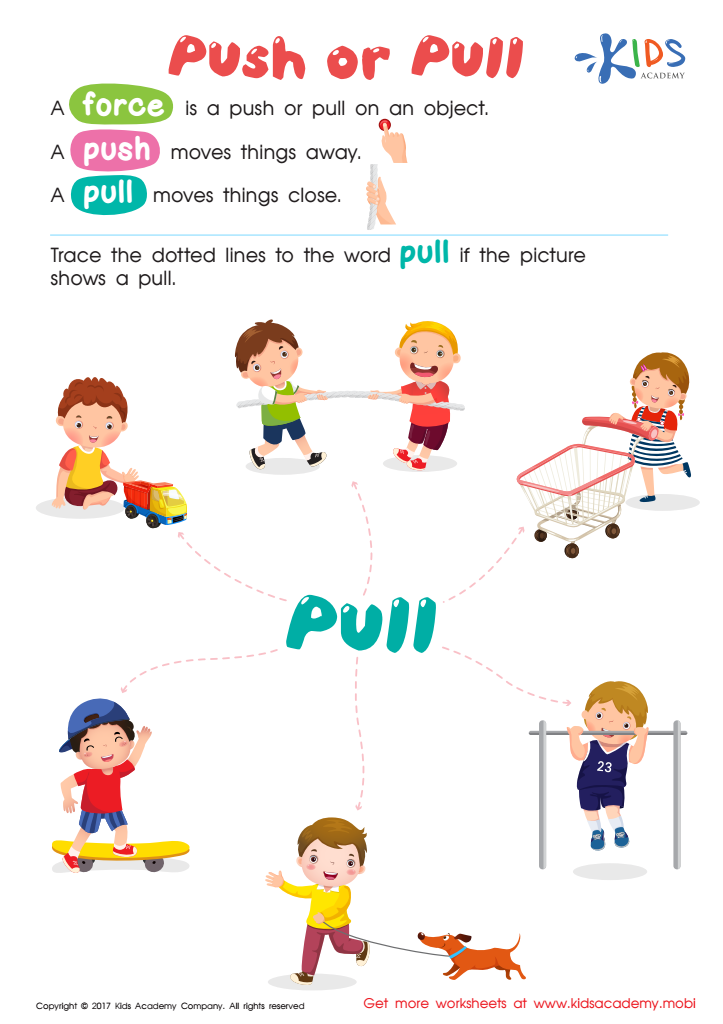
Pull or Push Worksheet
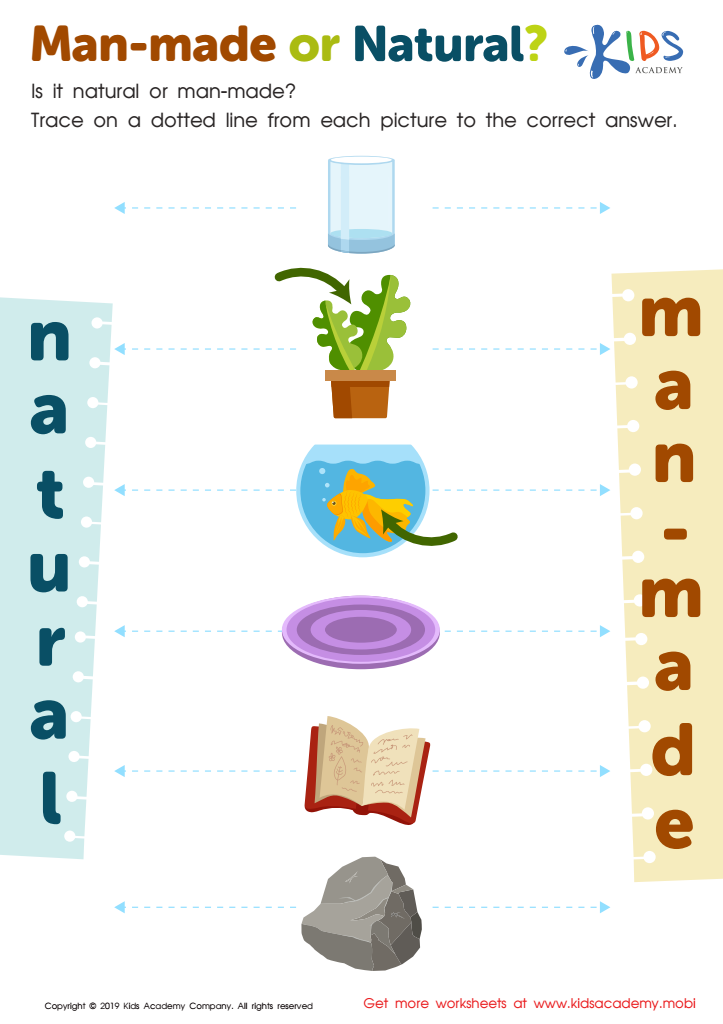
Man-Made or Natural? Worksheet
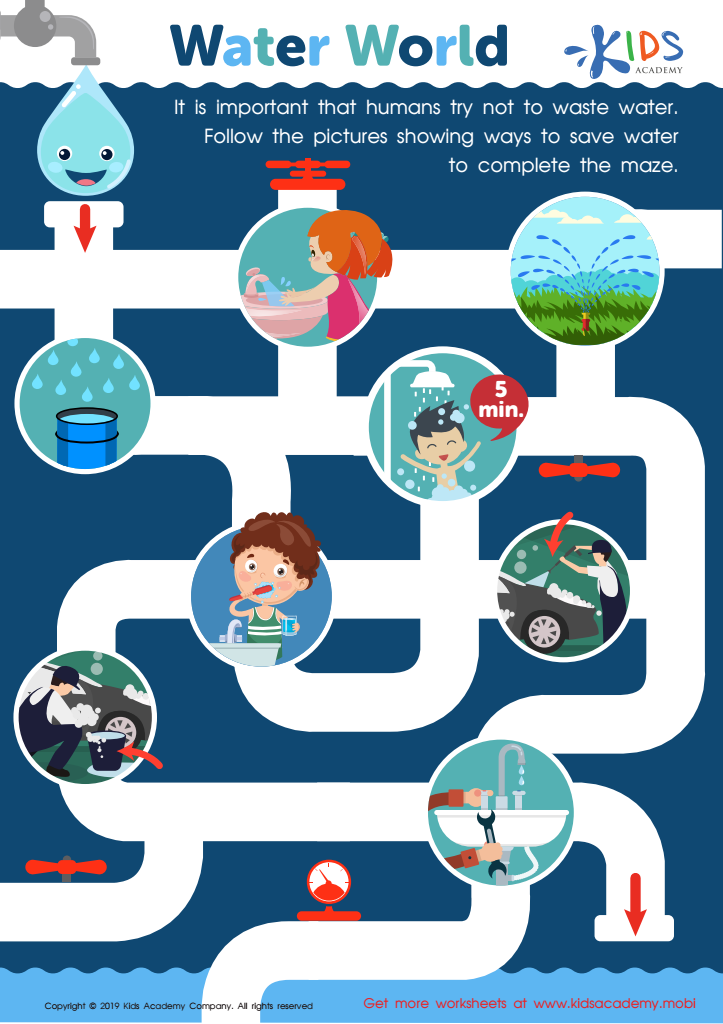
Water World Worksheet








Enhancing observation skills in young children, especially from ages 3 to 7, is crucial for their cognitive and social development. During these formative years, children are naturally curious and eager to explore their surroundings. By nurturing their observational abilities, parents and teachers can help them communicate more effectively, solve problems, and develop critical thinking skills. Observation fuels inquiry, allowing children to ask questions, discover patterns, and understand the world around them.
For instance, through nature walks or classroom experiments, teachers can guide children to observe colors, shapes, and movements, making learning interactive and meaningful. This engagement not only boosts children's confidence but also fosters a love for learning. Furthermore, enhanced observation skills can improve emotional intelligence; as children learn to notice body language and facial expressions, they become more empathetic and socially aware.
Incorporating observation activities into daily routines or structured lessons allows children to practice and refine these skills in a supportive environment. Thus, parents and teachers should prioritize enhancing observational learning as it lays the groundwork for a lifelong attitude of curiosity, resilience, and understanding, crucial for academic success and personal growth.







