Map reading skills Normal Science Worksheets for Ages 3-7
1 filtered results
-
From - To
Introduce young learners to the world of geography with our Map Reading Skills Normal Science Worksheets, crafted specially for children aged 3-7. These engaging worksheets from Kids Academy help develop essential skills in identifying landmarks, understanding symbols, and following directions on simple maps. Through interactive activities and vibrant visuals, children will learn to navigate their surroundings, fostering spatial awareness and critical thinking. Perfect for early grade students, our well-designed maps encourage logic and exploration, laying a strong foundation for future geographic comprehension. Embark on a fun and educational adventure with our comprehensive map reading worksheets!
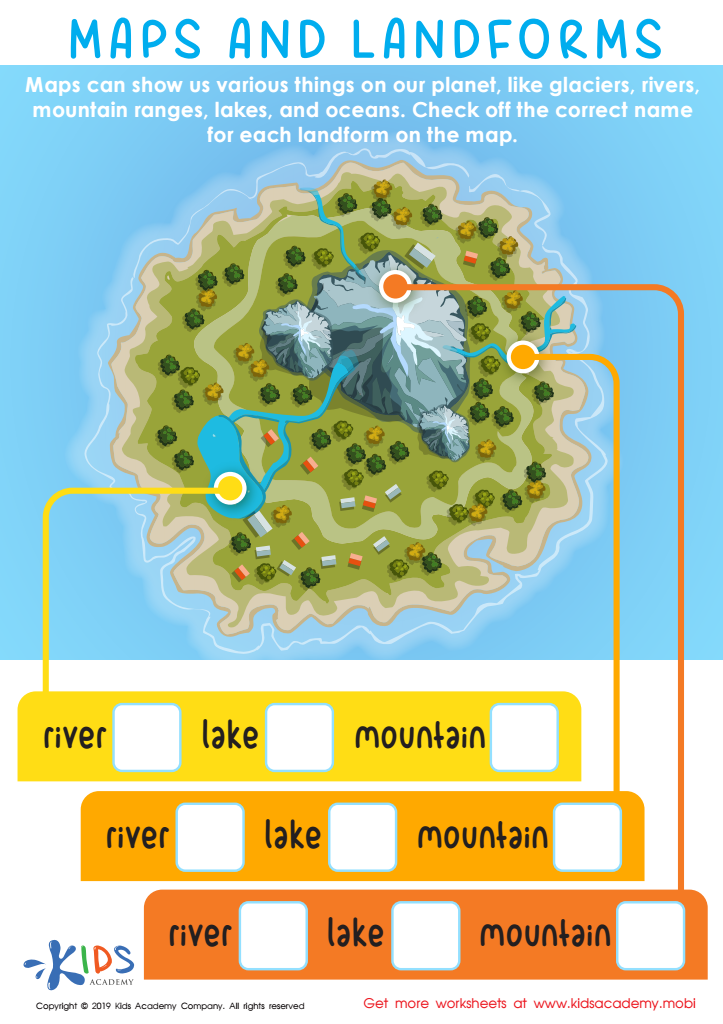
Maps and Landforms Worksheet
 Assign to My Students







Developing map reading skills in children aged 3-7 is essential as it lays a strong foundation for spatial awareness and geographic literacy, which are crucial elements of normal science learning. At this tender age, children's brains are exceptionally receptive to new information, and introducing them to maps can be both educational and exciting. By learning to interpret maps, they start to comprehend basic concepts of direction, distance, and location, which are integral components of cognitive development.
Map skills also promote critical thinking and problem-solving abilities. For instance, when children follow a map to find a hidden treasure or navigate a simple route, they learn to make decisions and understand cause-and-effect relationships. These activities foster curiosity, allowing them to engage actively with their surroundings and comprehend the world better.
Furthermore, learning to read maps enhances fine motor skills as children trace routes or mark locations. It also improves their vocabulary as they are introduced to terms like “north,” “south,” “border,” and “route.” Parents and teachers should emphasize map reading because it not only bolsters academic skills in mathematics and geography but also encourages a sense of adventure and exploration, making the learning process much more enjoyable and holistic. Thus, investing time in teaching map reading at an early age yields lifelong benefits.







