Space knowledge Normal Science Worksheets for Ages 3-7
4 filtered results
-
From - To
Explore the wonders of the universe with our "Space Knowledge Normal Science Worksheets" designed for children aged 3-7. Engaging and educational, these worksheets introduce young learners to essential space concepts, including planets, stars, and galaxies. Each activity is crafted to captivate curiosity and foster early scientific exploration through coloring pages, puzzles, and simple questions. Parents and teachers will find these resources perfect for enhancing classroom learning or reinforcing concepts at home. Stimulate your child's fascination with space while developing critical thinking and fine motor skills. Start your journey into the cosmos today and watch your little astronomers thrive!
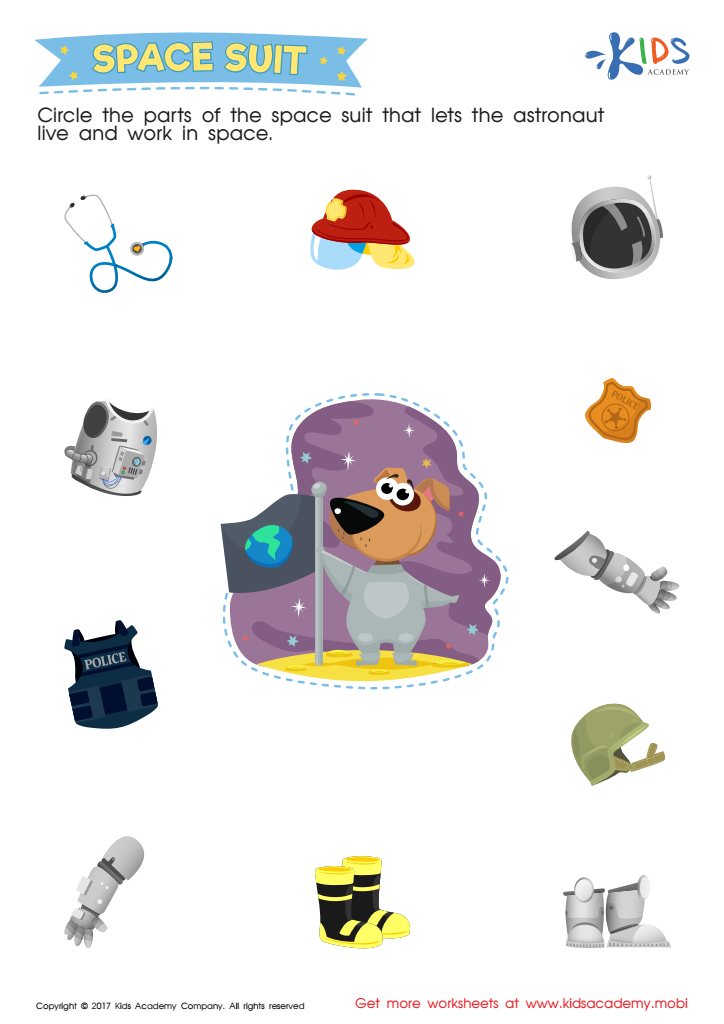
 Assign to My Students
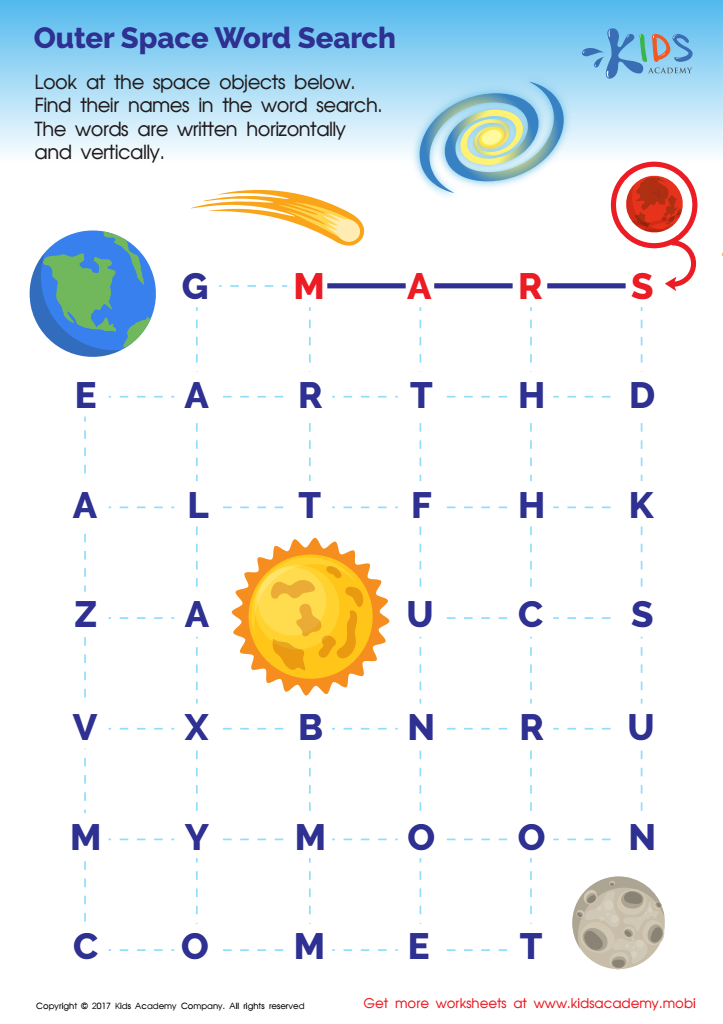
Outer Space Word Search Printable
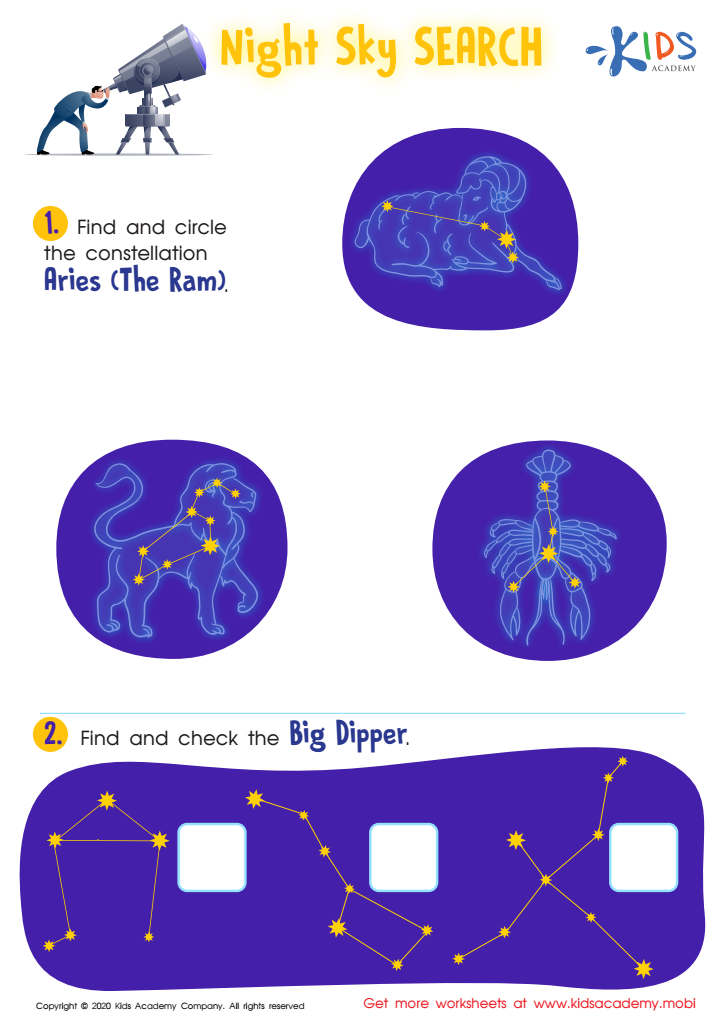
Night Sky Search Worksheet
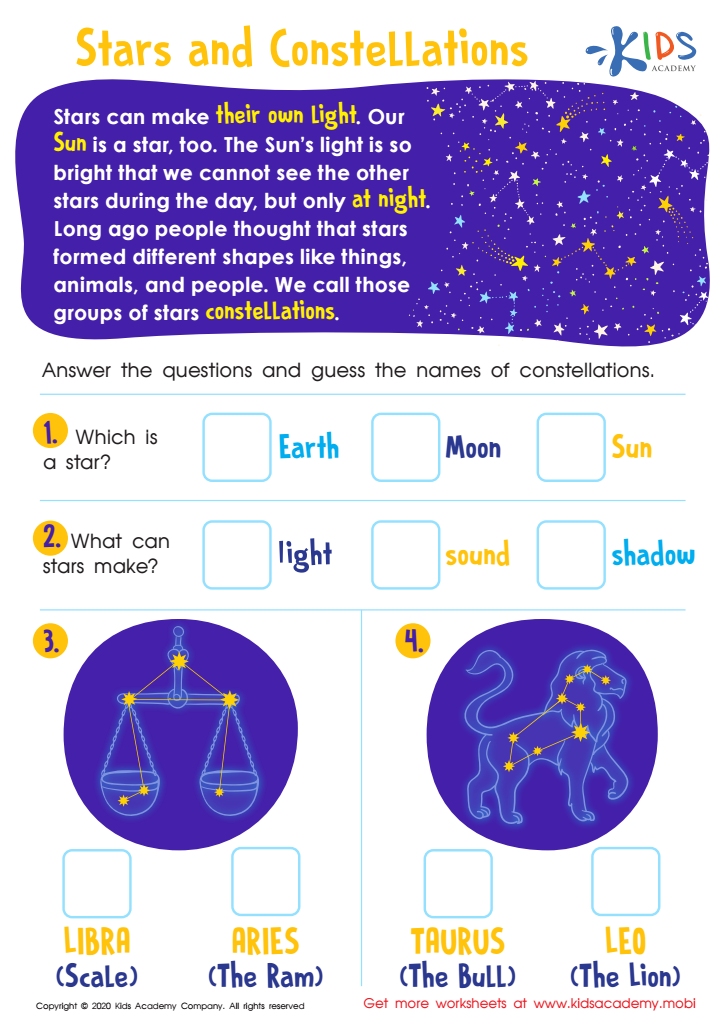
Stars and Constellations Worksheet


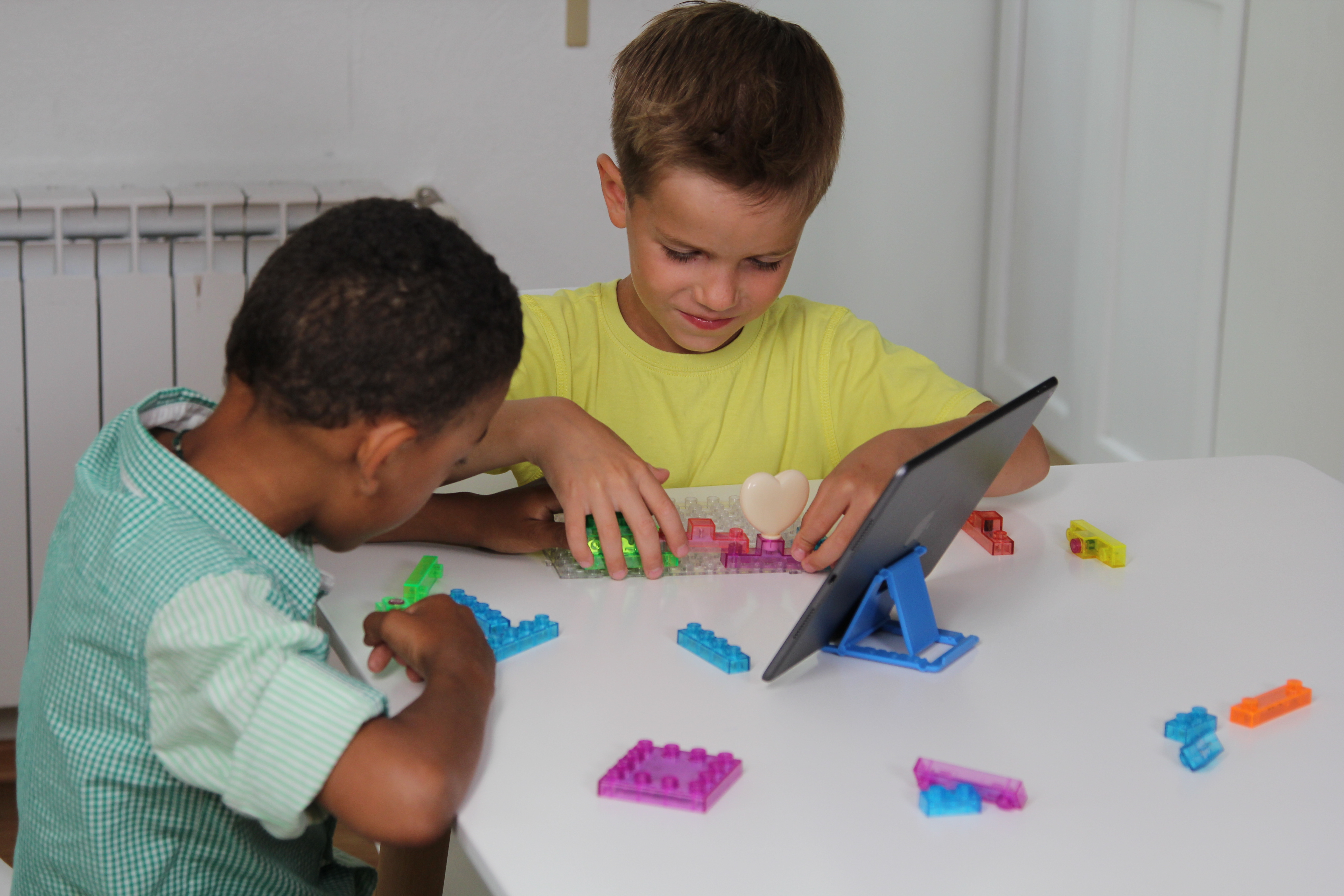




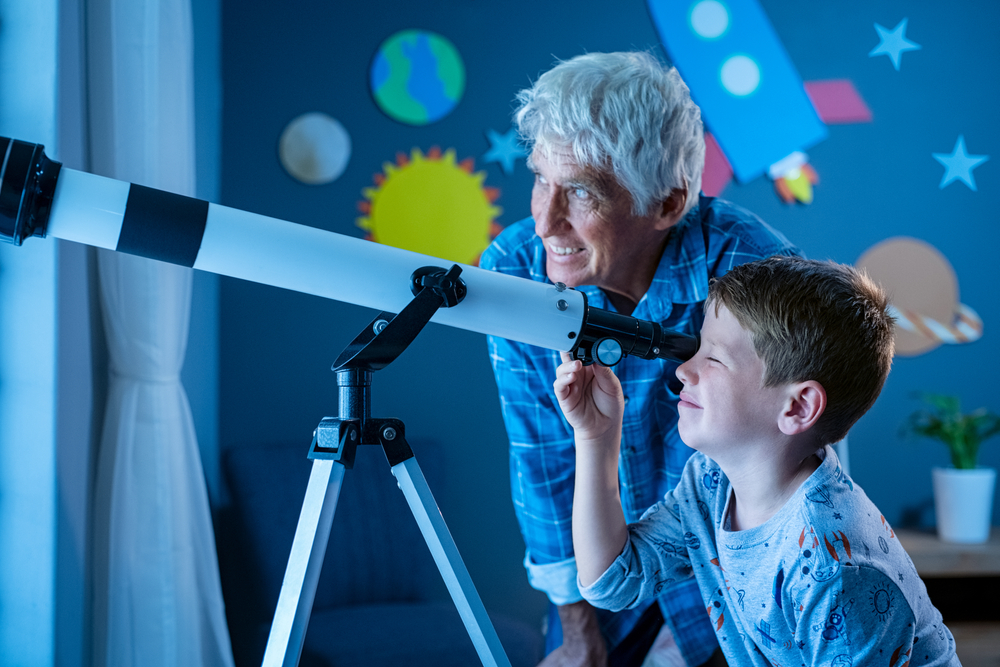
Understanding Space knowledge through science for children ages 3-7 is vital for several reasons. First, this age group is naturally curious about their surroundings, and introducing space concepts can stimulate their imagination and wonder. Learning about planets, stars, and the universe fosters critical thinking and sparks questions that encourage exploration and discovery.
Second, space science lays a strong foundation for STEM (Science, Technology, Engineering, and Mathematics) learning. Engaging children with hands-on activities related to space, like building models of the solar system or observing the night sky, not only enhances their problem-solving skills but also develops their ability to think scientifically.
Moreover, space knowledge promotes social interaction. Through collaborative projects or group discussions, children learn to communicate their ideas and work with peers—skills crucial for their future academic and social success.
Finally, instilling an interest in space encourages environmental awareness. Understanding the Earth’s position in the vast universe can create a sense of responsibility for our planet. Thus, for parents and teachers, integrating space knowledge into early education is not only educationally enriching but also fosters curiosity, creativity, and a sense of responsibility in young learners.







