Understanding constellations Normal Science Worksheets for Ages 3-7
3 filtered results
-
From - To
Discover the wonder of the night sky with our “Understanding Constellations” science worksheets designed for ages 3-7. Each engaging activity helps young learners recognize and learn about various star constellations. Filled with fun illustrations and easy-to-follow instructions, these worksheets foster curiosity and comprehension. Perfect for classrooms and home use alike, they support early learning development and science literacy. Encourage a love for astronomy in your child with our thoughtfully crafted educational materials. Visit our website to download and print these free resources, and embark on a stellar journey of discovery together!
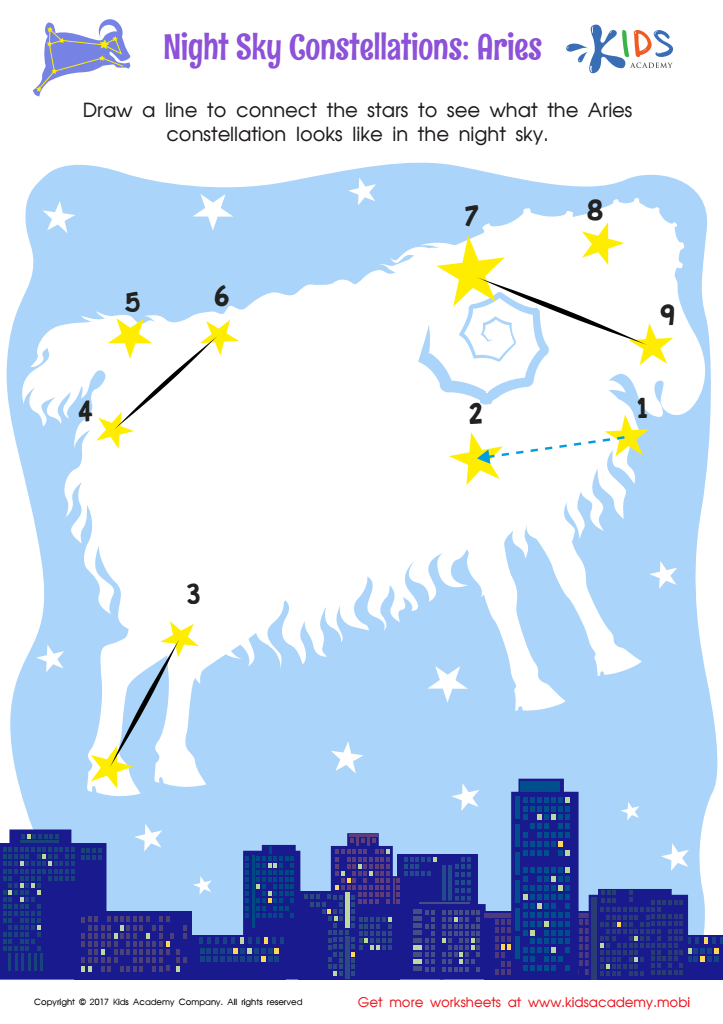
Night Sky Constellations: Aries Worksheet
 Assign to My Students
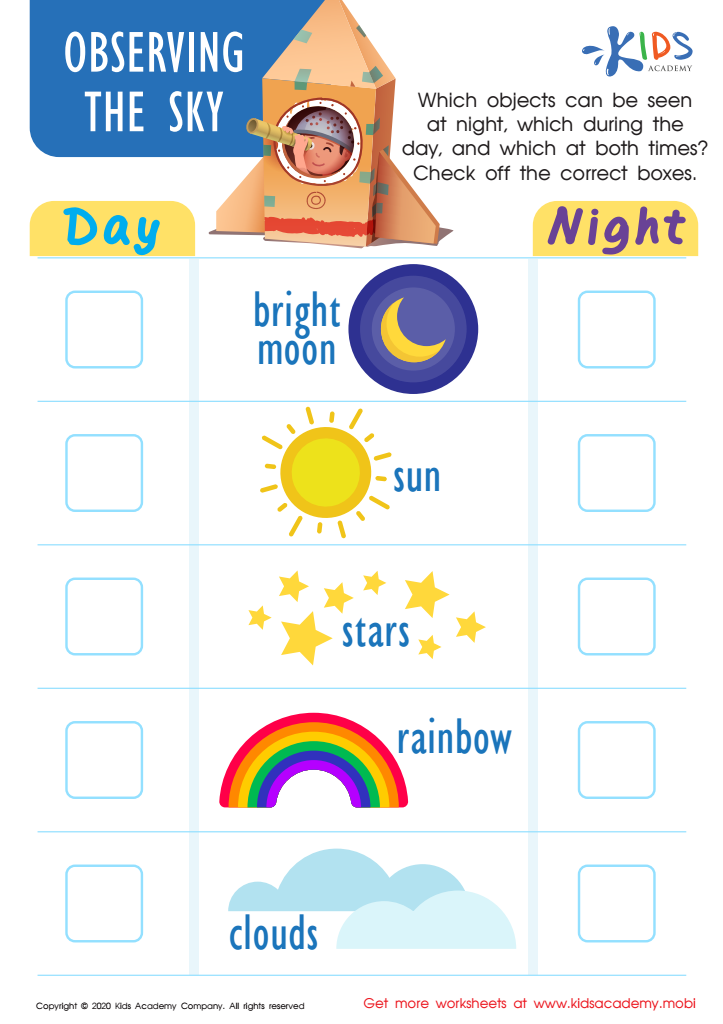
Observing the Sky Worksheet
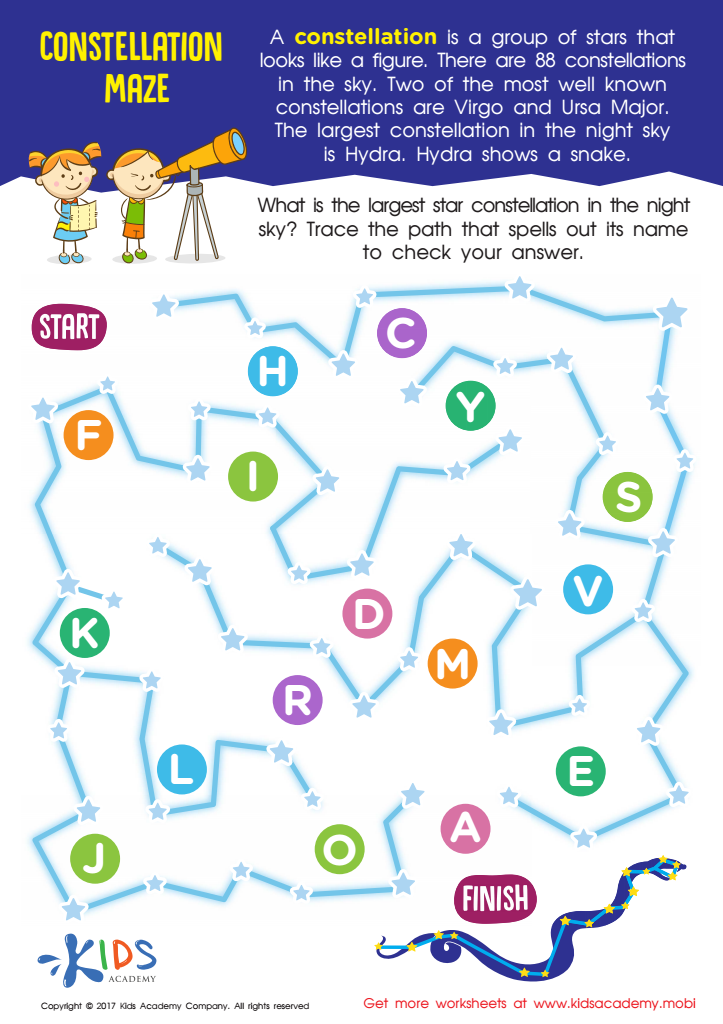
Constellations Worksheet







Understanding constellations and normal science concepts for ages 3-7 is crucial for a child's development for several reasons. At this formative stage, children's brains are highly receptive and curious, making it the perfect time to introduce basic scientific ideas.
First, teaching children about constellations can spark an early interest in astronomy and science. It encourages them to look up at the night sky with wonder and curiosity, fostering a love of learning and discovery. Young children are naturally inquisitive, so exploring patterns of stars helps develop their observational skills and ignite their imaginations.
Second, normal science education at a young age lays the foundation for critical thinking and problem-solving abilities. By understanding simple scientific concepts, children begin to grasp the nature of evidence-based reasoning and the systematic ways in which we explore our world. This builds a mindset geared towards inquiry and logical analysis, skills that are vital throughout life.
Additionally, early exposure to science subjects improves cognitive development and language skills. Engaging in science-related activities and discussions enhances vocabulary and conceptual understanding.
Lastly, learning about constellations and basic science is an excellent bonding opportunity for parents and children or teachers and students. It makes learning fun and interactive, creating positive associations with educational activities. Overall, this early scientific education paves the way for lifelong interest and competence in science.







