Understanding light sources Normal Science Worksheets for Ages 3-7
3 filtered results
-
From - To
Introduce young learners to the fascinating world of light with "Understanding Light Sources" science worksheets, specially designed for ages 3-7 by Kids Academy. These engaging, visually captivating, and interactive activities help children grasp the basics of natural and artificial light sources. Through age-appropriate exercises, kids will identify, compare, and explore different light sources, enhancing their learning skills. Perfect for both classroom and home use, these printables promote curiosity and a love of science, laying a strong foundation for future exploration. Boost your child's understanding of light and illuminate their scientific journey with our expert-crafted worksheets.
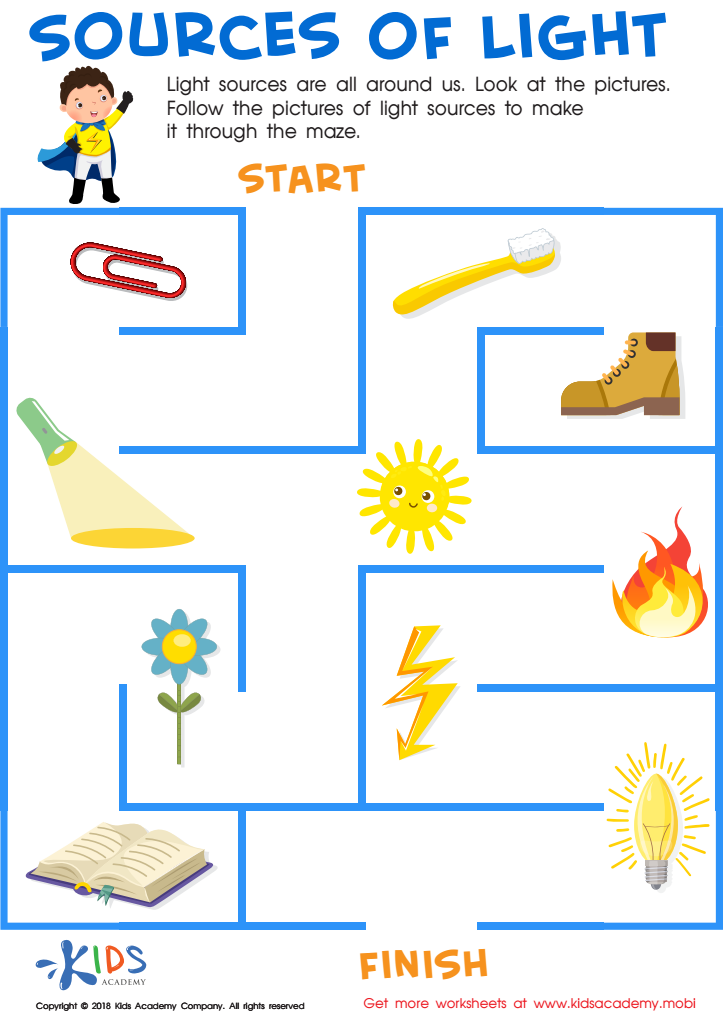
Sources of Light Worksheet
 Assign to My Students
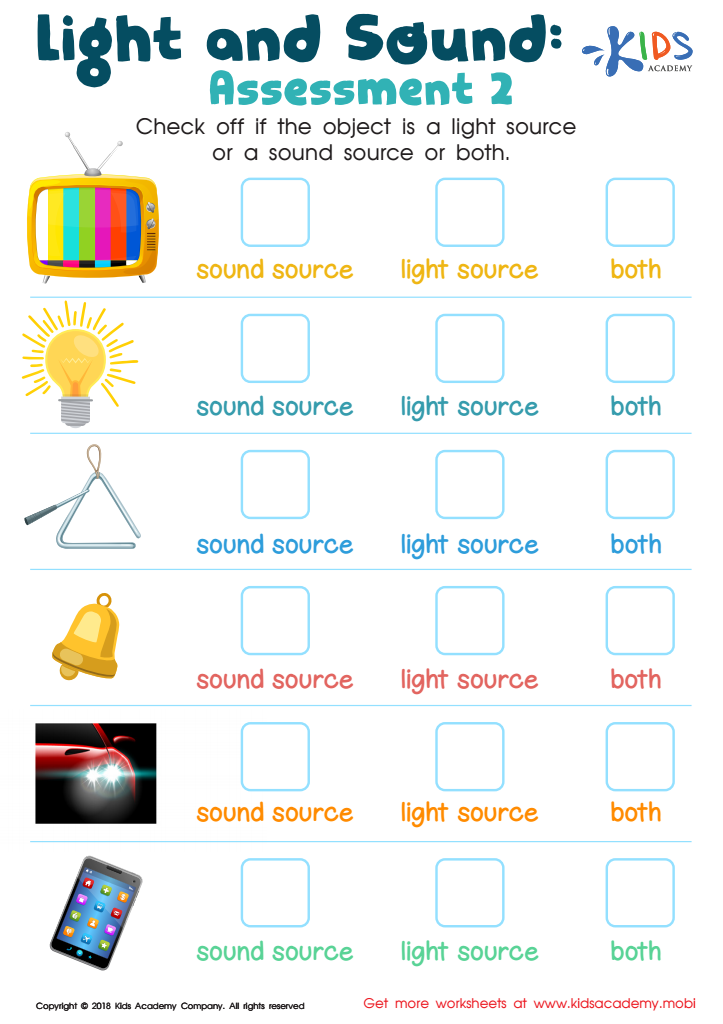
Light and Sound: Assessment 2 Worksheet
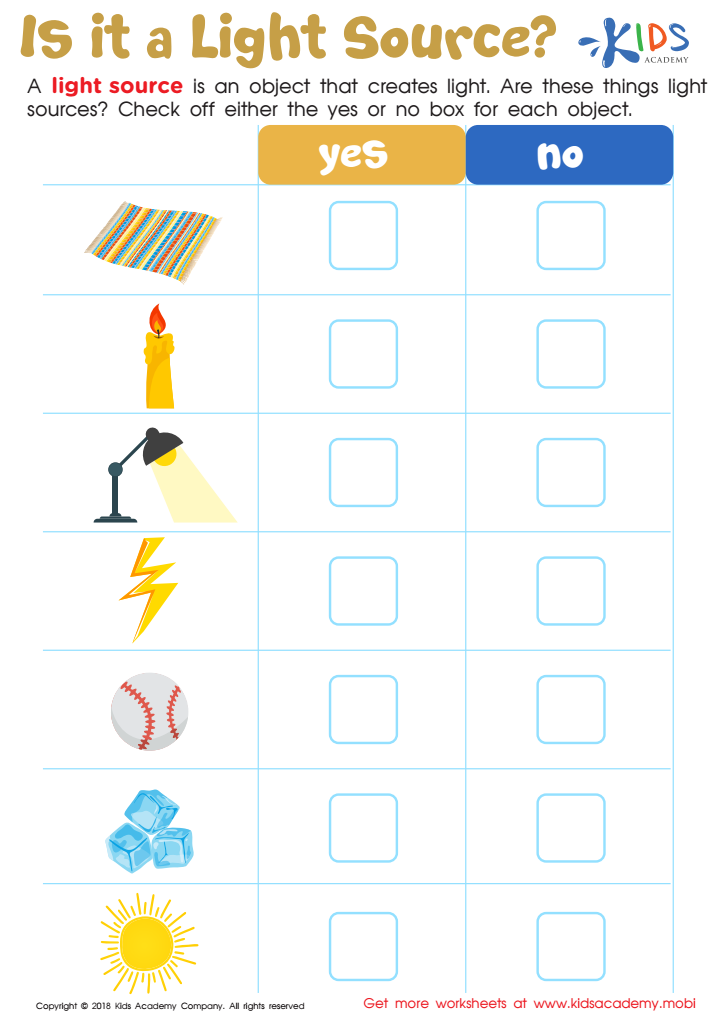
Is It a Light Source? Worksheet







Understanding light sources is essential for young children as it lays a foundational element for learning science. Teaching children aged 3-7 about different sources of light—such as the Sun, lamps, and flashlights—helps them make sense of the world they experience every day. It's not just about the scientific facts; it's about building curiosity and fostering critical thinking skills.
At this age, kids are incredibly inquisitive. They notice light and darkness but may not understand why these changes occur. By explaining light sources in simple terms, parents and teachers can encourage a child’s natural curiosity. For example, children can learn that the Sun provides light during the day, while lamps and bulbs are artificial sources of light we use indoors.
Understanding light also introduces basic but essential scientific principles such as energy, cause and effect, and environmental awareness. Studies suggest that early scientific learning can boost overall cognitive development, including language and reasoning skills.
And beyond academics, comprehending light helps children in practical terms, such as recognizing why it's unsafe to look directly at the Sun or why we turn on lights when it gets dark. All of this helps foster a lifelong love for learning while providing practical knowledge that will benefit them across a multitude of life situations.







