Understanding pollination Normal Science Worksheets for Ages 3-7
3 filtered results
-
From - To
Discover our "Understanding Pollination Normal Science Worksheets" designed specifically for children aged 3-7! These engaging and interactive worksheets introduce young learners to the essential process of pollination. Through fun activities and colorful illustrations, kids will explore how flowers, bees, and other pollinators work together in nature. Our resources promote curiosity and essential STEM skills while making learning enjoyable. Ideal for both classroom and home use, these worksheets encourage children to observe, question, and appreciate the natural world around them. Foster a love for science early on with our thoughtfully-crafted materials that support cognitive development and creativity!
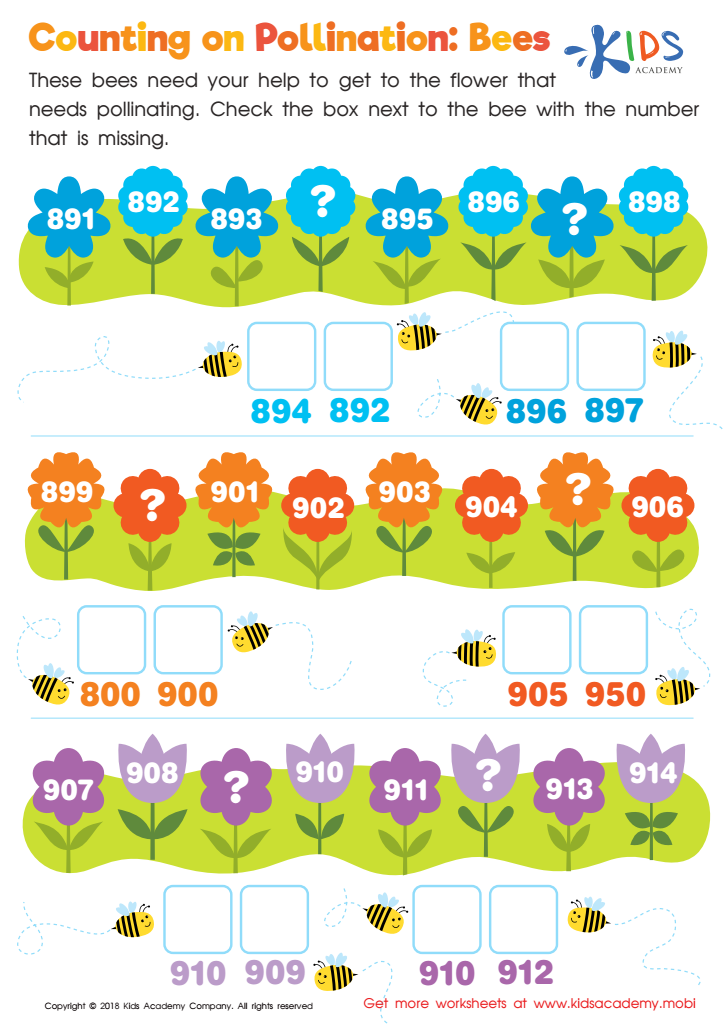
Counting on Pollination: Bees Worksheet
 Assign to My Students
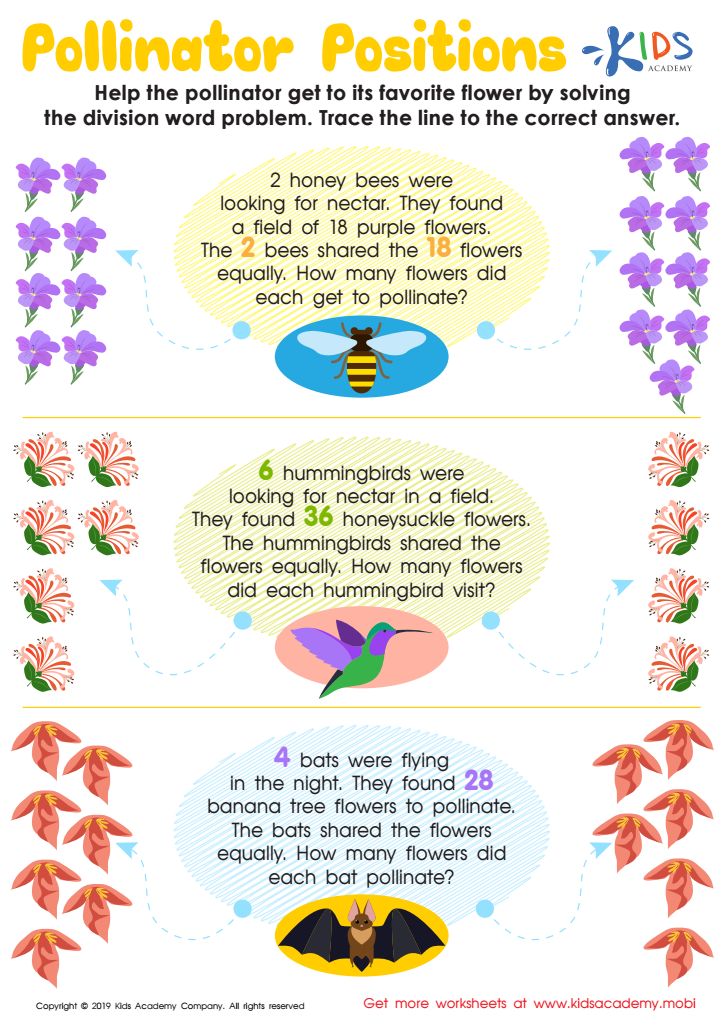
Pollinator Positions Worksheet
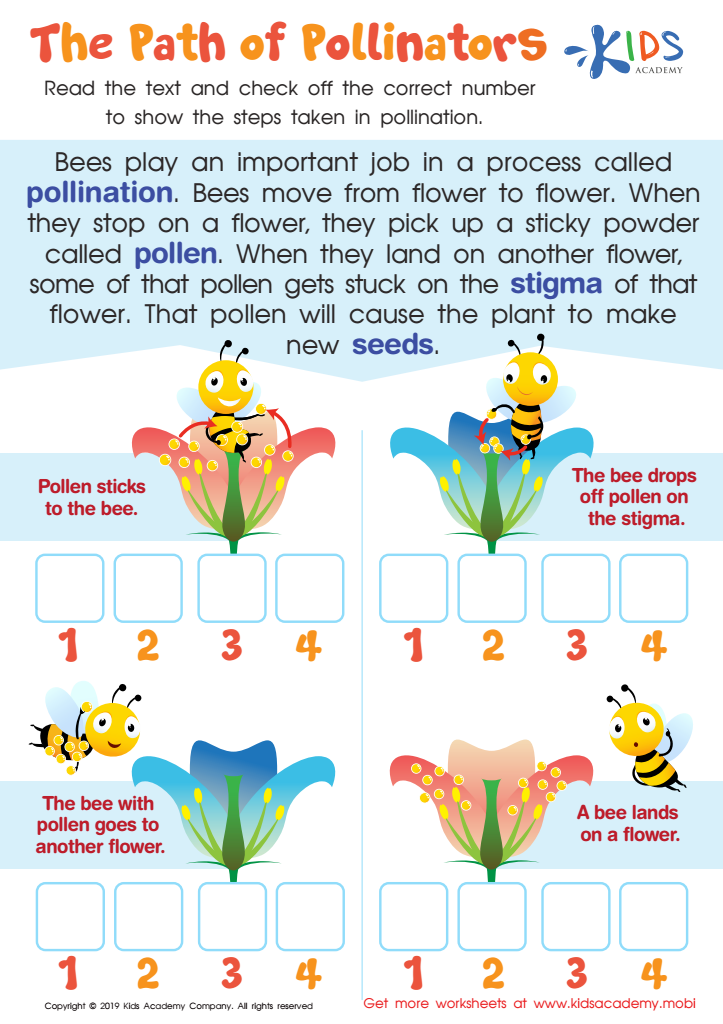
The Path of Pollinators Worksheet






Understanding pollination is essential for parents and teachers not only because it introduces young children to basic scientific concepts but also because it fosters a deeper appreciation for nature and its interconnected systems. For ages 3-7, children's natural curiosity about the world around them can be harnessed through engaging activities related to plants, flowers, and insects like bees and butterflies. Learning about pollination helps children recognize the vital role various species play in ecosystems, promoting a sense of stewardship for the environment.
Moreover, introducing concepts such as pollination in an age-appropriate manner supports cognitive development. It enhances observational skills and critical thinking, as children learn to ask questions like "How do flowers grow?" or "Why are bees important?" Such foundational knowledge not only encourages scientific inquiry but also encourages discussions about biodiversity and sustainability.
Furthermore, understanding pollination can lead to discussions about food sources and healthy eating, as many of the fruits and vegetables we consume rely on this process. By prioritizing pollination education, parents and teachers can cultivate a next generation of environmentally conscious individuals, nurturing their creativity and problem-solving abilities while fostering a lifelong interest in science.







