Understanding landforms Normal Our Planet and Environment Worksheets for Ages 3-7
3 filtered results
-
From - To
Explore our engaging "Understanding Landforms" worksheets, designed for children aged 3-7. These fun and interactive resources help young learners discover the diverse features of our planet, such as mountains, rivers, and valleys. Each worksheet encourages imaginative thinking, fosters environmental awareness, and promotes early scientific skills through colorful illustrations and simple activities. Perfect for homeschooling or classroom settings, these worksheets provide an excellent way to spark curiosity about the natural world, while developing fine motor skills and critical thinking. Let your child embark on an exciting journey to understand the landforms that shape our environment today!
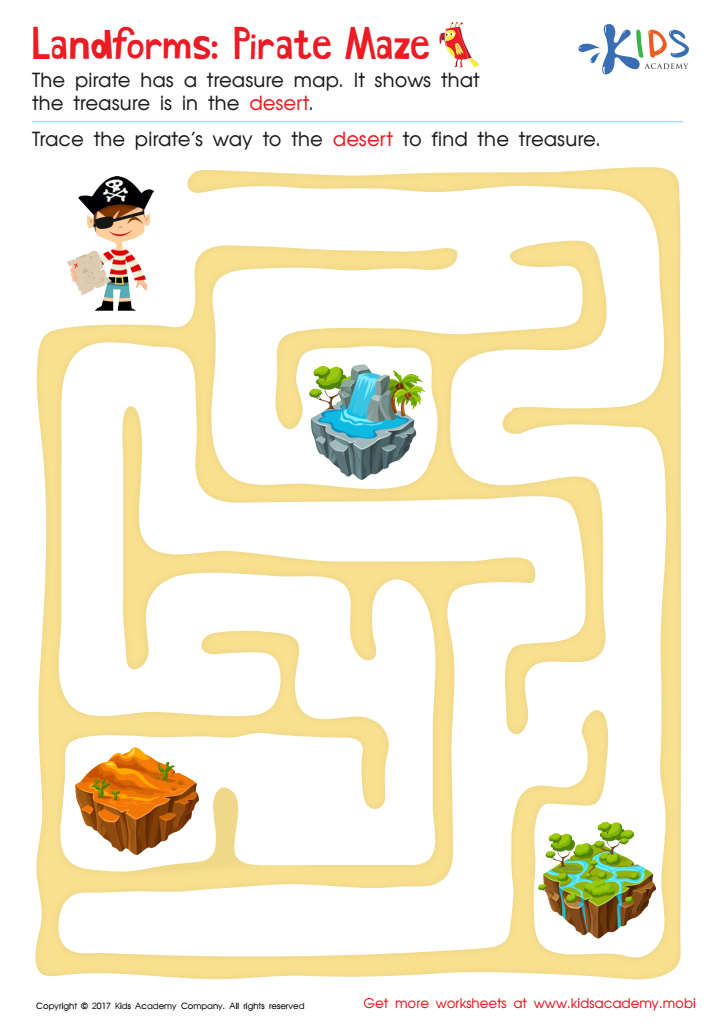
Landforms: Pirate Maze Printable
 Assign to My Students
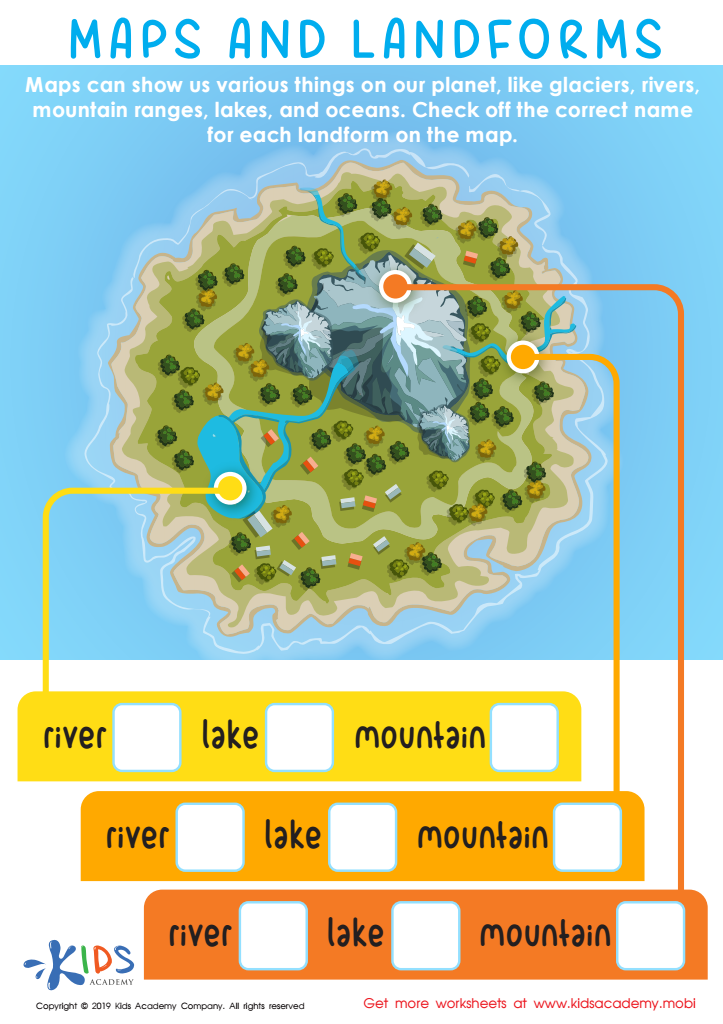
Maps and Landforms Worksheet
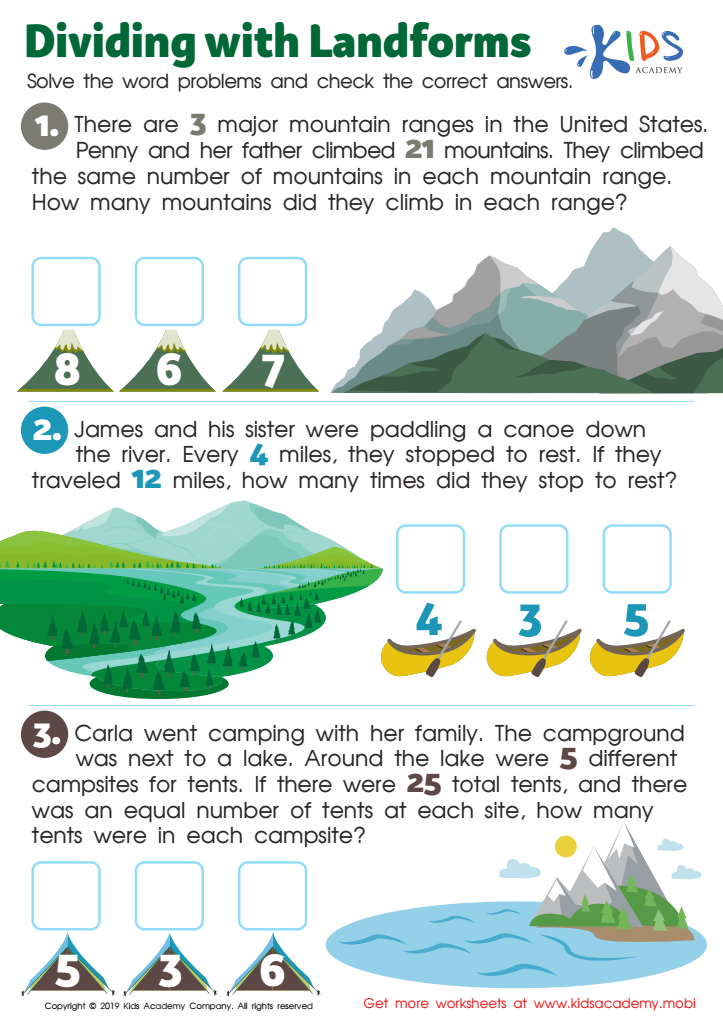
Dividing with Landforms





Parents and teachers should care about understanding landforms because it lays the foundation for children’s appreciation of our planet and environment. For ages 3-7, learning about landforms—such as mountains, rivers, and valleys—provides young learners with fundamental knowledge of the natural world. Recognizing these features fosters curiosity and engagement, allowing children to explore their surroundings with a critical eye.
By integrating lessons on landforms into early education, educators can promote environmental awareness and stewardship. Children develop a sense of place and belonging, connecting their everyday experiences to the broader landscapes they observe. This is essential for promoting sustainable practices as they grow older.
Furthermore, teaching about landforms enhances sensory learning experiences. Activities such as creating model landscapes or exploring local terrains make learning interactive and enjoyable, catering to various learning styles. Early explorations of geography can ignite a passion for science, navigation, and ecology, guiding future educational paths.
Finally, this understanding contributes to critical thinking skills, as children learn to recognize patterns in nature and appreciate its complexities. Cultivating knowledge about landforms early on is not just about facts, but nurturing environmentally conscious and knowledgeable citizens for the future.







