
Critical thinking skills Normal Plants and Animals Worksheets for Ages 3-7
3 filtered results
Difficulty Level
Grade
Age
-
From - To
Subject
Activity
Standards
Enhance your child's critical thinking skills with our engaging "Normal Plants and Animals Worksheets" designed for ages 3-7. These educational resources crafted by experts at Kids Academy provide young learners with exciting, interactive activities that focus on plants and animals. Your child will discover the magic of nature as they explore diverse species, understand animal habits, and learn about plant life cycles. Perfect for early learners, our worksheets encourage curiosity and problem-solving, laying a strong foundation for future scientific understanding. Foster your child's intellectual growth today with our innovative science worksheets geared towards their critical thinking development.
Favorites
With answer key
Interactive
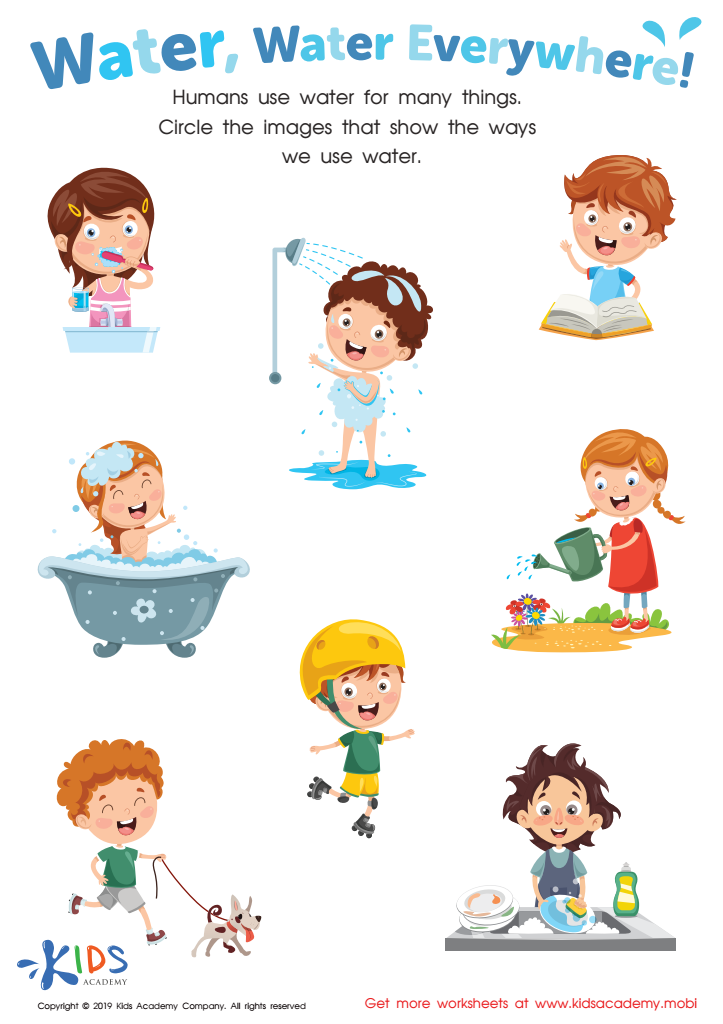
Water, Water Everywhere! Worksheet
Ask your kids how we use water daily. Point out how vital it is to the environment, as many living things couldn't exist without it. Show them this worksheet with kids doing different things that involve water. Ask them to identify what each one is doing, then help them circle the images which show the ways we use the water.
 Assign to My Students
Water, Water Everywhere! Worksheet
Worksheet











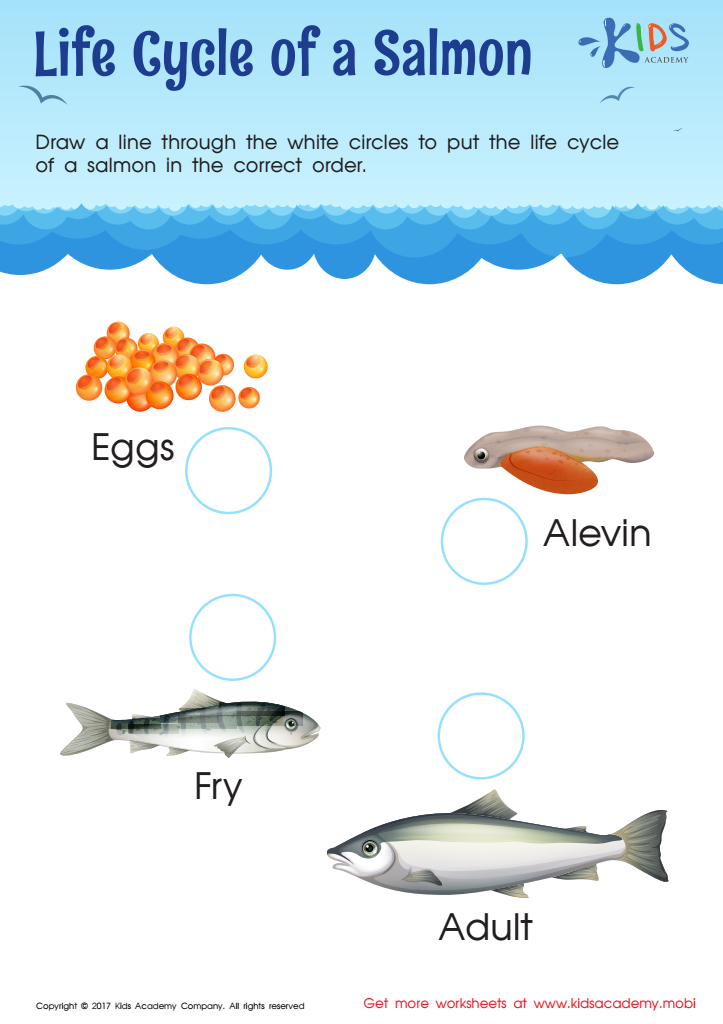
Cycle Of Salmon Worksheet
Explore the life cycle of a salmon with this grade 2 worksheet! Kids will learn by arranging the stages of the salmon's lifecycle in order. Science activities in this set cover a wide range of lifecycles in nature.
Cycle Of Salmon Worksheet
Worksheet
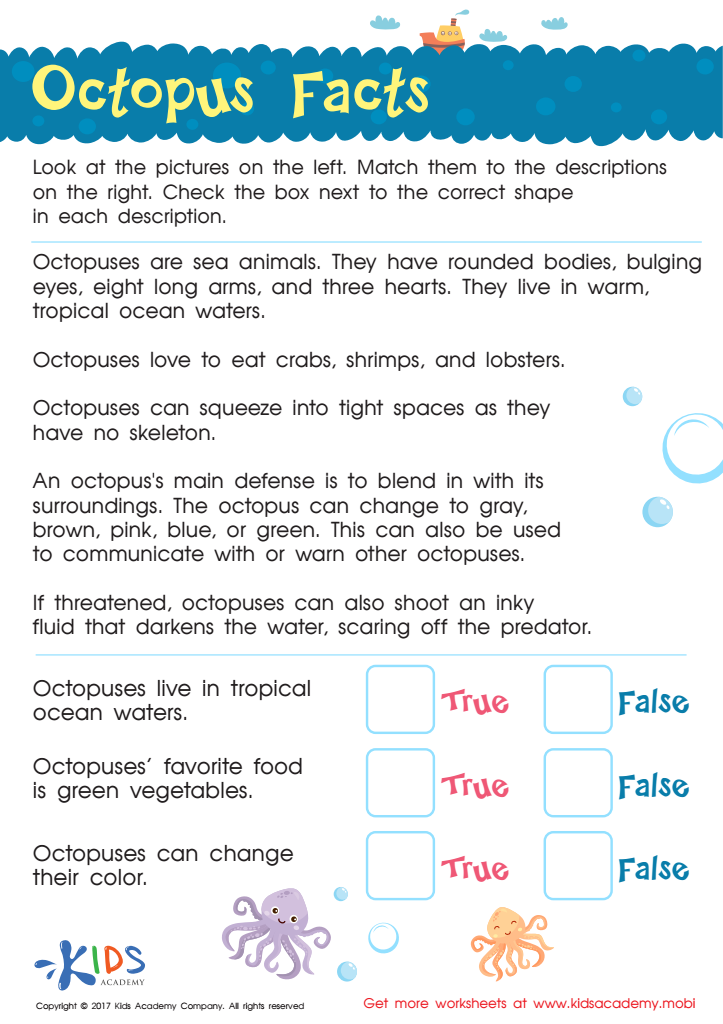
Octopus Facts Worksheet For Kids
Let your child dive into the world of octopuses with this fun worksheet. It offers invaluable practice in reading non-fiction texts, while they learn interesting facts about these strange sea creatures. It's a great way to help them hone their skills in reading comprehension.
Octopus Facts Worksheet For Kids
Worksheet
Join Kids Academy for Free
Who is primarily going to use this learning content?








Parents and teachers should prioritize developing critical thinking skills in young children because these skills form the foundation for lifelong learning and problem-solving abilities. Critical thinking enables children to analyze information, make informed decisions, and approach challenges with creativity and logic. For ages 3-7, fostering such skills helps in enhancing their curiosity and encouraging a love for learning early on.
Introducing concepts related to normal plants and animals serves as a practical and exciting way to develop critical thinking in young minds. Exploring the natural world through the lens of biology encourages children to ask questions, make observations, and understand relationships between living organisms and their environments. This engagement not only boosts their comprehension but also instills a sense of responsibility towards nature.
When children observe the life cycles of plants and animals, they practice making predictions, drawing conclusions, and recognizing patterns—key aspects of critical thinking. For example, understanding how a seed transforms into a plant or how caterpillars turn into butterflies can stimulate their intellectual curiosity and reasoning skills. Furthermore, by involving children in simple experiments, like planting seeds and watering them, they learn to hypothesize, investigate, and see outcomes firsthand.
In essence, focusing on critical thinking skills through the study of plants and animals enriches young learners, equipping them with essential tools for academic and real-world success.







