
Building vocabulary Normal Community Worksheets for Ages 3-7
3 filtered results
Difficulty Level
Grade
Age
-
From - To
Subject
Activity
Standards
Introduce your young learners to the vibrant world around them with "Building Vocabulary Normal Community Worksheets for Ages 3-7" from Kids Academy. Designed to enrich vocabulary, these engaging worksheets help children discover and name common community places and people, bolstering their social studies skills. Our diverse activities make learning fun and interactive, fostering curiosity and understanding of their environment. Perfect for home or classroom use, these worksheets provide an excellent foundation for early learners to develop language and cognitive skills. Encourage exploration and critical thinking as your child learns to appreciate their community with these colorful, educational resources.
Favorites
With answer key
Interactive
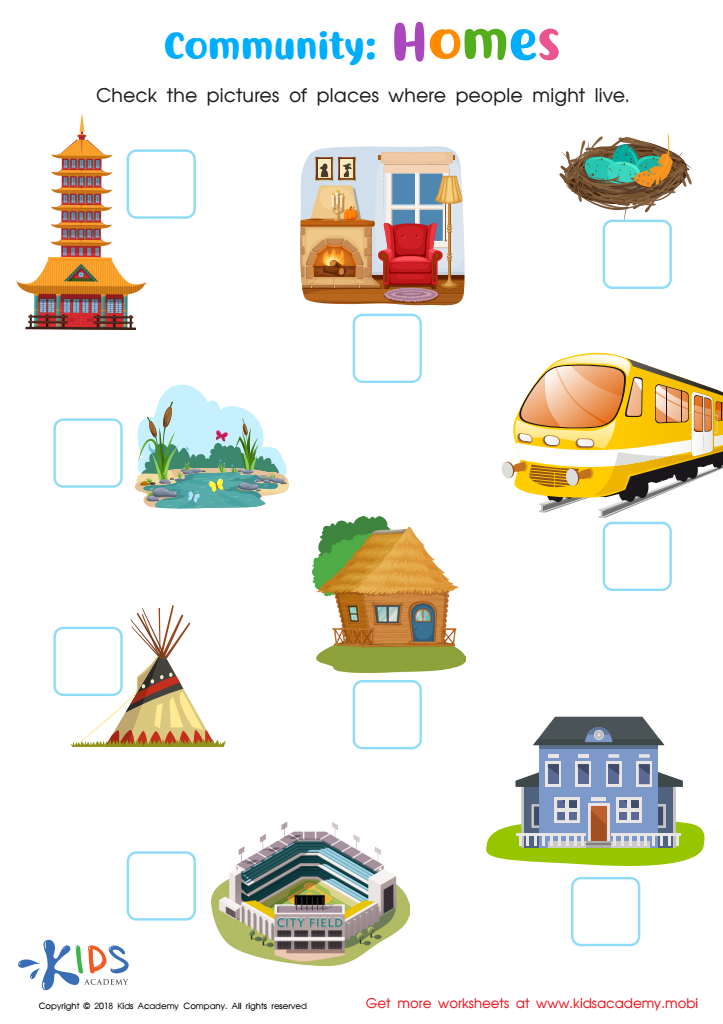
Community: Homes Worksheet
Help your child discover the different types of homes with this free worksheet! Full of colors and pictures, they'll assess which are suitable for people to live in. As they check each picture, they'll use their fine motor skills to draw a conclusion. They'll recognize familiar homes and learn about new ones. There's no place like home!
 Assign to My Students
Community: Homes Worksheet
Worksheet
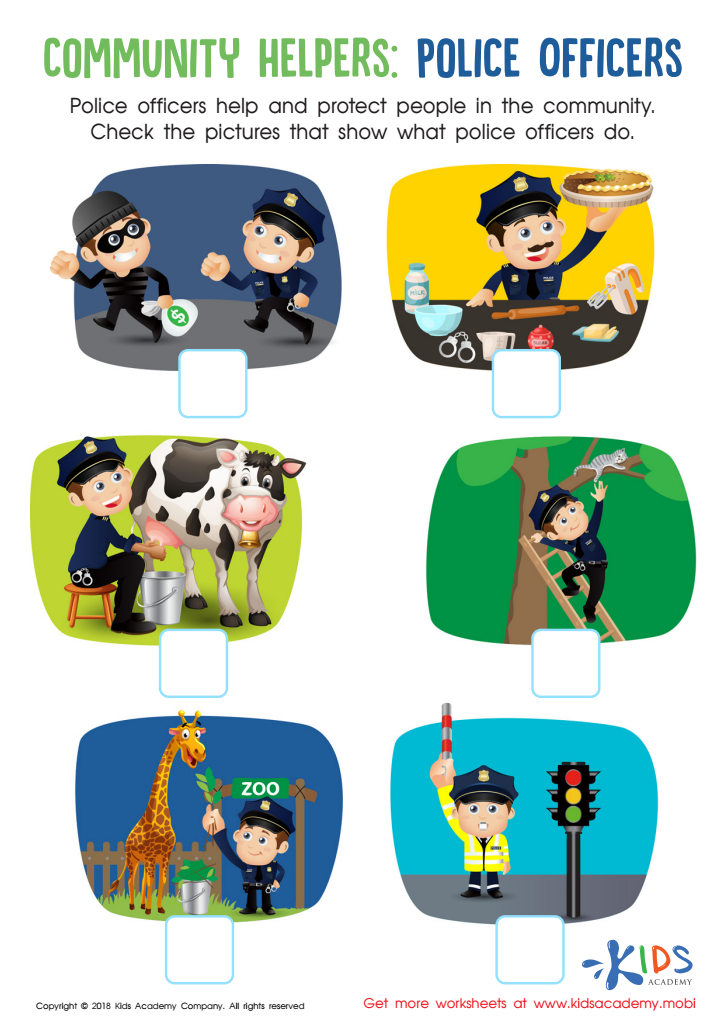
Police Officers Community Helpers Worksheet
Ask your child about police officers and how they help the community. Reference this worksheet to test their knowledge of police duties by asking them to name what the officers are doing in the pictures. Check which pictures correctly depict the duties of a police officer. Answering these questions together can help your child understand how police officers keep the community safe.
Police Officers Community Helpers Worksheet
Worksheet
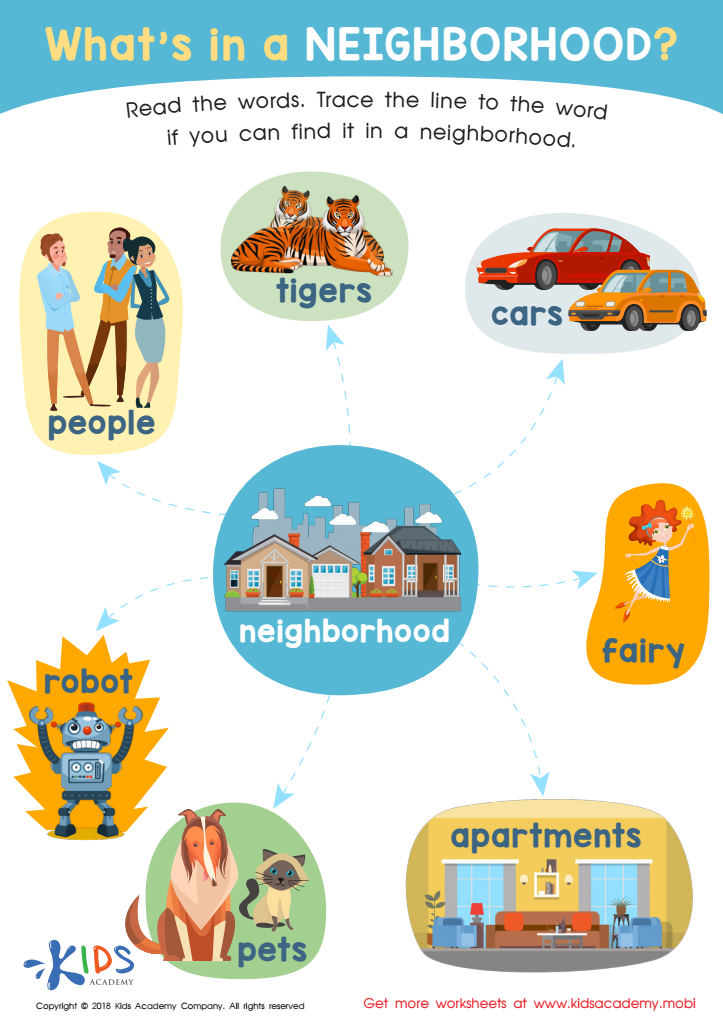
What's in a Neighborhood? Worksheet
This fun worksheet uses picture clues and traceable lines to help kids learn neighborhood words. Kids will match the neighborhood pictures to the correct words and practice connecting the two. The bright colors make it a great way for kids to practice understanding the qualities of a neighborhood.
What's in a Neighborhood? Worksheet
Worksheet
Join Kids Academy for Free
Who is primarily going to use this learning content?








Building vocabulary in children ages 3-7 sets a strong foundation for their future academic success and social interactions. During these formative years, children's brains are particularly adept at soaking up new words, meanings, and language patterns.
For parents and teachers, fostering an enriching vocabulary from an early age is crucial because it directly impacts reading comprehension, critical thinking, and communication skills. As kids learn more words, they can more accurately express their thoughts and feelings, which helps in social situations and emotional development. A robust vocabulary also allows for better understanding and processing of what they hear and read, which is pivotal when they start formal education.
Moreover, a strong vocabulary ignites curiosity and a love for learning. When children encounter new and interesting words, they're more likely to develop a deeper interest in reading and exploring new subjects, setting the stage for lifelong learning.
In essence, by prioritizing vocabulary building within a normal community setting, parents, and teachers help kids develop the tools they need to succeed academically and personally, bridging gaps in communication and understanding, and ensuring they have a solid foundation to build upon in later years.








